
Perfection? Gleneagles the glorious playground in the Glens
I first sampled the Gleneagles experience around thirteen years ago, I loved it then and the love affair deepened after my short visit last month when we stayed and played at “The Glorious Playground” in the height of mid summer.
The decision was to pack as much luxury and action as possible into just a few days, so on arrival at Edinburgh Airport we were met by a private resort chauffeur who whisked us off to the glamorous resort in the heart of the Perthshire Glens.
First up was a round on the King’s course, which I first experienced watching the BBC’s Pro Celebrity Golf programme on TV back in the 1970s – this show still holds wonderful memories for me. Of course things have changed on the King’s since then. A comprehensive bunker refurbishment was completed in 2016 and fairway cut lines have moved back to the original James Braid design – this is noticeable right from the off. The King’s is currently ranked #38 in Britain and Ireland and it’s such a joy to play.
The 160-yard par three 5th is one of my favourites, played to a tabletop green with severe run-offs on all sides – it’s much tougher than the length suggests. I’m a big fan of the drivable par four 14th also. From the tee you’re presented with what looks like a wall of bunkers, these are from around 150 yards to 220 yards from the tee, so they’re very much in play for all but the longest hitters. Driving over the second left bunker, and with a little bit of lady luck, you can get close to this 300-yarder. The home hole at 525 yards has bunkers everywhere and also the largest green on the course – so perhaps settle for par rather than trying to attack and hope for the birdie finish.
Our first evening concluded with drinks in Ochil House, dinner in The Birnam Brasserie and a brief nightcap in the brand new American Bar, which is elegantly glamorous and reminiscent of iconic bars of the 1920s and 30s. Each of these areas in the Gleneagles Hotel are simply delightful.

Day two was full on to say the least. We played the Jack Nicklaus-designed PGA Centenary course, which I first experienced thirteen years ago. There’s no doubt the layout has matured in a very positive way. Obviously the PGA Centenary was on full show for the 2014 Ryder Cup and will be back in the spotlight for the 2019 Solheim Cup. We all attempted the ‘Jamie Donaldson’ shot from 153 yards on the 15th, when his approach wedge became a gimmie and the Ryder Cup was in Europe’s hands again. Let’s just say I didn’t hit a wedge and my shot was not conceded!
Although the course doesn’t have the charm of the King’s or Queen’s, a ranking position just outside the Scottish Top 50 shows steady progress over the years. The holes back-to-back at the 5th and 6th are very strong, the former is called ‘Crookit Cratur’ and it’s a big par four with a long approach over marshland short and on the right. The wetland is back in play on the par three 6th – carry this and bring your ball in from the right side is the smart play. The par five 16th is another hole that I vividly remember from the 2014 Ryder Cup – this is the hole with water around 100 yards short of the heavily contoured green. The lay-up is the key shot on this hole without doubt.
Post golf we retired to the stunning new clubhouse bar, sampling Gleneagles' very own craft beer – Auchterarder 70 – which has been named after the hotel’s original phone number, a nod to the establishment’s long history. We then moved away from golf and headed to the archery range, which is another super facility for golfers and non-golfers alike. It’s fair to say my own skills are not quite at Olympic standard!
The evening continued with aperitifs on the Glendevon Terrace while watching the resort's’ gun dogs put on a great show – then we were off to The Dormy for dinner. The adventure continued while watching the sunset over Laich Loch where very patient ‘ghillies’ painstakingly showed the group how to fly-fish.

Our final day at Gleneagles included a round on my favourite layout at the resort, the Queen’s course. It’s the shortest by some way at less than 6,000 yards (par 68) but it’s one of those special golf courses with a certain something that’s hard to explain. Patric Dickinson eloquently summed it up: “One of the wonders of the golfing world, a kind of Hanging Garden of Babylon on a Scottish hillside.”
I think the Queen’s is my favourite because it’s relatively short and sheer fun. It’s where you get the chance to play to (or beat) your handicap. It’s certainly a little easier than the other two layouts, but in saying that, the first six holes give nothing away – even with two par threes in the mix. The 7th hole is the only par five on the card and it’s a lovely hole at just less than 500 yards. If the bunkers can be avoided off the tee and on the lay-up, then a birdie is a distinct possibility.
The 10th hole is called ‘Pint Stoup’ and as the halfway house is at the tee we had to stop for a pint. This is a big par four that doglegs left to a tree-protected green – it’s a strong start to the back nine. Three par threes at the 13th, 14th and 17th are no pushover, especially the 17th with a 60-yard green. Take in the view on the Queen’s 18th tee as it’s one of the most memorable on the entire Gleneagles Estate before playing the 400-yard par four – a drive down the right side for the best look at the green is a suggestion. The Queen’s has an impressive #74 ranking in our current Britain & Ireland Top 100 and it’s well deserved in my opinion.

Our time at the ‘glorious playground’ was coming to an end all too soon, but there was still enough time to visit the Shooting & Fishing School Lodge for a slap-up BBQ lunch and some clay-pigeon shooting instruction. Not my normal Wednesday afternoon, but when you’re in the Gleneagles magic bubble you go with the flow and enjoy every minute.
Final mention goes to the Gleneagles staff. Every single one, at all levels of employment, are wonderful – nothing is too much trouble for them.
Is Gleneagles the best golf resort in Britain & Ireland? All I can say is Gleneagles is in my Top 1.
Andy Newmarch
Top 100 Golf Courses

The Machrie launches the ultimate internship for golf enthusiasts The Machrie, set in the Scottish dunes of Islay, is pleased to announce the launch of its ‘Golf Internship Programme, 2022’ for any individuals with a passion for golf and a desire to experience the workings of one of the best golf resorts in the UK and Ireland. Launching this November, The Machrie’s once-in-a-lifetime paid internship programme will provide a hands-on insight into the golf and leisure industry and a unique learning experience for young talent considering this career path. Throughout the three- to six-month internship, golf enthusiasts will have the opportunity to live on a beautiful, remote Scottish island, play on the hotel’s Championship 18-hole golf links and gain invaluable training with practical skills as well as career advice, CV development and interview techniques. Work During their time at The Machrie, Scotland’s Hotel of the Year 2020, interns will work across various departments throughout the facility for a well-rounded experience. The Golf & Hotel Operations Internship covers everything from marketing initiatives and retail management to running and planning golf days and events, and food and beverage operations, with the opportunity to work with different Department Heads and attend Executive Management meetings, ensuring interns gain a thorough understanding of the inner workings of a successful golf hotel. Meanwhile, the Championship Links Maintenance Internship delves deeper into the practicalities behind maintaining a golf links such as learning how to preserve the perfect grass, correct usage of machinery, bunker maintenance, and the budget process. The programme includes a period of induction to each department, as well as thorough training and, following this, designated tasks and duties. Ongoing support, with regular feedback, will be provided throughout as part of the mentor programme. Additionally, independent training assessments will be issued, as well as frequent access to industry ‘gurus’. Play Whilst enrolled on the internship programme, students will frequently spend days playing casual and competitive golf on the world renowned 18-hole The Machrie Links. Designed by Willie Campbell and recently modernised by course architect DJ Russell, it is ranked in Britain & Ireland's Top 100 courses by Top100GolfCourses.com. Interns will have access to the hotel’s impressive range of golf facilities including a six-hole Par 3 Wee Course, the all-season, five-bay driving range, golf simulator room, trackman and short game area. The internship will also provide an opportunity to play one other of the best courses in the vicinity. Rest During the programme, there will be organised social events and interns will be encouraged to explore Islay, including the seven miles of rugged beach outside the hotel, walk or cycle the 70 trails available on the island, as well as try wild kayaking in search of bottlenose dolphins, minke whales, basking sharks and orcas. Spending time on Islay offers the opportunity for young people to gain an appreciation for the environment and the great outdoors. Paul Lawrie, winner of The Open in 1999 and founder of the Paul Lawrie Foundation spoke of The Machrie’s continued focus on and support of promoting golf to young people: “Following on from The Race to The Machrie, which my Foundation is involved with annually, this is another very exciting development from The Machrie and a further commitment to developing the game and golf industry from the team. The development of an intern programme is an extraordinary opportunity for anyone wishing to have new experiences in an exceptional golf environment, enter the golf industry or enjoy a Summer on Islay playing golf and developing transferable skills for any walk of life.” Applicants are encouraged to sign up on www.campbellgrayhotels.com. The deadline for submissions is 12pm on 9 January 2022, with internships running between April 2022 to October 2022. For more information, visit: www.themachrie.com
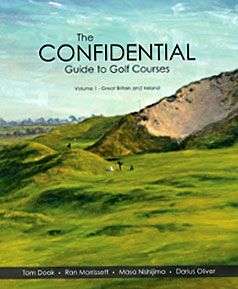
The Confidential Guide revealed Tom Doak’s updated “Confidential Guide” book: a Scottish perspective The updated version of Tom Doak’s cult golf book “The Confidential Guide to Golf Courses” will be released in five volumes, the first of which has just been published. For those who don’t know, earlier editions of The Confidential Guide – where Doak reviews and marks courses on a scale of 0 to 10 – change hands for substantial amounts of money amongst acolytes of the minimalist designer. Along with Ran Morrissett (founder of the Golf Club Atlas website), Darius Oliver (writer and publisher of the Planet Golf books) and Masa Nishijima (long-time international consultant at Top 100 Golf Courses and author of Analysis of a Golf Course), Doak now aims to rate and critique more than 2,000 golf courses around the world, the first 289 of which, in Great Britain and Ireland, appear in Volume 1. There’s quite a bit to digest in this particular volume, so we thought it might be worth having an initial look at the book from a more specific Caledonian perspective, leaving an examination of the other countries for future articles. The original Confidential Guide first appeared in 1988, when 53 of the layouts assessed by Tom Doak were located in Scotland. The new revised edition of the book almost doubles the number of courses that lie to the north of the border with England, adding all the top courses that have opened for business in the last quarter of a century, with three glaring exceptions. Most prominent of these is Spey Valley in Aviemore, an exuberant Dave Thomas-designed layout that sits comfortably in the top half of our Scottish Top 100 chart. The exclusion of the other two courses is even more puzzling because the Fidraand Dirleton courses at Archerfield Links – currently number 32 and 39 in our Tartan Top 100 – are located immediately adjacent to Tom Doak’s only Scottish design at Renaissance Club in East Lothian, which is ranked above both its near neighbours at number 27 in Scotland. Cynics might speculate the absence of both Archerfield courses from the book is understandable due to commercial rivalry – we’d like to believe it was simply an oversight. Actually, there are a number of other noteworthy courses that are also missing, three of them on the west coast at Glasgow (Gailes), Kilmarnock (Barassie) and Irvine (all of which have been used in the past as Final Open Qualifying venues) and the expansive parkland layout of Downfield in Dundee. The reason given in the book for leaving out Downfield (a former Scottish Open venue) was that it couldn’t be found after driving around for half an hour in search of it. A rather lame excuse surely? In fairness, to counterbalance any controversy over leaving out (inadvertently or otherwise) those leading Scottish courses, the book does make reference to a raft of lesser layouts, such as Braid Hills, Peebles and Strathpeffer Spa. Also, dare I mention it, there’s even appraisals of other little-known courses, such as Braemar, Cullen and Dunaverty. Furthermore, several wee 9-holers – Carradale, Killin and Rosehearty amongst them – are also considered, so full credit to the authors for this depth of coverage. As it’s perfectly entitled to, the new volume reappraises the “Doak scale” ratings that were originally given to more than a dozen Tartan tracks, with most of these layouts marked up one point from 3 to 4, 4 to 5 or 5 to 6. Nevertheless, eyebrows will be raised at three courses – Lundin, St Andrews (Jubilee) and Dunbar – which have jumped up 2 points from a 3 (“about the level of the average golf course in the world”) to a 5 (“well above the average golf course, but probably about the average among courses covered by this book”). If those ranking alterations are surprising, the three point jump of Shiskinefrom a humdrum Doak scale-2 (“a mediocre golf course with little or no architectural interest”) to a more than respectable 5 (where although “it’s certainly not everybody’s cup of tea… Shiskine is not to be missed”) might well have some people wondering if Arran was under a blanket of fog when the course was first visited. Eighteen of the courses in the book have been selected for special attention, forming what’s been termed “The Gourmet’s Choice,” and five of these favourite tracks – all links layouts – are located north of Hadrian’s Wall: St Andrew’s (Old), Prestwick, North Berwick (West), Royal Dornoch (Championship) and, rather surprisingly, Askernish. These courses are described as “places that stir our souls, and will reward the visitor with something out of the ordinary”. Simply put, the authors think that they’re “courses we would take a good friend to play”. An eclectic 18-hole course for GB & I has also been assembled in the new Confidential Guide, with eight of the holes fashioned from Scottish links courses. The more predictable of these – No. 1 (“Battery”) at Machrihanish (Championship), No. 8 (“Postage Stamp”) on Royal Troon (Old), No.14 (“Foxy”) at Royal Dornoch (Championship) and No. 17 (“Alps”) on Prestwick – are joined by the par four 2nd on St Andrews (Old), the par five 6th at Carnoustie (Championship), the par three 13th at Muirfield and the par three 15th at North Berwick (West). Individual holes on a number of courses attract criticism from the authors – the “uncomfortably American” 18th at Skibo Castle – Carnegie Club and the “ridiculous uphill par-3” 3rd at Gullane No.2 are two that spring to mind – but the most damning narrative is reserved for all 18 holes on the St Andrews (Castle) course, controversially awarded a score of 0 (“a course so contrived and unnatural that it may poison your mind”), where the considered opinion is that “trying to one-up Kingsbarns turned out to be a formula for excess”. Unnecessarily harsh words indeed for a modern layout that currently resides at number 22 in our national rankings for Scotland, only one position behind its illustrious stablemate St Andrews (New). Then again, it’s very fashionable amongst many in the golfing architectural fraternity these days to lambast just about anything the St Andrews Links Trust does. Despite the gap of "local" European knowledge, the authors have, overall, performed a reasonable job from a Scottish golf course perspective. Ralph Thompson and the other golfing islanders on South Uist will no doubt be delighted to have their Askernish course lauded so loudly in the book. However, I'm doubtful that architects David J. Russell and David McLay Kidd will be overwhelmed. Jim McCann Editor Top 100 Golf Courses of the World
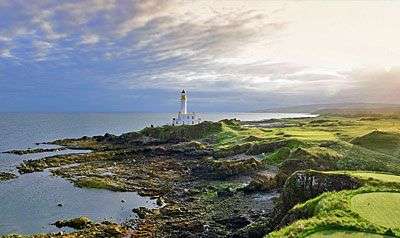
Review of the Month March 2018 - Trump Turnberry (Ailsa) Four Englishmen tried their luck with the Scottish weather and took advantage of an offer to play the new Ailsa course in March. I had played the old version a few times and considered, along with many others, the stretch from holes 4 to 11 as one of the very best I have ever played. Would the new version live up to the old? Fortune smiled on us and, despite snow drifts that day in parts of England we were treated to blue skies and crystal-clear views and temperatures above freezing for the first time in days. We were given mats to play off which felt a little disappointing at first having paid so much money, but several factors prevented this detracting from our enjoyment. Some of the time we simply moved our balls to the semi-rough (better than most club's fairways) and played from there – no problem. Also, the mats were of high quality and enabled perfectly decent golf shots to be played (not like the thin pieces of carpet I'd be given at other places. This all meant that the fairways looked spectacular and divot-free (unlike the soggy courses we'd left behind in Yorkshire). I should also point out that we played off the proper tees – we were offered the choice of white or yellow - and played on all proper greens so definitely received the full Turnberry experience. On to the course itself, were the changes a good idea? The simple answer is a resounding 'yes'. The best really can be made better. Although there are changes to most of the holes, it is probably most apparent on the famous 4-11 stretch. Once down by the sea on the 4th tee, with Ailsa Craig overlooking your tee shot, you really get a sense you're in golfing heaven. The par 3 tee shot is all carry (as indeed are all the par 3s). The green has been relocated closer to the sea and any degree of wind (we had around 10mph from the East) will cast doubts on the golfer's strategy and only a well-executed shot will hit the green. The next par 3 (6th) has been shortened but the new green is no less easy to hit being on top of a dune ridge. Again, anything other than finding the green and bogeys or worse will likely ensue. Holes 7 and 8 maintain the high standard, threading their way through dune valleys. It used to be that one strolled from the back of the 8th to the Open championship tee of the then Par 4 9th and marvelled at the carry the professionals must make over the rocky inlet with the sea crashing below. The amateur golfer then walked to a slightly inland teeing area to play a fairly straightforward par 4 without too much danger. Even for the Pros in modern times, this hole has been relatively easy unless there was a rare strong off-shore wind and so even for the Open the drama of the hole had diminished. Not so anymore. With the re-siting of the green close to the lighthouse, the Open tee is once again daunting as a 248-yard par 3 over the sea. However, unlike the previous version, us mere mortals also have a chasm to cross. Our group resorted to fairway woods into the breeze to carry the ocean below and our good shots were rewarded with a great sense of achievement. This seems to me the closest I will get to playing the 16th at Cypress Point. The 10th hole was previously one of my favourite holes in all golf, hugging the sweeping coastline as a very tough par 4, littered with bunkers and slopes. It still retains its place as one of the greats. The breath-taking views remain, possibly enhanced by the use of numerous (I think there are 7!) elevated tees all framed by the famous lighthouse behind. The green has been pushed further into the corner of the coastline allowing the hole to become a par 5 which at least gives the amateur golfer a better chance of better of a par if they are not distracted by the glorious scenery. Finally, we say goodbye to the sea along the 11th but this also has been redesigned to be more of an all-or-nothing par 3 where nothing but the green will do. Another stunning improvement. The remaining holes are still of a high standard (the 14th green is now almost back at the lighthouse) but it remains the coastline holes which will capture the imagination of every golfer that visits Turnberry. Needless to say the hospitality, facilities and attention are all of the high standard expected at a top tier golfing resort but it is the course itself that will live long in the memory. RdD By Richard Review of the Month March 2018 selected by Editor-in-Chief, Keith Baxter – click to read more about Trump Turnberry (Ailsa).
