
Top 100 Golf Courses of Australia 2017
We present the third revision of our ranking chart for Australia
Top 100 Golf Courses published its first Australia Top 100 chart in May of 2010 so this is the third biennial revision of those rankings. Over the last six years, we’ve managed to establish links with several authoritative golfing sources Down Under so we’re confident that this latest edition of our Australian standings is the most informed that you will find anywhere.
In fact, such is both the quality and quantity of data now being processed, we’re going to extend the coverage of courses within our Australian state listings over the next few weeks. This expansion means that we’ll soon feature just as many Aussie tracks listed outside the Top 100 as inside so watch out for further state by state announcements as November unfolds.

But first, we present our updated Top 100 chart, where Royal Melbourne (West) remains firmly embedded at the summit. Alister MacKenzie’s celebrated masterpiece has been ranked as the national number 1 since we compiled our first Aussie Top 50 back in 2007 and we think it will take something truly extraordinary to remove this highly strategic layout from its current position.
Our US Consultant Fergal O’Leary played the course several times last year during his golf trip to the Melbourne Sandbelt saying that he “appreciated new aspects and nuances each time I played it. It’s a never-ending education… a place of pilgrimage for golfers [where] the holes are as fascinating to look at as they are to play.”
The top three chart positions stay exactly as they were last time around, which means that Kingston Heath holds onto the runner-up slot. Located less than five miles to the east of Royal Melbourne, it’s another course that Dr. MacKenzie advised on during his tour of the famous sandbelt region in 1926 and a recent reviewer called it “a severe test not of brawn but of brain.”

At number 3, Barnbougle Dunes is the foremost of three top Tasmanian tracks which now occupy prominent positions in our new listings. Opened at the start of the new millennium, the course is a Tom Doak/Mike Clayton co-design, with fairways carved through towering coastal sand hills next to the unspoiled beaches of the remote Waterhouse Conservation Area on the island’s northeast coast.
Two courses rise towards the top of the table; the first is New South Wales (up one to number 4), another old Alister MacKenzie design that’s laid out within Botany Bay National Park and the second is Victoria (up four to number 6), a near neighbour of Royal Melbourne which another reviewer described earlier this year as “tremendous fun… and a pretty decent walk over some of the best golfing land in the world”.

Other courses making significant upward moves include a couple of extensive renovations carried out by the Ogilvy Clayton Cocking Mead design company: Royal Canberra (Westbourne) (up twenty-one to 29) and Bonnie Doon (up thirty-one to 49). Also on the rise is the 18-hole layout at Long Island (up twenty-two to 55), where the club merged with The National Golf Club last year to form the nation’s first 72-hole private membership golf facility.

There are eight new entries in our new chart, the first of which debuts at number 8, which is an extraordinarily high position when you consider it’s only the second course (along with Barnbougle Lost Farm) to break into our Australian Top 10 since it was first established ten years ago. When you also take into account the fact that all of the courses in positions 1 to 7 are currently world ranked, then it can surely be only a matter of time before Cape Wickham is recognised in a similar global context.
Located on King Island in the Bass Strait, midway between Tasmania and Victoria, the course is a Mike DeVries collaboration with author Darius Oliver who, when describing the location in his recent book Modern Masterpieces said: “If not the most beautiful place to play golf in the world, Cape Wickham is certainly on a very short list… King Island isn’t the easiest place to get to, but those of us involved in this project always felt that if the course was good enough then golfers would make the effort. ”

Incredibly, our next new entry also emanates from King Island, where Ocean Dunes comes into our new chart at a very creditable number 35. Opened for play earlier this year, the course lies on a seaside site close to King Island Airport, which is the only means of getting to and from the island because there’s no passenger ferry in operation.
Graeme Grant lost out on purchasing the Cape Wickham site a few years ago so he turned his attention to acquiring another coastal property where he developed and designed this layout. In his new book, Darius Oliver is very generous in praising the new course: “The course may not have as many knockout holes as Cape Wickham, but as a complement to the golf available elsewhere on the island… it’s an attractive golfing option and sure to win plenty of admirers.”

The other five newcomers appear in the lower half of our newly updated table, headed at number 60 by Bob Harrison’s Bungool course at the 36-hole Riverside Oaks Golf Resort in Cattai, northwest of Sydney. Set out in two separate 9-hole sections overlooking the Hawkesbury River, the course is characterised by the rugged bunker style adopted by the architect to blend in with the surrounding landscape.
We’re also aware of an exciting new Greg Norman-designed 27-hole golf complex, the Eastern Golf Club, located in Melbourne’s Yarra Valley. The 18-hole South course debuted in October last year, with an additional nine holes opening for play just last month. We’ll be keeping a close eye on developments here in the months ahead.
Another course that just missed out on our national rankings this time is Peninsula Kingswood (South), where the renovations to the course were not completed in time for it to make the cut, but we fully expect the revitalised layout to leap back into the chart next time around. Additionally, since we defined this Top 100 table, the North course at Peninsula Kingswood went under the Ogilvy Clayton Cocking Mead knife, so its position at #25 is arbitrary and the members are currently playing a composite course at their Peninsula site.
Rank/
To view further details of the Top 100 Golf Courses of Australia click the link.
We’re always intrigued to find out what you think of newly updated national rankings so feel free to let us know your views of our new chart for this country. Is there a certain course that we’ve omitted or maybe you feel we've included one that doesn’t belong there? Maybe we’ve listed one that’s either far too high or way too low? Whatever your thoughts, please click the “Respond to this article” link at the top or at the bottom of this page if you’d like to share your opinion.
Jim McCann
Editor
Top 100 Golf Courses
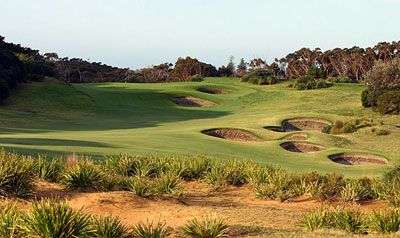
Australian Capital Territory and New South Wales Best in State Rankings 2021 On the back of publishing our biennial Australian Top 100 last week, it’s now time to focus our attention on the state listings, which are one level below the national chart. This gives us the benefit of being able to cast the spotlight on many of the layouts that miss out on a place at the country’s top table, but are still worthy of recognition within a smaller geographical area. We begin this exercise in the southeast of Australia with the federal district of the Australian Capital Territory – which is home to the nation’s capital city, Canberra – and the state of New South Wales, within which ACT is enclaved. We feature five of the courses in ACT and we’ve now extended our coverage in NSW to a Top 100, giving us the opportunity to highlight close to a third of the total number of tracks in the most populous state Down Under. Australian Capital Territory The top three positions in the Australian Capital Territory chart remain unaltered, which means the Westbourne course at Royal Canberra is still #1 in our revised table, a position it’s held since we started our state listings for Australia six years ago. Originally laid out by John Harris in the 1960s to a plan devised by James Herd Scott twenty years earlier, the course was extensively remodelled by Ogilvy Clayton Cocking Mead when this company was a design ensemble a few years ago, before Mike Clayton joined forces with Mike DeVries and Frank Pont. OCCM rebuilt greens and bunkers, removed trees and remodelled a number of holes. Royal Canberra Golf Club - Westbourne course This is what a recent reviewer had to say after playing here: “the new renovation brought a modern touch to a classic layout at Royal [by] opening the fairways, as well as adding strategic bunkers and amping up the green complex contours… the renovation solidified RCGC as a course with natural beauty and a classic Australian design, something that is quite unique to the Oceania region.” There is one new entry at #4 and it’s the course at Gungahlin Lakes Golf Club, situated 18 kilometres north of the capital, which is owned and operated by the Ainslie Group, one of Canberra’s leading hospitality companies. Unveiled in 1996, it was co-designed by Ted Parslow and Jamie Dawson of Enviro Links Design, with Dawson returning a decade later to add new bunkers, upgrade tees with stone wall abutments and install new cart paths. Click the link to see full details of our latest ACT Top 5 rankings. New South Wales There’s been quite a shake-up in our New South Wales listings, with most of the action taking place in the bottom half of the new table, where we’ve added another forty courses to create a Top 100. But first, looking at the other end of the chart, there’s very little movement within the first twenty places. Indeed, more than half the courses remain in the same position, including the state #1, New South Wales Golf Club in Botany Bay National Park. New South Wales Golf Club Designed by Alister MacKenzie back in the 1920s and refined down the years by a succession of architects, including Eric Apperly, Peter Thomson and Mike Wolveridge, Greg Norman and Bob Harrison, “La Perouse” (as the course is known locally) has recently benefitted from Tom Doak and his Renaissance Golf Design team reworking a number of the holes, most notably the par three 6th. The following remarks were made in a post a few months back: “the location of La Perouse on the northern cliff-top side of Botany Bay is to Sydney what Pebble is to Carmel, California… New South Wales is right at the top of the surprisingly meagre architecturally significant offerings on the Sydney golf scene. You will not be disappointed by a day spent in its warm embrace.” The most significant upward move near the top of the chart is the two-place advance of Bonnie Doon Golf Club's course at Pagewood to #7. The club is the third oldest in Sydney but its course is a relative youngster, having been created shortly after World War II when a relocation took place due to the expansion of the city airport. The aforementioned design firm of OCCM completed a 4-stage renovation a few years back and the results of this extensive upgrade are now reflected in the course’s upward trajectory in the rankings. Bonnie Doon Golf Club Rising sixteen to #22 (and also a new entry in our national Top 100), the Hilltop course at Mollymook Golf Club is another big climber in our NSW standings. The club was formed in the early 1950s with a 9-hole layout but it decided to fashion a new 18-hole layout within a nearby eucalyptus forest in the 1970s when expansion of its original Beachside course provide impractical. Featuring kikuyu fairways, bent greens, and water on almost half the holes, the Hilltop’s a tidy track that demands respect. Mollymook Golf Club - Hilltop course The course at Killara Golf Club progresses twelve places to #24. Founded at the end of the 19th century, the club moved to its present location just a few years after its formation, becoming what’s believed to be the first in Australia to own its own course in 1906. Englishman John Harris redesigned the layout in the mid-1960s and Harley Kruse has just completed a renovation, rebuilding greens and fairway bunkers, reversing a couple of holes and removing a significant number of trees. Killara Golf Club Another double-digit chart improvement (up ten to #29) is made by the course at Duntryleague Golf Club in Orange, which Eric Apperly and the club’s professional designed back in the 1930s. A Latvian landscape architect was hired shortly after World War II to devise an agronomy masterplan for the club so there are now some wonderful tree species to be found in the grounds of the estate that the course occupies. Duntryleague Golf Club Situated next to the Murray River, Corowa Golf Club (up thirteen to #45) have been in operation since 1903, when it started out as a basic 9-hole set-up with sand scrape putting surfaces. After moving in 1928 to Corowa Common, Al Howard redesigned what had become an 18-hole layout during the mid-1950s and another nine holes were brought into play twenty-five years later. In more recent times, a 35-room motel was added to the list of club amenities but, to top it all, a 58-seat boutique cinema became another of the club’s visitor attractions in 2018. Corowa Golf Club The last big mover of note is the Gangurru course at Riverside Oaks Golf Club, progressing eleven spots to #48. The original layout at an enterprising 36-hole facility, the Gangurru is somewhat overshadowed these days by the new Bob Harrison-designed Bungool course which opened five years ago but a bunker refurbishment carried out around the same time on the Gangurru has reignited thoughts of the glory days when it hosted three editions of the Australian PGA Championship at the end of the 1980s. Gangurru course at Riverside Oaks Golf Club The highest entry made by the many newcomers to our expanded NSW chart is the Captains course at Tocumwal Golf & Bowls Club, which arrives at #40. The club was formed in the 1950s, using former Australian Air Force property to build an initial 9-hole layout. This became the 18-hole Presidents course in the 1970s, before former Australian Amateur champion Kevin Hartley laid out the Captains course in the early 1990s. Click the link to see full details of our latest New South Wales Best in State rankings. Jim McCann Editor Top 100 Golf Courses
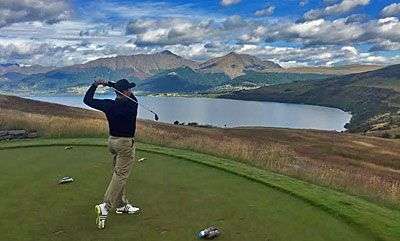
Fergal O’Leary returns to the land down under A return journey to the Sandbelt highlights just how fortunate our Aussie friends are to have so many world-class golf courses in such close proximity. With various reciprocal relationships among the clubs, it promotes the opportunity to enjoy them all. With the rise of golf in Tasmania and on King Island, golf in Australia is arguably the hottest destination on the planet these days. After fifteen hours in the air, I was staring out the cabin window hoping our landing pattern would take us over the Sandbelt allowing my Google Earth research to come to life. Royal Melbourne (West) continues to be number one in the Australian rankings. This is due to the fabulous piece of land the holes sit on, but more so the genius of the green complexes. It certainly feels like the golfing cathedral of the southern hemisphere, armed with the ability to break a man’s heart as he begs for more. The course continually asks for heroic approach shots judged to perfection, or face almost impossible ups and downs to save par. It’s Australia’s toughest examination of your skill set. With that said, I developed a deeper love for Kingston Heath on this trip and was fortunate to play it on three occasions with various Pennant (interclub team scratch match play competition) level members. Although on a flatter piece of land, the strategy for ball placement is truly paramount in order to get the best angle into the greens. MacKenzie continually asks golfers to hit the ball as close to hazards/bunkers/doglegs as possible. Of all the golf courses in the Sandbelt, I would hands-down choose to play Kingston Heath the most. The simplicity of its creation married with the genius of the strategy to negotiate each hole, offers up what I consider to be the greatest course in Melbourne. No matter which way the wind blows, no two rounds are the same and this old lady deservedly wears a crown. While the back nine at Victoria Golf Club has possibly the greatest collection of holes in the Sandbelt, it is sometimes let down by conditioning, especially on the greens. Victoria was my favourite course on my last trip to the Sandbelt and I jumped at the opportunity to play it again. Some people knock it due to its back-to-back par five conclusion to each nine and the fact that three of the four par threes play uphill. Having played the course multiple times myself to establish my own independent perspective, you see something new every time. Admittedly, I did find that the 18th hole downwind is not an exciting or stimulating finishing hole. Furthermore, I continue to personally dislike the design of the greenside bunker on number 12, it’s very “un-Sandbelt like” and out of character with the rest of the bunkers on the property. I will forever absolutely love the course and the clubhouse accommodation experience, and it’s only after playing it multiple times that you appreciate different aspects. The large strategic MacKenzie bunkering, mouth-watering rolling topography and impressive raised greensites continue to keep Victoria in the upper echelon of Sandbelt golf. Given the proximity of Royal Melbourne (West) to Victoria, if God ever combined the back nine at Victoria with the main paddock of Royal Melbourne, there wouldn’t be a better golf course known to man. From a development perspective, the mouth-watering renovations at Peninsula Kingswood (in the Sandbelt) being undertaken by Michael Clayton and the construction of Cathedral Lodge Golf Club by Greg Norman, two hours north of the city, are just more reasons to get excited about world-class golf in Melbourne. I took a tour of Cathedral Lodge, and it looks like Ellerston has a rival. The Barnbougle resort on mainland Tasmania proves that man will literally go to the end of the earth to find sand dunes worthy of championship golf. The popularity of the resort among both domestic and international golfers is certainly on the rise, especially with both Barnbougle Dunes and Barnbougle Lost Farm ranked comfortably in the Top 100 Golf Courses in the World. The onsite accommodation and an increasing number of airlines making the journey is a great foundation for an enjoyable golf trip. Then came King Island, also governed under Tasmania. A forty-minute flight from Melbourne across the Bass Strait introduces us to two more world-class golf courses. Like we needed another reason to travel to the bottom of the earth! All 18 holes at Ocean Dunes were completed in June 2016. This coastal masterpiece was built by Graeme Grant, who has a decorated CV, including being head greenkeeper at Kingston Heath for 16 years. I had the pleasure of Graeme’s company for the trip – so his in-depth personal insights were wonderful. Land down along the west coast of King Island is rugged, and the opening stretch of Ocean Dunes brings you straight out into the rocky action with ocean-pounding backdrops. There is no delay in exposing golfers to the magnificent violent coastline with dramatic changes in elevation, heroic carries over water and danger in all directions. The turf has a lot of maturing to do, and many dollars are needed to support the conditioning of the course. Given the land they had to deal with, and the rock that needed to be moved, this course was considerably more difficult to build than Cape Wickham. A tremendous amount has already been written about the glory of the golf course, but I focused heavily on the skill it took to merely construct the layout. Graeme lived onsite for three years, having to deal with extreme winds and brutal conditions. Fairways had to be planted multiple times, sacrifices had to be made in certain parts of the property. But I am of the opinion that Ocean Dunes certainly holds its weight architecturally with its neighbour up the coastline. The infinity greens and fabulous short par fours were a delight to play. As with any dramatic coastal golf course, the holes along the water typically get all the attention. Admittedly, many of my favourite holes at Ocean Dunes were not immediately on the water. For example, the short uphill par four 13th hole plays up an enormous dune to a tiny infinity Biarritz style green. Its beauty will be etched in my memory forever. I had the benefit of getting a tour of the course from the air before we landed, and was fascinated with the contours of the land. It always helps when the pilot of a small airplane is a keen golfer. Walking the course, you can see how Graeme found breath-taking green sites, which include a Biarritz, a large punchbowl, a short over water and a boomerang. It was disappointing that the final couple of holes don’t bring you back to the ocean for a vivid climax – instead you finish in an amphitheatre of dunes. It doesn’t require rocket science to work out from where they got the club name. It was clear that they had already used as much of the coastal land as they owned. The largest and most immediate challenge for Ocean Dunes is funding. The course doesn’t yet have a clubhouse or onsite accommodation. Another current logistical challenge for the entire island is that the airport does not (yet) have refuelling capabilities for aircraft. Ocean Dunes club purchased a hotel in the nearby town of Currie, which I stayed at and thoroughly enjoyed. The Ocean Dunes ownership has a big challenge regarding onsite accommodations in order to stay above water financially. Furthermore, the current green keeping staff are poorly trained and not taking care of a number of the greens and tee boxes, especially those along the coast. Drainage issues have also impacted spots on certain fairways that have not been fixed properly. Filling in patchy areas with sand is not the agronomic solution. However, the bones of this layout are glorious and with investment to help with conditioning, the sky is the limit for this infant course. The property at Cape Wickham was the number one choice on King Island for golf developers. Mike deVries, with input from Darius Oliver, serve golfers from the same menu by launching into the dramatic coastal holes. The fairways are generous and the fun is endless. Play it on a typical windy day and you’ll certainly have your hands full. On both nines, there are holes with forced carries off the tee, which won’t suit every level of player as this makes a number of holes unplayable due to the strong winds. This was my main issue with the course. The course and coastline are so beautiful, that you need to play here multiple times just so you can concentrate on the architecture. After the mind-blowing opening stretch, the course begins to move inland with plenty of raised greens and wonderful contours. Cape Wickham will overload your imagination like nowhere else, as it’s a guessing game as to how the ball will react once it lands. Holes 9 through 12 are the best stretch, despite how good the opening introductory holes are. The 9th is a double-dogleg par five to a perched green, the 10th is straight downhill to an ocean-side green, 11th is a mind-blowing par three playing over the rugged coastline and the 12th is a short cape hole that wraps along a cliff-edge to an exposed green. You have to see it to believe it. I travel the world to see golf like this. The 13th is an inland par five that actually brings you back to the clubhouse, before you migrate to the other side of the property next to the iconic lighthouse. The view from the 14th tee highlighted a difference in my mind between Cape Wickham and Ocean Dunes. Many of the holes at Cape Wickham were sitting on the land and could be visualized a little easier. The cambered fairways, the greensites and even the positioning of the tee-boxes are all there for the taking. Ocean Dunes, I felt, was a much more difficult project. Cape Wickham certainly has a cracking closing stretch with one epic hole after the next. The par four 16th is a fabulous short hole touching the water’s edge and gives you glimpse of the final two holes ahead of you. The 17th is a downhill glorious par three, giving players plenty of tee-boxes to choose from. The waves crashing into the shoreline just add to the excitement. The tee-shot on 18th across the body of water to a diagonal fairway will be on every postcard home. It’s truly a roller coaster golf course that offers more fun than you could ever expect. The course also has the benefit of superior conditioning and beautiful playing surfaces thanks to the owner's solid financial structure. Overall, I rate Cape Wickham higher than Ocean Dunes, but only by a whisker. The golfing public need to give Ocean Dunes a chance to mature and appreciate how impressive the layout is. I just hope you like small airplanes and don’t mind being asked how much you weigh boarding an aircraft. Yes, that’s the joy of King Island Airlines. Heading North up the eastern coastline, golf in the Sydney area doesn’t have the same level of attraction as that of Melbourne or Tasmania. I did play The Australian Golf Club and made a welcome return journey to New South Wales Golf Club. The Australian is a prestigious club with a pleasant golf course. Water comes into play on at least nine holes, but it’s still an easy walk on a relativity tame piece of land with little to no traces of Alister MacKenzie’s original design. We all know that Jack got his hands on this place 30+ years ago and the writing was on the wall from then on. I can’t imagine rushing back from an architecture perspective, but for general member play or if looking for a good game while in the area, it’s certainly a great day out. One peculiarity I’ll mention was that none of the ladies’ apparel in the pro-shop has the club logo, as apparently the lady members don’t like the logo on their clothes. Make sure your wife knows this in advance. New South Wales Golf Club is so good that even members of the Sandbelt courses give it praise. While discussing various Australian cities and giving compliments to somewhere other than your hometown, I laughed when one of my Melbourne mates said, “it’s just not the done thing, it’s like going to Sydney and admitting that you liked it”. The routing at New South Wales is jaw dropping, and MacKenzie certainly took advantage of the La Perouse coastline. Much has been written regarding the downhill approach shot into the par five 5th hole and with good reason, because it is among the top 20 long holes in golf. Heartbreakingly, I learned that the public walkways between the 5th and 6th holes are forcing the relocation of the world famous par three 6th green, which will move 30 metres away from the position it has occupied for the past 90 years. The greensite is now deemed a health and safety risk to the public. The clubhouse has explanations of the legal situation pinned up on the walls, accompanied by drawings of the proposed new tee box and green locations. This is very sad in my humble opinion, but unfortunately craziness like this is too common in today’s world. Little do the protestors realise what they are doing to one of the most photographed par threes in Australia. I still maintain that holes 11 to 17 at New South Wales are the toughest closing holes of any back-nine you’ll play in Australia. The last hole is a bit pedestrian, but with additional bunkers, the hole is much more commendable than in the past. It would be fantastic if more professional events were played at NSW, rather than insisting we watch Royal Sydney or the Lakes on TV late at night! I just hope that the character of the 6th hole will be maintained and the dramatic tee shot from that rugged piece of exposed rock will continue to win the hearts of golfers from all over the world. Moving east across the Tasman Sea lands you on the North Island of gorgeous New Zealand. The most celebrated architects of today’s golfing world do not let distance hold them back from creating a masterpiece on a fitting piece of land. In the past ten years, we’ve seen the introduction of Cape Kidnappers and Kauri Cliffs, and with the addition of the spectacular Tara Iti, two hours north of Auckland, the talents of Tom Doak have no end in sight. With the backing of financial powerhouse, Ric Kayne, Tara Iti Golf Club has burst onto the golfing map with emphatic fanfare and exclusivity. The history behind where the club got its name from is intriguing. The New Zealand fairy tern, also known as the Tara-Iti in Maori native language, is a small tern which breeds on the lower half of the Northland Peninsula of the North Island. It is the smallest tern breeding in New Zealand and is a subspecies of the fairy tern. There are only forty fairy terns left in existence and they are all based at the far end of the golf property. The golf club has dedicated its name and logo to this rare bird. The land on which the golf course is routed was once a dense forest along the Te Arai coastline and the trees were growing over magnificent sand dunes. The most difficult aspect during construction was the removal of tens of thousands of tree stumps. The result was a wide expansive area of sand perfect for golf. Ric Kayne commissioned Tom Doak to create the layout, which is fun for all levels of golfer. The visuals throughout the course in all directions are those of large sprawling sand areas, often negatively affected by the strength of the gusty winds. There are rippling contours with humps and bumps to ensure you have a wonderful walk. My main gripe with the layout is that the visuals throughout the course get repetitive, leading to a lack of approach shot variety. Despite the visual intimidation and deception, it’s almost impossible to lose a ball which helps with pace of play. The ‘ground-game’ is paramount at Tara Iti as you continually use the rolling tumbling topography to navigate your ball towards the flagstick – it reminds you of The Old Course. The coastal scenery is without doubt spectacular, but the real prize is the genius of Tom Doak and his use of the land. This is a very private club with the routing permitting a view of the ocean on all 18 holes, as it meanders through natural dunes. It’s a true seaside golf experience with fescue grass from tee to green, and although there is sand as far as the eye can see, there are no official bunkers. An important note is how playable it is for all levels, which is a major plus in my book. My wife, a beginner, said it was the most enjoyment she’s ever had on a course. The layout is all about having fun, playing quirky imaginative shots and enjoying this private retreat. Highlights for me include the short par fours at the 4th and 7th holes which test the limits of your course management, and also the remarkable 11th and 12th holes, which run parallel to each other – Doak has christened them as his “Par 9”. The 11th is a par five and the 12th is a par four, however depending on the direction of the wind, the par of the holes will flip. The overall expectation is that nine strokes will be taken on these two holes on any given day. Rumour has it that Doak has wanted to implement this design for a long time. It reminded me of his unique concept at The Loop. Additionally, I did cherish the par threes at #15 and #17 that hug the coastline and emphasize Doak’s skill to find incredible greensites – the course shaping team were the best that money can buy. Everything at Tara Iti is world class – including the course conditioning, the accommodations, the chef, the hospitality and certainly the handpicked members. In addition to the golf on King Island, this Oceania region of the world now has a third candidate that will surge into the Top 100 world rankings. While the North Island has by far the superior golf, the South Island gifts us with a snow-capped mountainous landscape of Hollywood proportions. Sitting at the base of Queenstown mountain range known as “The Remarkables”, the South Island showcases some commendable golf courses too. Jack’s Point, designed by John Darby, will be the most awe-inspiring course you’ll ever play. People will look at photographs and think it’s fake, but it’s really that perfect. You’re essentially playing golf in a Lord of the Rings movie set. Your head will be on a swivel looking at the enormous mountains that tower over you and Lake Wakatipu. It’s arguably the most sensational, almost surreal, setting for a golf course. Thankfully the layout is pretty good too! Along with dinner at ‘Fergburger’, Jack’s Point must be on every golfer’s wish list while visiting bustling Queenstown. The jewel in the South Island’s crown from a golfing perspective is Arrowtown Golf Club. It’s a short bundle of fun that flies under the radar of its more famous neighbours: The Hills and Millbrook Resort. After Tara Iti and Paraparaumu Beach, I confidently hold Arrowtown in my top 3 favourite courses to play in New Zealand. Despite its short length, the tight fairways and seemingly unbelievable landing areas, this mountainous terrain will get your heart racing. It’s the type of golf course where you’d love to learn the game and can’t wait to step back onto the 1st tee. Article and photos by Fergal O’Leary
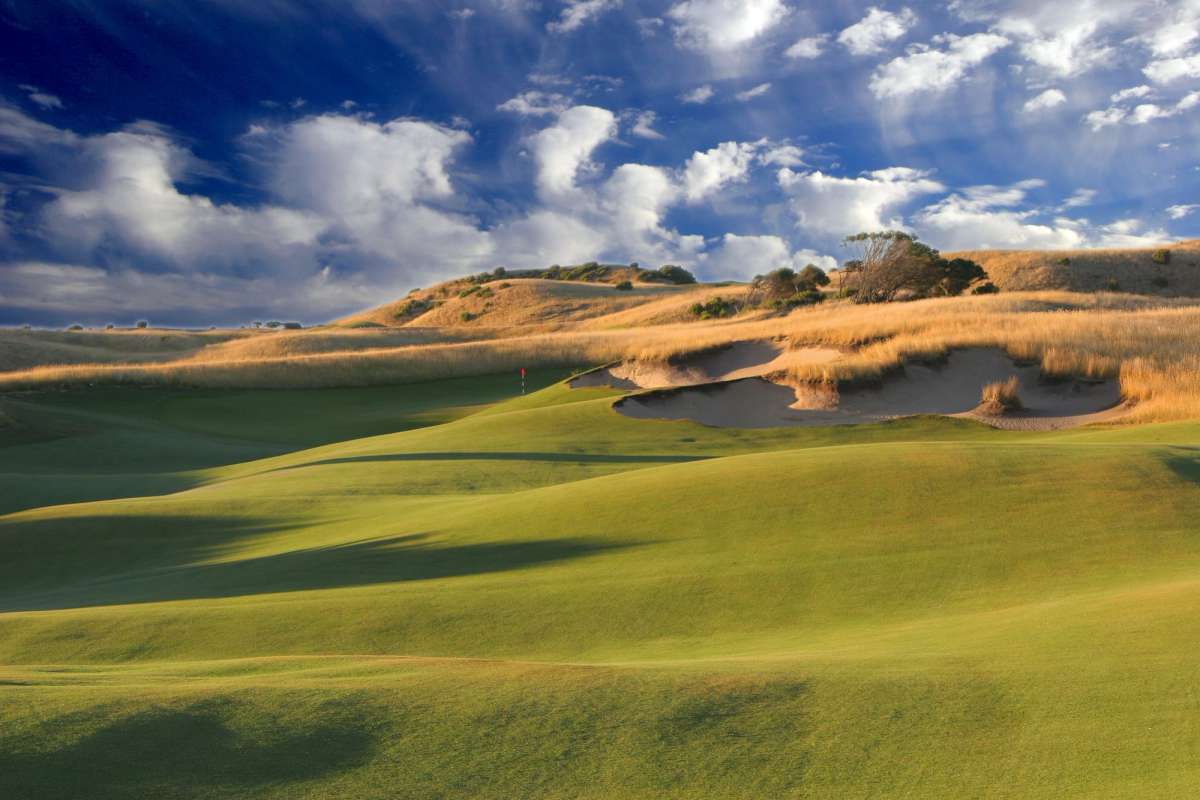
Melbourne is located in the southeast corner of Australia. A major urban hub, it is the golf capital of Australia. Sydney has New South Wales, Brisbane has Royal Queensland, and Adelaide has Royal Adelaide but Melbourne is replete with world-class golf in abundance. It also has a depth that other Australian cities cannot match. Melbourne, The Sandbelt, and The Mornington Peninsula The term Sandbelt has become synonymous with Melbourne as a whole but it is a little more nuanced than that. Melbourne sits on the north side of Port Philip - a large bay that has the Mornington Peninsula on the east and Gellong on the west. The Sandbelt is found south and east of the Central Business District of the city. Strictly speaking, the famous 'Sandbelt Courses' are Commonwealth, Kingston Heath, Metropolitan, Peninsula-Kingswood, Royal Melbourne, Victoria and Yarra Yarra. In this synopsis, we will be looking at golf in the Sandbelt but also on the Mornington Peninsula as you would normally take in golf here in this area as a whole. World Top 100 Tier In the space of a few miles, Melbourne is host to perhaps the best collection of golf courses in a single neighbourhood. Royal Melbourne West leads the way. The Alister MacKenzie design is one of the all-time greats and would probably be even higher than 6th in the world if it wasn't located almost at the end of it... Photo Courtesy Gary Lisbon - Royal Melbourne Kingston Heath is up next. Kingston Heath is a proper heathland with a rare species of heather found only here. It is 1 of 1 and outshines the big London-based heathlands of Sunningdale Old, Sunningdale New, Swinley Forest and St George's Hill. It is the best heathland in the world despite not being in the home of heathland golf - it is that good. If you got an invite, you could play one or the other and no more and the trip down under would be worth it. Photo Courtesy Gary Lisbon Kingston Heath In Melbourne, the next two golf courses near the World Top 100 are Victoria and Royal Melbourne East. Victoria is an intricate routing and has recently completed fine work. Royal Melbourne East is sneaky good and adds six holes to the composite course, which may just be the best golf course in the world. Tom Doak is responsible for the East's current iteration based on Alex Russel's framework. The Newcomers The new kids on the block are Peninsula Kingswood North and South. After joining forces, two clubs became one, sold off some land and heavily invested in their two courses and clubhouse. The result is nothing less than spectacular. The North is making waves and some have it earmarked for World Top 100 consideration. The South is strategically sound but not as visually stunning. Every hole is good, but the North is more memorable with some cracking holes in incredible settings. Photo Courtesy Gary Lisbon - Peninsula Kingswood Old School Charm The old-world classics offer charm and class the flashiest new builds seem to lack. The three big names in the immediate area of note are Commonwealth, Yarra Yarra, and Metropolitan. Here, Tom Doak and Renaissance Golf Design have made their impact felt with Yarra Yarra and Commonwealth recently upgraded and refined. Metropolitan has also seen local firm Crafter & Mogford refine the more recent additions to make a cohesive whole. Photo Courtesy Gary Lisbon - Yarra Yarra Sample Itinerary Royal Melbourne West has to be on the top of anyone's wish list. Visitors are welcome on Mondays, Tuesdays, and Fridays. Kingston Heath allows visitors on those days and additionally on Thursday afternoons. Victoria is happy to hear from visitors but you can play any day if you stay on-site in their Dormie accommodation. Peninsula Kingswood operates on a similar system with visitors requiring prior application and approval before arriving on site. Metropolitan allows visitors most weekdays. Yarra Yarra and Commonwealth allow play seven days a week, especially if booked well in advance. Hence, in a single week, it would be possible to play the lot. With some careful planning. If you can get the anchors booked in, the rest should fall into place given enough time and notice. Be advised, that in Australia, you often need a letter of introduction and a handicap certificate for access at most clubs. As well, unaccompanied play as a visitor is not inexpensive. You can expect to play anywhere from $500 to north of $1000 AUD to play some of the courses listed above... Test Melbourne's Depth Within an hour or so, you have a plethora of great golf. The National Golf Club has three golf courses that anyone would enjoy. The Gunnamatta is Tom Doak's contribution, with Greg Norman's Moonah and Robert Trent Jones Jr's Old Course providing appealing additions or alternatives. Perhaps the best value of all, is St Andrews Beach. A collaboration between Tom Doak and Mike Clayton is superbly routed and one of the most pure golf experiences I've ever enjoyed. At $115 AUD or about £60, I'd happily play 36 here in a day. As it is a public pay-and-play, rounds can be lengthy as many aren't private golf club regulars who play ready golf, quickly - get out early. Photo Courtesy Gary Lisbon - St Andrews Beach Other options nearby like Cathedral Lodge, The Dunes Golf Links, Moonah Links, and Portsea are worth seeing if the others have been filled or the diaries don't sync. Getting to Melbourne The West Coast of North America is well serviced with direct flights to Melbourne from Vancouver, LA, and San Francisco. From the UK, there are no direct flights with most layovers at hubs in the Middle East and Asia. Getting Around You drive on the left side of the road or drive right-hand drive vehicles. Put another way, you drive on the opposite side down under than you do in America or the same as the UK. Car hire is easy and all the usual suspects are here. The airport is undergoing major renovations as of 2025, but it works well. Spend Time in Melbourne On golf destination holidays, its easy to cram in the golf and forget about the experience. However, few cities hit like Melbourne - food, drink and vibe are all worth soaking up. If you visit in January, the Australian Open (tennis) runs just about all month. It is an international city that is worth a day or two to see. Remember the Sunscreen I've not been caught out in four trips to Australia but the sun here and in New Zealand is next level. Wear UV 50+ sunscreen and a hat. Even the locals wear broad-rimmed or bucket hats instead of ball caps. In fact, it was observed many were now wearing protective arm sleeves as well. If the locals take it seriously, you should too!

