Host to four US Opens, the Lake course at Olympic Club is a serious challenge. Take your stabilisers and expect few level lies on these sloping fairways.
Overall rating

4.5
Host to four US Opens, the Lake course at Olympic Club is a serious challenge. Take your stabilisers and expect few level lies on these sloping fairways.
The latest ranking of the Top 100 Golf Courses in the World serves as the ultimate global golf bucket list. Most members of our World Top 100 Panel are seasoned golfers, each playing 20-30 of these courses annually while travelling extensively over decades to form their opinions on others. We recognise that opinions vary—even among our panel members. Rankings are subjective, and there are undoubtedly 50 or more courses in the UK and USA alone that could easily fit onto this list. Links Golf Pilgrimages The rankings
California, United States
New Jersey, United States
Northern Ireland, United Kingdom
New York, United States
New York, United States

East Lake, Atlanta Athletic Club, Cypress Point and Olympic Club - four different ways to make golf very special by Javier PIntos During the last two months I had the chance during two trips to the USA to experience four private and very exclusive golf courses. All four are steeped in golf history and have hosted major events in the past. On April 1st, my friend Gastón Morgan and I had the chance to play both Atlanta Athletic Club (Highlands) and East Lake in one day after a 10-hour flight from Buenos Aires. It was one of the most special golf days I have ever had, playing two venues that are very special and also very different from each other. On May 19th, after two long flights from Buenos Aires to San Francisco, I drove directly to the first tee at Cypress Point to play it for the second time (first in 2011) with my friend Lucas Raznoznik and on May 20th we played the Olympic Club (Lake) which was a true test with an added bonus of playing the Cliffs course after lunch, which made for another very special golf day. The purpose of this article is not to review of each course, which I have done separately here at Top 100 Golf Courses (click the links above if you'd like to read my reviews), but to mark the differences between these venues and how each manages to make a visit unique in four very different ways. Of course there are aspects which are shared, but the experiences are all different. The Golf Courses The two features that mark the biggest difference between golf courses around the world come from the designer and the piece of land used to construct the golf course. Then you can put the grasses used to cover the surfaces, the landscaping and the climate in the region. Finally, but no less important, the maintenance, the type of sand, bunkers shaping and attention to detail where you will see the difference between very good venues and those you know are different from the rest. During these two trips I was able to see four very different courses and all of them have their own greatness. East Lake was the first I played in a 36-hole day during April. It is a true classic, a parkland with some great level chances and very challenging holes for an amateur. Greens are not big but they are firm and very fast, with the grain of the grass marking a huge difference... when it is in your direction (very fast putts) or against you (super slow ones). I had some situations where it was really impossible to leave it close to the hole... on the par five 15th I three putted from 8 feet without hitting a bad stroke. There are many tee shots which require power but there are also many where skill is much more important as you will need to fade or draw the ball to get a good angle to the pin. Missing greens often makes it very tough to have a chance of an up and down due to speed and slopes. But the course is fair and true, nothing is hidden and on a good day you can match your handicap. What's great about East Lake is that it's very playable for bogey golfers; the only forced carry is on the par three 6th, but it's a short iron even from the tips. As it's a regular PGA Tour venue (The Tour Championship) you visit familiar places and even try to replicate some shots. Unfortunately I could not try the Bill Haas recovery at the 17th because when they played the water level was 6 feet lower due to the dry summer that season. What is great about Bill's shot is that from where he was he could not see the higher part of the flag. After lunch we drove 20 miles to arrive just before our tee time at Atlanta Athletic Club and play the Highlands Course (host of the 2011 PGA Championship won by Keegan Bradley). So close to East Lake and yet so different. The Club has two courses, Riverside and Highlands, which despite being laid out over similar ground they are very different from each other. Even the front and back nines are very different on the Highlands course. The first nine is flatter and straighter with fewer doglegged tee shots and where almost always you see the green from the tee. But in my case I found it harder to score on the front side, finding holes 1, 8 and 9 the tougher holes. In my opinion, the back nine is better and more enjoyable to play, starting with two great par fours, with 11 a downhill dogleg left where the more you risk with the simpler the approach. Despite being tired on the back nine, I played really well hitting all nine GIRs but couldn’t score lower than even par as the greens were fast and with deep slopes, which sometimes made it very tough to get close with the first putt. We played the 6,900-yard tees and it was wet with drives only rolling a couple of yards. It was a monster. The pros played it from 7,600 yards in 2011, they play a totally different game. The par three 15th was where Dufner found the water and tripled, I managed to hit a 210-yard 4 iron to 25 feet but had a very hard job to get down in two putts. It is one of the toughest par threes I have ever played, but the forced carry needed on the 17th is also hard as a mishit shot will always end wet. We played the 18th as a 520-yard par five... from the same tee the pros played it as a par four. If I have to compare these first two courses, I have to say that for a scratch golfer they are both resistant to scoring, but for a bogey golfer East Lake is much more playable and enjoyable. At AAC a bad round for a bogey golfer can turn into really high numbers and common to both is that you need to be really good with the short game around the green. It's maybe the biggest challenge. Cypress Point… evokes the Wow! It was my second visit here and my only regret was not being able to enjoy more pre-game time as I arrived just in time to tee off after only hitting a couple of putts. This 6,700-yard classic course is a design jewel, as it has been untouched since it was created and remains just as it was. There are many aspects that make it unique: the quality and challenge of the greens, the variety in the design of the holes, the challenge and risk/reward situations (5, 8, 9, 16 being the more remarkable ones). It's true that if you look back down the hole from the greens, you won't see a single bunker (this camouflage technique was learned by MacKenzie during the war). I don’t wish to describe every single hole but I'll just mention some shots that are worthy. The second shot at the par five 5th hole is maybe one of the most engaging, but if you don't have a good lie you can’t go for it. The tee shot on 8th is where you can attempt to cut the dogleg - it's one of the most clear risk/reward situations I have played. Then on the 9th tee you feel that you have to go for it but a miss can be a disaster. Finally the 16th needs a carry of 220 yards to remain dry. Some people, including Tom Doak, think the 18th is a bad hole. In my opinion it's one of the greatest closing holes where you need two solid shots and a hot putter not to card a bogey. It is true that if they decide to change it and play it close to the 16th it could be a better hole, but as it is I love it! The course will never change, it is the playground of its members, it is a place where you play fast and where walking is one of the most enjoyable parts of the round. But if you can’t putt you will not score because the greens are the toughest challenge on this course. Not only that, holes 15, 16 and 17 are maybe the best trio of consecutive golf holes in the world. For bogey golfers it's another course that they will enjoy (the member who hosted us couldn't drive it further than 200 yards and his only lay up was at the 16th where he couldn’t carry the water and he made a very easy bogey!). The Olympic Club Lake Course is markedly different from the first three. From the opening hole to the last it shows it's a US Open venue. The rough wasn't as long as for the Open, but it was tough enough and the greens were running at 12 feet on the stimpmeter. A round of golf here is a true scoring challenge and every missed shot will be punished. But with no water and no forced carries, it is another course where a bogey player who can putt will have a very enjoyable day. It was not the best of the four courses, but there are some elements that are really charming. From the elevated tee on the par three 3rd hole you can see the Golden Gate in the distance, then there's the uphill par three 8th hole which heads to the clubhouse... it's one of the loveliest spots on the course. The par five 16th is a monster and the tee shot on the 18th is maybe the nicest shot you will hit on the course. The greens are big, very tough to read, fast and sloping, but they are true. Some tee shots require skill to draw or fade the ball to flight it to the correct spot. I scored very similarly on the four courses, but some weeks later I feel that it was the Olympic Lake course that really tested me; every missed shot punished me - I missed 6 GIR and could not get up and down. I even doubled holes 1 and 12 from beside the green. If I was asked to select one of these four courses to play tomorrow there are two possible answers: If I want a nice enjoyable walk, I'd choose Cypress Point, but if I want to test my game the choice will always be the Olympic. There are reasons that would make me choose East Lake (the clubhouse and staff hospitality) or Atlanta (the back nine for match play is really great). But ultimately I'd always choose the No.1 course in the World! The Pro Shops The pro shop is the place where visitors get their souvenirs and memories from their visit to these venues. There's a very big difference between Cypress Point and the other three pro shops. Cypress has a very nice but small shop where you can buy the typical stuff (shirts, sweaters, hats, club covers, pitch markers, cap pins, etc.) but where the two things I like most (pin flags and bag tags) are not available. The other three courses have much larger shops, with a wider variety of souvenirs and memories you be purchased. It is not that Cypress has no stuff, the shop is smaller because the course sees less rounds played than the other three. However, one interesting thing I brought from Cypress was the book “The Match”, which is a mandatory read after you have played the course. The two courses, Atlanta and Olympic, used to have a lot of corporate play and outings, which is why I think they are bigger and offer wider variety. Naturally I bought many things from every one! The Clubhouse Again Cypress is different to the other three. The first thing is that if you're not with a member, you cannot use the bar, grill and clubhouse, just the locker room (in 2011 I had an unaccompanied foursome, we left immediately after the game and pro shop purchases). The member who hosted us this time had to leave quickly, so we had just a short opportunity to walk around the clubhouse. I have to say the terrace facing the 16th hole is the best I've seen, no argument. Olympic’s clubhouse is immense, maybe necessary to host its 1000+ members. There are lots of spots where you see memories, pictures, scorecards and more from past US Opens. Atlanta Athletic is like a mix between a resort course and private clubhouse, big and with places where memorabilia from past tournaments is kept. The clubhouse at East Lake is something really special where you will find the memories of Bobby Jones everywhere. One of the most special things I found is the scorecard of the final golf round of his life. As a guest of a member you are allowed everywhere and the club staff proudly tell stories about the history of the club. It is a tough choice, but my favourite is between the simplicity of Cypress Point and the museum style of East Lake, both are very enjoyable to visit after the round of golf. The Locker Rooms All four were nice but I would say the only one not reaching "special" was Atlanta Athletic. I will say that East Lake, where I used Rory McIlroy’s locker, was my favourite. Cypress is small but the pictures shown there are pure history and display how extraordinary the course is, whereas Olympic is huge, with memories of past events everywhere. My small suggestion is that if you are invited to any private club you always take a look at the locker room.. History and Past Events Cypress Point has hosted the AT&T National ProAm in the past, but unfortunately for those who don’t know the course it is not likely to return here. It is the member’s playground and they just like to share it with their friends and guests. Of course pros will be allowed during the week of the ProAm. Caddies here are excellent and always have a story, Andy Bean being -7 at the 11th tee and scoring 80 is my favourite! If you are lucky enough to play here, you simply have to buy and read “The Match”. It's one of the best golf books I've ever read. For the Olympic Club you have to study their US Open stories and you'll learn much. My caddie showed me a lot of spots where historic shots were played, but the bush that buried Jim Furyk’s chances in 2012 is the most notorious as the tee shot was akin to a 24 handicap golfer rather than a pro! East Lake will always be special and holds a deep history related to Bobby Jones, but hosting The Tour Championship for a number of years has provided a lot of background on the current Tour Players and being able to use their lockers is the nicest touch. When playing the course you have to go to the 17th where Bill Haas played that dramatic hazard shot. From where he was you won’t be able to see the top of the flag! Atlanta Athletic hosted a wonderful 2011 PGA Championship and there is a lot of information about it and also about Bobby Jones, along with other past events. There are rooms specially dedicated to history and I always like to spend some time finding out what happened there. But remember that this course plays really tough and from the very back tees it's a monster. By Javier Pintos javier@wegolf.com.ar www.wegolf.com.ar

The message of great, strategic golf course architecture is clear. The actual words used to describe those golf courses, however, are many. The Architecture Glossary column will examine more precise terms and concepts that one will find when exploring golf course architecture. Hopefully understanding these terms, and why certain architects employed them, will help you to better understand the golf courses you play…and maybe even improve your scores! Today’s term is ‘Reverse Camber’. Most golfers experience the same patch of bad luck (or bad placement) during any given round…the bad lie. Sometimes the ball is sitting below the feet, leading to a shot that sprays hot and away from the player, and sometimes a lie above the feet causes it to hook drastically inward in line with the swing. Often, this is the result of a bad shot finding slope on the outside of a hole. But what if golf course architects were to intentionally position fairways so that players would be required to deal with a tricky lie in order to score? This concept is known as “reverse camber.” As we’ve discussed in a number of terminology posts, some greens are strategically designed to attract a draw or a fade. Playing from a level lie, a skilled golfer will shape the ball accordingly in order to find the green in regulation. A number of architects decided to ratchet up the challenge for championship golf, however. One can see how the angled fairway leading up to the No. 10 green at Olympic Club's Lake course makes the necessary draw a tough proposition. (Photo Cred: P.J. Koening) For example, a green may call for a draw (from a right-handed player). The architect has designed this green with the knowledge that the fairway tilts downward from left-to-right somewhat aggressively. This means that a well-struck tee shot will likely come to rest at an uncomfortable angle on the slope. The typical player (right-handed) will need to hit a draw if they want to score, but the angle of the lie amplifies the difficulty of hitting that shot. This concept comes to public awareness most often, it seems, during any event held at Olympic Club’s Lake course, where the San Francisco slopes set William Watson up for angle-based design attacks. Perhaps Olympic gets the most attention for utilizing reverse camber because an early trio of holes flexes the test in both directions. No. 2 doglegs right toward the green, yet calls for players to hit a fade off of a fairway that starts high on the right and slides down to the left. No. 4 reverses the logic, requiring players to attempt a draw around a dogleg left while the lie sits well below their feet. The next hole finds players looking for an awkward above-feet fade once again…but this time the par four stretches to 500 yards. What’s the appeal of reverse camber at big-time championship courses? It’s the rare trait that has not had its fangs dulled by advances in technology. Although modern clubs have added significant distance for the modern pro, it’s possible that those advances have also dampened players’ ability to shape shots in both directions. So, while the original members at Olympic were certainly challenged by the Lake course’s odd lies, those shots were less daunting at the time. Combine the ample use of reverse camber with Olympic’s small greens and trees, and it’s reasonable that Webb Simpson managed to win the 2012 U.S. Open despite finishing above par. It’s somewhat ironic that Olympic draws all the attention for reverse camber as, after all, perhaps the world’s most famous golf course is also among the most eager subscribers to this technique. It also happens to host a major every year. Augusta National's No. 10 hole is one of many at The Masters' host that uses reverse camber to test a player's approach shot. (Photo cred P.J. Koenig). Ask an attendee to The Masters for their thoughts on walking Augusta National, and they’ll respond that no matter how dramatic the land looks on television, it’s twice that bold on the ground. Players comment frequently on the hidden nuances of Alister MacKenzie’s greens, but they also profess that a shot in the fairway is hardly a guarantee for a green-in-regulation. Among the holes that best demonstrate this is No. 10, the lengthy par four renowned for its rapid descent from the top of the property. Less discussed is how the fairway also slopes from right-to-left, and the difficulty that adds for a player looking to hit the proper fade uphill to the green, when the ball is likely above their feet. Although it took relative eons for the first left-hander to win a green jacket (Mike Weir during 2003), three wins for Phil Mickelson and two for Bubba Watson makes one wonder if the camber might fall in their favor. As has been the case with several entries in the terminology series, MacKenzie was a frequent participant in reverse camber. Another famous design from his pen that features the strategy, clear on the other side of the world, is Royal Melbourne’s West course. The combination of an awkward lie and Melbourne's notorious greenside bunkers makes the approach into West's No. 17 a tough one. (Photo cred: Gary Lisbon) No. 17 may be the most clear example. The bunkering at both the fairway and green suggest this is a traditional dogleg; play too far from the fairway bunkers on the left, and your angle into the green will be impeded by one of the course’s iconic greenside bunkers (on the right). That said, hug the inside of the dogleg and a new challenge emerges: This portion of the shortgrass tilts inward, adding difficulty to the fade that a player was hoping to hit into this green. Few design elements have as immediate roots to the game’s origins as reverse camber. Even before strategic golf course architecture came to be, players on the bumpy linksland of Scotland realized that they owed some amount of their fortune to luck; a straight tee shot could just as easily settle into a flat lie as come to rest on the side of a mound. Success in matches often came from one’s ability to manage the lies provided by the sandy soil’s spontaneity. Harry Colt's use of reverse camber at Muirfield (No. 14) and other courses marked a transition from the "luck of the linksland" to more strategically-considered elements in British golf. (Photo cred: Gary Lisbon) Eventually, Britain’s great golf course architects came to utilize the lay of the land as more than just luck of the draw. One example is the subtle rightward cant of No. 14’s fairway at Muirfield. It’s one of the holes Harry Colt contributed to the club, calling for a drive that hugs the three bunkers along the left fairway, and then the ability to guide the approach shot down the left side of the fairway into the green, without being thrown off by the ball’s placement just below the player’s feet. A shot involving reverse camber remains one of the toughest in the game — and that’s for professionals, much less mid-handicappers. The architects of yore realized it would be asking the common man too much, and that’s why this shot is most prevalent, as seen in the examples above, at championship-caliber courses.

Top 100 Golf Courses of the USA 2016 Our latest US Top 100 is unveiled Welcome to the sixth edition of our biennial Top 100 Golf Courses of the USA. Each of the previous five editions of this ranking list featured Pine Valley at the top of the chart. Those that have been following our recent re-ranking releases will already know that Cypress Point has displaced Pine Valley from the top of the World Top 100 rankings. Therefore it will be no surprise to hear that Cypress heads our new US list. A recent report from the R&A entitled “Golf around the world 2015” states that there are now 15,372 golf facilities nationwide, a figure that represents approximately 45% of the total number throughout the world. This latest US Top 100 list is the second most fiercely contested ranking table behind only the World Top 100. Undeniably America is the strongest golf course nation on the planet. We used more data input than ever before to form this latest US hundred and there’s really very little change within the Top 20 (only minor movement) which suggests we’re getting things about right. Both Camargo, up nine to #29, and Garden City, up five to #30, move into the Top 30 for the first time – Olympic Club (Lake) and Bandon Dunes make way. Old Town Club in North Carolina, home of Wake Forest University Golf, crashes into the top fifty as a brand new entry. Sean Arble originally nominated OTC as a gem back in 2008: “The feeling of being on a course of grand scale is further enhanced by the recent (and continuing) felling of many trees which afford lovely interior views. If you plan to be anywhere near Winston-Salem it is worth a bit of grovelling to play Old Town. Even Tom Doak thought so.” A recent renovation by Bill Coore and Ben Crenshaw has catapulted this gem into the top half of the national rankings and Fergal O’Leary – the man who played the entire US Top 100 in just four years at the age of 28 – was suitably impressed when he played OTC earlier this year: “It’s the best piece of land for a golf course I’ve seen in this country. The routing across the changes in elevation is, in my opinion, Maxwell’s best course on earth.” The California Golf Club of San Francisco (aka “The Cal Club”) moves into the top fifty, up seven to #47, for the first time. The recent Kyle Phillips restoration used 1927 as a benchmark when Dr Alister MacKenzie re-bunkered the course. Fergal said: “The restoration has been the catalyst for the club’s rising national and world ranking, and I can only anticipate continued future success.” It’s hard to fathom the reason why Golf Digest didn’t place this genuine classic in their 2015 US Top 100 (ranked #136 in their second hundred). It just goes to show how opinions dramatically vary. Tom Fazio’s Gozzer Ranch moves into the top half of the table, also for the first time, leaping seventeen places to #50. Idaho’s flagship layout divides opinion between the two big-hitting American glossy magazines – Golf Digest #30 and Golf Magazine #81. We think it slots more comfortably in between and Fergal reckons: “It is far and away the best Tom Fazio track I have ever played. It doesn't look like a Fazio, feel like a Fazio, or play like a Fazio… The course definitely grows on you through the round while you try to convince yourself that Ben Crenshaw didn’t sneak in after dark and cut out a few bunkers with his shovel before the sun came up again.” Eastward Ho! is a brand new entry in our national US Top 100, straight in at #62. This old classic has been ranked highly for years within our Best In State rankings and has finally entered the national list. About time many will say. Fergal recently commented: “Thank god Herbert Fowler created a golf course on this roller-coaster piece of land on the elbow of Cape Cod, Massachusetts. Quirky, fun, thrilling, exhilarating and exciting are adjectives commonly used to describe this old layout. What it lacks in length, it makes up for with spectacular design, eye-catching angles and dramatic landforms.” Herbert Fowler is best known for his work at Walton Heath, but he also re-shaped England’s oldest golf course at Westward Ho! on the opposite side of the Pond. Oak Tree National (#80), Erin Hills (#93), Shelter Harbor (#94), Dismal River's Red course (#97) and Fox Chapel (#99) join Old Town Club and Eastward Ho! to make a septuplet of brand new entries. We also welcome back Michigan’s 9-hole answer to Pine Valley. We controversially ranked Mike Keiser’s Dunes Club in our inaugural 2006 US hundred and its return to the national ranking table will come as no surprise to those who’ve played here. Many golf course aficionados rate the “sacred nine” at Mildenhall as the world’s best nine-holer. Surely Royal Worlington & Newmarket cannot be seriously considered to be better than The Dunes Club? We don’t claim that our latest US Top 100 is definitive – how could that ever be the case? We also suspect our new US Top 100 will not gain universal approval, but we’ve given these latest rankings even deeper consideration than before. Just for the record, I’d like to remind you that Top 100 Golf Courses is truly independent and we have no association with any magazine publication. Feedback is always welcome, so please feel free to let us know what you think of our latest 2016 US Top 100. Have we omitted a course that really should be in our rankings, or have we included a course that really doesn’t deserve to be there? Maybe there’s a particular layout that’s riding too high or perhaps there’s one lying too low in the standings? Please click the “Respond to this article” link at the top and bottom of the page if you’d like to share your opinion. If you’d like to help improve our US golf course rankings, please get in touch. Our new Best In State rankings will be published soon, so please keep an eye on the Top 100 website and our social networking channels for the latest updates. Finally a big thanks to everyone (especially Steve MacQuarrie) who has taken the time to post many colourful course reviews. Please keep them coming, it’s your reviews that I enjoy reading most of all. Keith Baxter Editor-in-Chief Top 100 Golf Courses Click to see in detail our new 2016 Top 100 Golf Courses of the USA. The eight courses that made way for the new entries are: Medinah (No.3), Kapalua Plantation, East Lake, Black Wolf Run (River), Alotian, Wannamoisett, Dallas National and Holston Hills.
The Olympic Club was founded in 1860 and it is the oldest athletics club in America. After the Great War, the sporting Olympic Club decided to get into golf and purchased the Lakeside course from the financially struggling Lakeside Country Club.
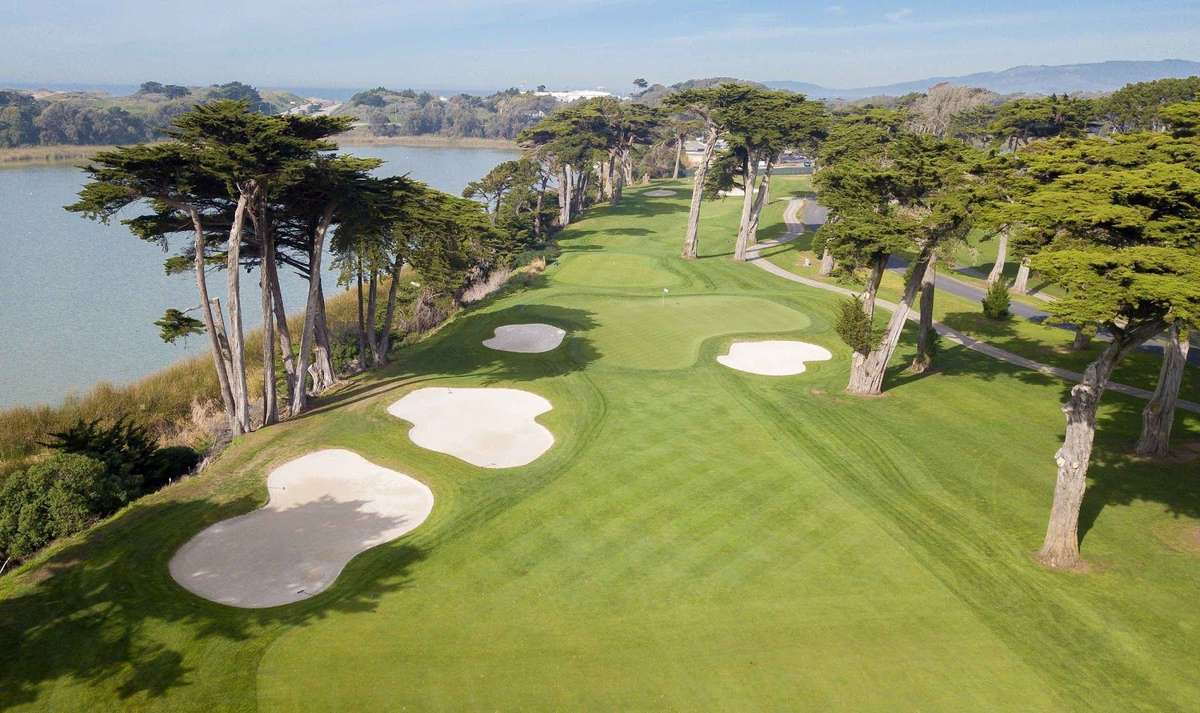
The course had been built on the landward side of a barren strip of hillside, which separates the Pacific Ocean from Lake Merced, the largest freshwater lake in the San Francisco area (hence the name of the course). Set on the seaward side of the hill is the Ocean course, which also belongs to the Olympic Club.
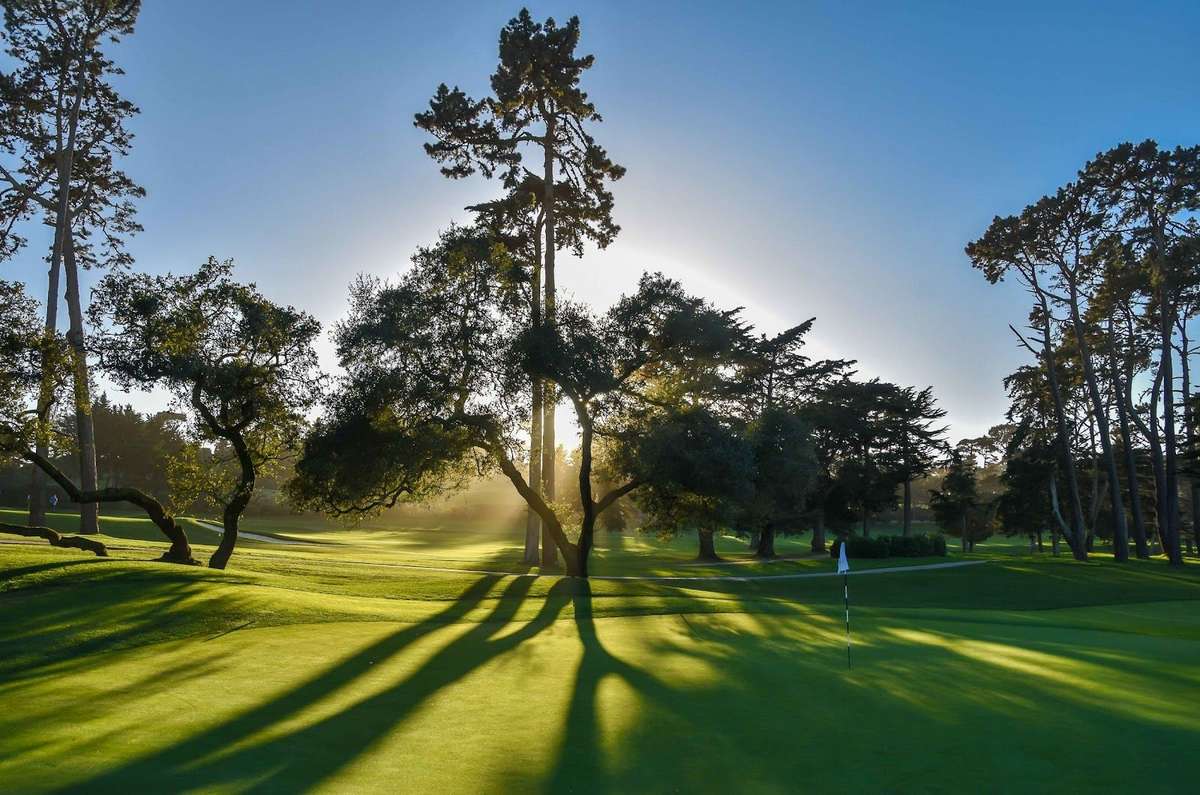
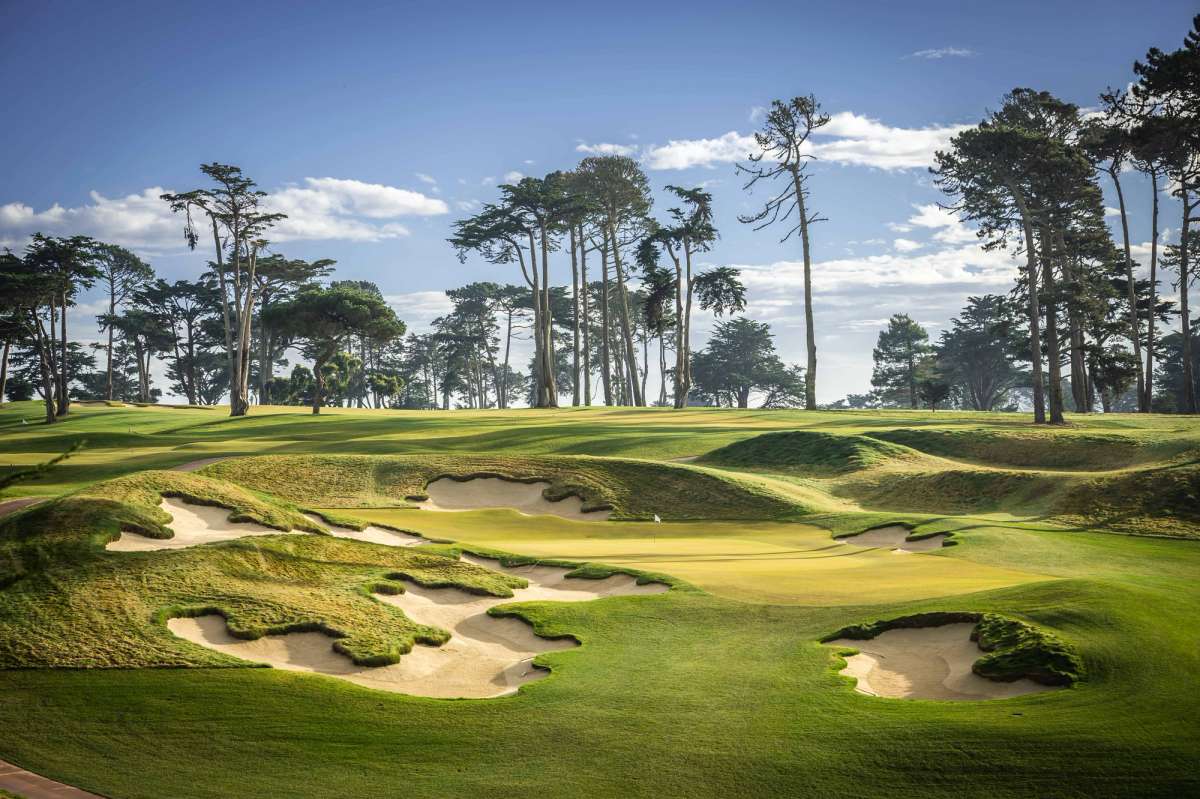
Trees are the predominant feature of the Lake course (in distinct contrast to the Ocean course) but they were planted after the acquisition to add definition to the desolate sloping topography. Despite its name, there is not a single water hazard on the Lake course – and there’s only a single fairway bunker on the entire course. You can’t lose a ball unless you get it stuck in a tree and, according to Olympic legend, three branches were once lopped from a tree and 150 balls fell out. You have been warned!
Host to five US Opens, the Lake course is a serious challenge. Take your stabilisers and expect few level lies on these sloping fairways. Don’t expect too much respite once you reach the sanctuary of the small greens either, because most of the putting surfaces seem to present you with permanent downhill putts. What’s more, the greens are lightning fast and if you miss with your approach shot you’ll be in the vicious rough.
It’s not that easy to get a game here, so we recommend that you befriend and member at your earliest opportunity. The Lake course, which is no longer visibly beside the lake, is a daunting experience.
In November 2017 the PGA of America announced that the Olympic Club will host the 2028 PGA Championship and the 2032 Ryder Cup, the latter event will now take place in 2033 due to the COVID-19 pandemic. It will be the first time the Lake course has hosted either event.