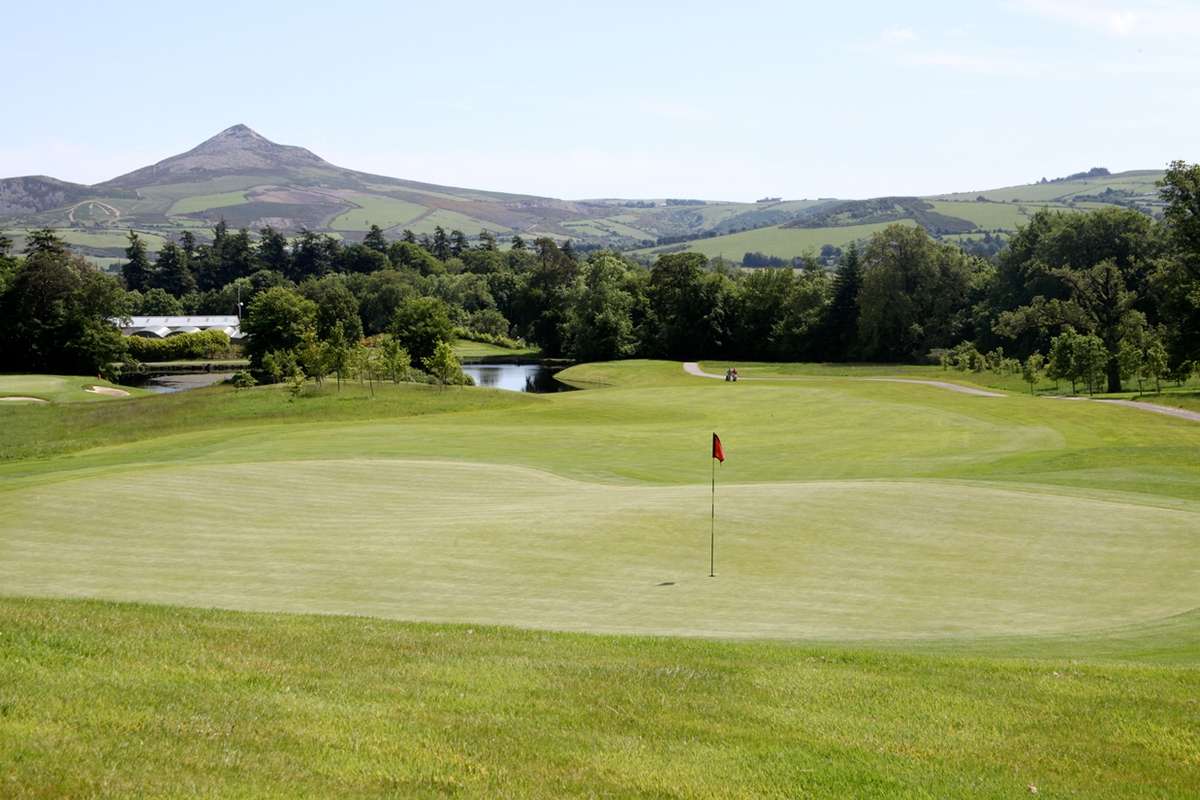
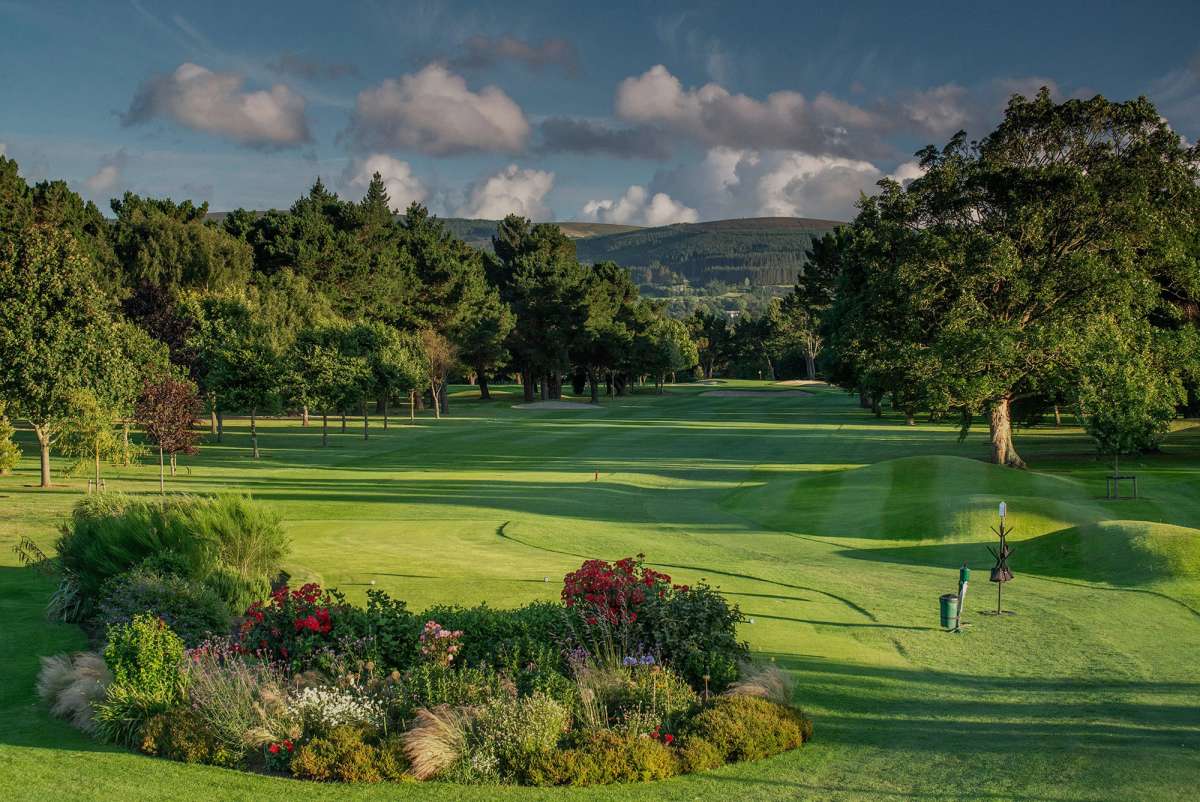
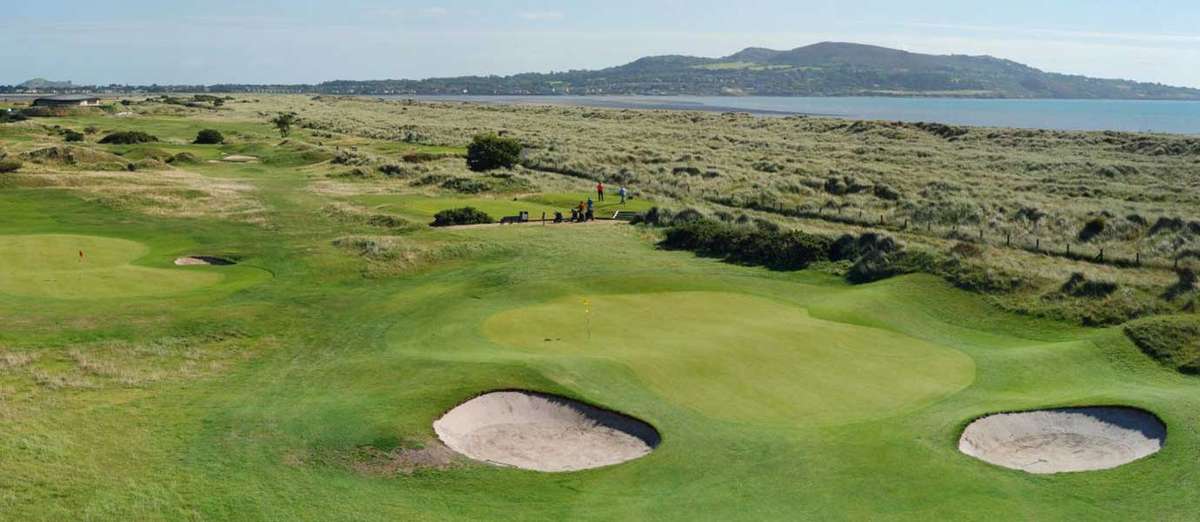
Woodbrook Golf Club is a lovely parkland course sitting on cliffs overlooking the Irish Sea at Bray, just south of Dublin.
Woodbrook Golf Club is a lovely parkland course sitting on cliffs overlooking the Irish Sea at Bray, just south of Dublin.
Woodbrook Golf Club is a lovely parkland course sitting on cliffs overlooking the Irish Sea at Bray, just south of Dublin. Peter McEvoy redesigned the course in 1998 when USGA standard greens were laid in preparation for the Irish Seniors Open. As he said at the time, “Woodbrook had history, ambience and class. Golf and its high-tech equipment had outgrown its challenge…design changes will prove to have redressed this balance and places Woodbrook back at the top of Irish championship venues.”
The main railway line south of the capital runs through the course and must be crossed after playing the 4th and 17th holes. It is said that in the recent past, members could pull a switch to stop the next train traveling north to Dublin or south to Bray if they required transportation!
The course stretches to 6,863 yards from the medal tees and has a hole configuration of five par threes, eight par fours and five par fives, giving a par of 72. There are many stands of mature trees and strategically placed bunkers around the course. Greens are generally large and gently undulating though several are tiered and hard to read.
The latest ranking of the Top 100 Golf Courses in the World serves as the ultimate global golf bucket list. Most members of our World Top 100 Panel are seasoned golfers, each playing 20-30 of these courses annually while travelling extensively over decades to form their opinions on others. We recognise that opinions vary—even among our panel members. Rankings are subjective, and there are undoubtedly 50 or more courses in the UK and USA alone that could easily fit onto this list. Links Golf Pilgrimages The rankings
California, United States
New Jersey, United States
Northern Ireland, United Kingdom
New York, United States
New York, United States

Links golf changes with the seasons, and knowing when to go can make a big difference to a trip. Summer brings long days in Scotland and Ireland, while winter offers the chance to head south to Australia and New Zealand. Spring and autumn can also be good times to play, with different conditions and green fees to consider. Here's a look at where to play throughout the year, with options for different budgets and travel plans. Winter (December–February): Follow the sun south While winter brings the links season to a close at many courses in Britain and Ireland, it's summer in Australia and New Zealand. For golfers keen to keep playing through December, January and February, the Southern Hemisphere has some excellent options. Tasmania is a good place to start, with Barnbougle Dunes and Lost Farm sitting next to each other on the island's north coast. Tom Doak and Mike Clayton designed Dunes, which follows the natural contours of the towering dunes, with plenty of uneven lies and the wind rarely far from play. Lost Farm, designed by Bill Coore and Ben Crenshaw, takes a different approach to the same landscape. The 20-hole course moves between the dunes and more sheltered ground, giving golfers a different test from its neighbour. Playing both gives golfers two different tests in the same part of Tasmania. Cape Wickham, on King Island, is another option for those happy to travel a little further. The course winds through sand hills and limestone outcrops before returning towards the coast and the lighthouse that gives the property its name. The closing hole wraps around a sandy bay, with the shoreline providing a memorable backdrop to the finish. New Zealand has plenty to offer, too. Te Arai Links, north of Auckland, has two courses on a sandy stretch of coast. Bill Coore and Ben Crenshaw's South Course brings several holes right alongside the Pacific, while Tom Doak's North Course moves between the coastline and forest before returning to the sea for its closing holes. For a different kind of test, Paraparaumu Beach Golf Club, near Wellington, is one of New Zealand's best-known traditional links. Designed by Alex Russell in 1949, it has hosted the New Zealand Open 12 times. Wind can make club selection difficult, while the split fairway on the 17th gives players a choice of routes rather than a simple shot to the green. These destinations still get their share of bad weather, and reaching Tasmania's island courses takes more planning than a conventional city break. But for golfers willing to travel during the European winter, they offer the chance to play some excellent links while much of the northern hemisphere waits for spring. Green Fees: Barnbougle The Dunes & Lost Farm: A$285 Cape Wickham: A$315 Te Arai Links (North & South): NZ$975 Paraparaumu Beach: NZ$275 Spring (March–May): Get ahead of the summer rush Spring is a good time to start planning a links trip in the UK. Daylight increases through the season, and April and May can offer a chance to play some of the country's best courses before the busiest summer weeks arrive. March is less predictable, with cold, wet and windy conditions still very much part of the deal. Kent is an obvious starting point. Royal St George's, in Sandwich, has hosted The Open 15 times and is known for its undulating fairways, awkward lies and deep bunkers. The enormous bunker beside the fourth hole is one of its most recognisable features, but there are plenty of other places where a wayward shot can make the next one difficult. Royal Cinque Ports, known locally as Deal, is only a short distance away and makes a natural addition to a two-course trip. It's an exposed links that can be particularly demanding when the wind gets up, with the closing stretch a stern finish after a full day's golf. Playing both courses over a couple of days gives visitors two very different tests without spending much time travelling between them. Scotland has good options for a spring trip, too. North Berwick's West Links is one of the most distinctive courses in the country, with views across the Firth of Forth and a variety of holes that reward more than just hitting the ball as far as possible. Its unusual features make it a course worth playing with an open mind, especially for golfers used to more conventional layouts. Further along the coast, Dunbar is a strong option for anyone wanting another East Lothian round. The course runs beside the North Sea, with a rugged setting and plenty of exposure to the wind. It attracts less international attention than some of its neighbours, but it deserves a place on a trip to the area. Spring weather is never a sure thing, particularly in March and early April. By May, longer days make it easier to fit in multiple rounds, but demand starts to build. Booking tee times and accommodation ahead of time is still a sensible move. Green Fees: Royal St George’s: £235 (March), £430 (April to September) Royal Cinque Ports: £185 (March), £285 (April to October) North Berwick: £260-280 (March), £360-380 (April to November) Dunbar: £135-155 (March), £165-265 (April to October) Summer (June–August): The classic Scottish and Irish links trip Summer is peak season for links golf in the UK and Ireland. Long daylight hours make it possible to fit in extra rounds, visit more remote courses and cover plenty of ground on a golf trip. Green fees and visitor demand are at their highest, but this is also the time of year when golfers have the best chance of making the most of a long day on the links. St Andrews Old Course is the obvious centrepiece for many trips to Scotland. Its enormous double greens, deep pot bunkers and humps and hollows have challenged golfers for generations. The Road Hole, with its notorious bunker and narrow green beside the hotel, is one of the game's most famous tests. Getting a tee time takes planning and a degree of luck, with the ballot one of the main options for visitors who haven't secured a place in advance. For something further from the usual tourist route, Machrihanish Dunes sits on the Kintyre peninsula, where the rugged coastline and natural dunes make for an unpredictable round. Uneven lies and the Atlantic wind are part of the challenge, and the remote location means it takes more effort to reach than courses around St Andrews. Across the Irish Sea, Royal County Down is one of the major draws. Set beneath the Mountains of Mourne in Newcastle, Northern Ireland, the course combines views of the mountains and sea with a demanding test through gorse and heather. Blind shots and tricky approaches mean position matters, and the course can be a tough proposition when the wind picks up. On Ireland's west coast, Enniscrone is another trip worth building around. The Dunes course runs through towering dunes in County Sligo, with a scale and setting that make it feel a long way from the more familiar golfing hubs. The dunes provide plenty of drama, but the challenge is about finding the right lines and positions as much as it is about length. Summer comes with the highest prices and the most competition for tee times, particularly at the best-known courses. Book early, and consider adding a less familiar course or two rather than building an entire itinerary around the biggest names. Green Fees: St Andrews Links (Old Course): £380 Royal County Down: £495 Enniscrone (Dunes): €290 Autumn (September–November): Make the most of the shoulder season September and early October can be a good time to play links golf in the UK and Ireland. The summer rush begins to ease at some courses, while the weather can still allow for a full day on the links. As the season progresses, shorter days and more changeable conditions become increasingly important when planning a trip. Kingsbarns, just south of St Andrews, is a good fit for an autumn visit. The modern links hugs the Fife coastline, with several holes running right beside the North Sea. It can be paired with the Old Course and Carnoustie for a trip to the area, although its popularity means tee times still need to be booked well ahead. For golfers looking for another East Lothian round, Gullane No. 2 is worth considering alongside its better-known neighbour. Designed by Willie Park Jr and opened in 1898, it occupies elevated ground above the coast. It's shorter than Gullane No. 1, but still provides a demanding test, with the long par-three 11th among the holes to look out for. Ireland's Atlantic coast is another good place to head in autumn. Portsalon Golf Club, in County Donegal, sits beside Ballymastocker Bay on the Fanad peninsula. The early holes run close to the shoreline, the second skirts the beach, and an approach shot over a burn adds another challenge. Elevated tees provide views across the bay, and Portsalon is a useful option for visitors wanting to explore beyond Ireland's most heavily travelled golf destinations. Further south along Ireland's Atlantic coast, Carne Golf Links sits on the Belmullet peninsula in County Mayo. Its enormous dunes and rugged terrain make for a very different round from the more accessible parkland courses found elsewhere. The elevation changes and scale of the landscape are a big part of the challenge, and its remote position means it takes some planning to include in an itinerary. September and early October generally offer the best balance of daylight and playing opportunities. By November, shorter days and more unpredictable weather can make a trip harder to organise, so build some flexibility into the schedule and check tee-time availability before booking accommodation. Green Fees: Kingsbarns: £524 Gullane No. 2: £100-125 Plan around the season There isn't one perfect time to play links golf. Winter opens up the Southern Hemisphere, spring can bring better value in Britain, summer gives golfers the longest days in Scotland and Ireland, and autumn offers another chance to play before the weather turns. The best choice depends on the courses you want to play, your budget and how much uncertainty you're prepared to accept with the weather. Wherever you go, it's worth checking seasonal green fees and visitor access before committing to flights and accommodation. Note: Green fees are based on international visitor rates for the 2026/27 season and are listed in each course's local currency. Prices may vary by date and availability.
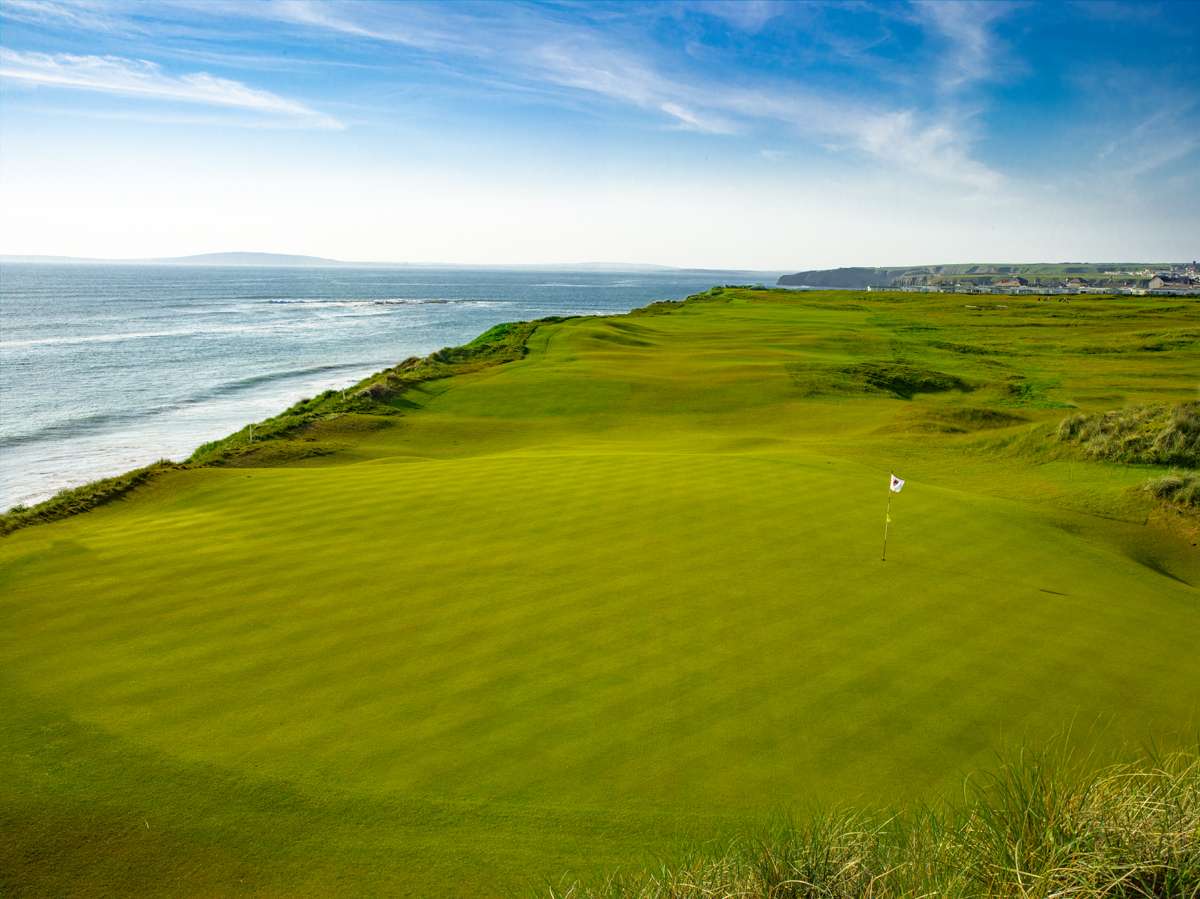
Ireland is one of the world's great golf destinations, but planning a first trip can be daunting. With outstanding links courses scattered along its coastline, deciding where to play is only half the challenge. The other is working out how to fit them into a week. For first-time visitors, you don't need to travel the length of the country to experience some of its finest golf. Ireland's west coast offers more than enough to build a memorable golfing holiday, with Shannon Airport providing a convenient starting point. To see what a week of Irish links golf could look like, we put the Top100 Golf Courses AI Trip Planner to work. The result is a seven-day itinerary taking in five of Ireland's standout links courses, from famous names to a few lesser-known gems. There will be plenty of driving along the way, but the reward is a week of golf on one of the most spectacular stretches of coastline in the game. Day 1: Arrive in Ireland Airport: Shannon Shannon Airport is a convenient starting point for a golf trip along Ireland's west coast, with Lahinch around an hour's drive away. Pick up a hire car and make your way to the seaside village, where it's worth booking accommodation for the first couple of nights ahead of your opening round at Lahinch Old. With five courses to play over the following days, there's no need to rush into the golf straight away. Spend the evening exploring the village's pubs and restaurants, whether that's a pint at Kenny's Bar or dinner overlooking Liscannor Bay at The Edge, before preparing for the week ahead. Day 2: Lahinch Golf Club - Old Course (County Clare) World Ranking: 32nd | Ireland Ranking: 2nd | Green fees: €450* The first round sets a high standard. Lahinch Old is one of Ireland's most celebrated links courses, with the Atlantic coastline, towering dunes and naturally uneven terrain creating a memorable introduction to the trip. The course is full of character, particularly around the fourth and fifth holes. The short par five, Klondyke, features a towering dune that complicates the approach, while the famous Dell is a blind par three played towards a green hidden between sand hills. A marker on the dune indicates the pin position, but golfers still need to judge the wind and choose their club carefully. Originally laid out in 1892, Lahinch was improved by Old Tom Morris before Alister MacKenzie redesigned several holes in 1927. That mix of history and unusual golf gives the course a personality that goes well beyond its spectacular setting. After the round, enjoy another evening in Lahinch before heading towards County Kerry for the next leg of the trip. Day 3: Ballybunion Golf Club - Old Course (County Kerry) World Ranking: 29th | Ireland Ranking: 1st | Green fees: €450* If there is one course that belongs on a first-time Irish golf itinerary, it is Ballybunion Old. Long regarded as one of the world's great links courses, it is a headline round on Ireland's west coast and a highlight of any trip to the country. The course's enormous dunes shape almost every aspect of the round, creating narrow corridors and demanding approaches to greens tucked into the natural landscape. The second hole, a long par four known as Kennells, sets the tone with a tight line between two towering dunes before a challenging approach to an elevated green. The drama continues at the seventh, where the tee sits above the shoreline, and the 11th, a formidable par four that is among the course's standout holes. Ballybunion is as much a test of judgement as distance, with the wind capable of turning an already demanding round into a real challenge. From Lahinch, allow around two hours to reach Ballybunion by car, depending on the route and whether you take the Killimer–Tarbert ferry across the Shannon Estuary. After the round, stay in Ballybunion or Tralee ahead of the next day's golf at Tralee Golf Club. If time allows, take a walk along Ballybunion's clifftop paths or settle in for a pint at one of the town's traditional pubs. Day 4: Tralee Golf Club (County Kerry) Ireland Ranking: 12th | Green fees: €450* Designed by Arnold Palmer and opened in 1984, Tralee is one of Ireland's most dramatic coastal courses. The front nine crosses relatively open links land, but the course becomes more rugged on the way home, climbing into towering dunes with elevated tees, challenging carries and sweeping views across the Atlantic. The par-three third, known as The Castle, is a standout. Played towards a green overlooked by the ruins of a castle, it combines a demanding shot with a spectacular setting. The 17th, Ryan's Daughter, is another memorable hole, requiring a drive across a ravine before an approach to a small, raised green. Tralee offers a different experience from Ballybunion. Both courses are shaped by Kerry's dramatic coastline, but Tralee's changing terrain gives the round its own character and plenty of variety. The drive from Ballybunion takes around an hour, making this one of the easier transfers of the trip. Stay in Tralee for the night and head to Baily's Corner, a long-established pub known for its rugby memorabilia and traditional atmosphere, before continuing to Dooks Golf Club the following day. Day 5: Dooks Golf Club (County Kerry) Ireland Ranking: 23rd | Green fees: From €260* After three high-profile rounds, Dooks offers a different kind of Irish links experience without sacrificing the scenery. Established in 1889, it is Kerry's oldest golf course, set beside Dingle Bay with views towards the MacGillycuddy's Reeks and the surrounding mountains. At just over 6,500 yards, Dooks is shorter than some of the other courses on this trip, but there is plenty to keep golfers interested. The natural contours call for an adaptable approach, while the par-three 13th stands out for its unusually undulating green. The course's relaxed atmosphere and warm welcome make it a refreshing change of pace midway through the week. Although shorter than the other courses on the itinerary, Dooks is well worth the stop, offering a more relaxed round with views that stretch from the bay to the surrounding mountains. After the round, head to nearby Rossbeigh Strand for a walk along the beach, with views across Dingle Bay, before settling in for dinner and a pint at the Glenbeigh Hotel. Staying in the area also puts you in a convenient position for the journey to Waterville Golf Links the following day. Day 6: Waterville Golf Links (County Kerry) Ireland Ranking: 5th | Green fees: From €400* Waterville brings the golfing week to a close with one of Ireland's most celebrated links courses. Set on a remote stretch of the Iveragh Peninsula along the Ring of Kerry, it is surrounded by water, with views across Ballinskelligs Bay towards the Atlantic and northeast towards the MacGillycuddy's Reeks. The front nine crosses relatively flat ground, but the course takes on a different character on the way home, weaving through avenues of tall dunes. The short par-five 11th is a highlight, with a rippling fairway framed by towering dunes, while the elevated tee at the par-three 17th, Mulcahy's Peak, offers one of the most memorable views of the week. Waterville is a fitting finale to five rounds of Irish links golf, combining a challenging test with a spectacular setting far removed from the busier tourist centres. After the round, enjoy a final evening in Kerry, whether that means a relaxed dinner in Waterville or exploring more of the surrounding Ring of Kerry. Day 7: Return to Shannon The journey back to Shannon Airport takes around three hours from Waterville, so allow plenty of time if you're catching a flight home. If your departure is early, consider spending the final night closer to the airport rather than making the drive on the morning of your flight. Alternatively, an extra day gives you more time to explore County Kerry, enjoy another stop along the west coast or squeeze in one last pint of Guinness before heading home. Planning your first Irish links trip Five rounds in six days is an ambitious schedule, but focusing on Ireland's west coast makes it manageable with a little planning. The route does involve a few accommodation changes, so it's worth thinking through your overnight stops before booking. Getting around: Hiring a car is the easiest way to travel between courses, particularly when travelling with golf clubs. Allow plenty of time for the drives and remember that the most direct route isn't always the quickest if you're using the ferry across the Shannon Estuary. Where to stay: Book two nights in Lahinch for the opening rounds, then plan your overnight stops around Ballybunion, Tralee and Dooks before finishing near Waterville. This means changing accommodation a few times, but it avoids unnecessary backtracking. If you're flying home early, consider staying closer to Shannon after your final round. Book ahead: These are popular courses, especially during the main golf season. Secure tee times well in advance and check visitor availability before committing to flights and accommodation. Pack for the weather: Conditions on the west coast can change quickly. Waterproofs, warm layers and spare golf gloves are sensible additions, even during summer. Budget for the trip: This is not a cheap golf holiday. Based on published 2026 visitor rates, the five green fees alone come to around €2,000 per person, before caddies, accommodation, car hire and food. Including six nights' accommodation and a hire car shared between four people, budget approximately €3,200–€4,200 per person, excluding flights. Caddie fees and peak-season accommodation can push the total higher, so check each club's caddie requirements and current rates before booking. Consider an extra day: Five rounds in six days leaves limited time to explore beyond the courses. An extra night gives you more flexibility to enjoy Kerry's coastline and towns, or simply relax over a final pint of Guinness before heading home. *Green fees referenced are based on published high-season visitor rates for 2026 and are subject to change. Check with each club for current pricing before booking.
For golfers planning their first serious links trip, the choice often comes down to two destinations: Scotland or Ireland. Both offer some of the finest links courses in the world, dramatic coastal landscapes, historic clubs and enough quality to fill several days without playing the same type of golf twice. Scotland has the strongest claim to being the home of the game, with St Andrews, Muirfield, Carnoustie and Royal Dornoch among its headline acts. Ireland, meanwhile, can counter with Royal County Down, Royal Portrush, Ballybunion, Lahinch and Rosapenna. There is no wrong answer. But if you only have one major links trip to make, which country should come first? The Headline Courses Scotland has an almost unfair collection of famous links. The Old Course at St Andrews remains the obvious pilgrimage, while Muirfield, Turnberry Ailsa, Royal Dornoch and Carnoustie provide four very different reasons to keep travelling beyond the Home of Golf. North Berwick and Kingsbarns add further depth, and there is no shortage of excellent options once you move away from the biggest names. Ireland has an equally compelling collection. Royal County Down’s Championship course currently sits at No.1 in the Top100 GB&I ranking, with Royal Portrush at No.3, Ballybunion, Lahinch and Rosapenna Golf Resort’s St Patrick's Links adding further heavyweight options. That means neither country is short of a bucket-list course. Scotland perhaps has the deeper bench of instantly recognisable names, but Ireland can comfortably match it at the very top. Winner: Scotland The Links Experience The character of the golf is one of the biggest differences between the two destinations. Scotland gives you an extraordinary range of links experiences. The Old Course at St Andrews is steeped in history, Carnoustie has its fearsome reputation, Royal Dornoch delivers a more remote Highland setting, while North Berwick and Turnberry offer their own very different takes on seaside golf. Ireland's great strength is the way its links interact with the landscape. At Royal County Down, the Mountains of Mourne provide a spectacular backdrop. Royal Portrush winds through some of the biggest dunes in the British Isles, while Ballybunion, Lahinch and Rosapenna put the Atlantic firmly into the equation. That doesn't necessarily make Ireland's golf better, but it does give many of its standout courses a particularly strong sense of place. The landscape is part of the experience of playing the course. For golfers looking for variety, Scotland has the edge. For those who want their links golf to feel wild and dramatic, Ireland takes the cake. Winner: Ireland Building The Perfect Itinerary For the travelling golfer, the quality of individual courses is only half the equation. The other question is how easily you can string them together. This is one of Scotland's greatest strengths. A St Andrews trip can be built around the Old Course and supplemented by the six other courses at the St Andrews Links complex (New, Jubilee, Castle, Eden, Balgove, and Strathtyrum), alongside Kingsbarns Golf Links and Crail Golfing Society. An East Lothian trip can combine Muirfield with North Berwick, Gullane and Dunbar. Further west, the Ayrshire coast offers Turnberry, Royal Troon, Prestwick and Western Gailes. Then there is the Highlands, where Royal Dornoch, Castle Stuart and Nairn provide the foundations for another outstanding trip. Ireland has excellent clusters of its own. Dublin and the east coast provide several strong options, while the southwest combines Ballybunion, Lahinch and Waterville. Further north, Royal County Down and Royal Portrush provide the kind of double act that could justify an entire trip. But Scotland gives you more ways to construct the itinerary. You can build a four-day trip around one region or spend a week travelling between some of the game's most famous courses without running out of options. Winner: Scotland The Scenery and Atmosphere Both countries offer more than enough scenery to make the journey worthwhile, but they create very different kinds of golf trips. Scotland has the history and sense of occasion. A day at St Andrews can feel like a pilgrimage, while travelling through East Lothian or Ayrshire takes you between courses that have been part of the game for generations. Ireland's appeal is slightly less about pilgrimage and more about exploration. The best trips often involve following the coastline, travelling between small towns and remote clubs, and arriving at courses where the dunes and sea dominate the view. The golf can feel like part of a wider road trip, with the day's round followed by a trip to the pub to dissect it. Scotland has the stronger sense of golfing history, but Ireland arguably offers the more rounded sense of adventure. Winner: Ireland Value for Money Neither Scotland nor Ireland is a destination for the golfer looking for a bargain-basement holiday. The headline courses can command substantial visitor fees, particularly during the summer, but neither country requires you to play the most expensive courses every day. Scotland's depth is particularly useful, with an enormous range of courses allowing you to mix marquee names with excellent, less expensive links. That depth also means you can build an itinerary around value rather than simply ticking off the most famous names. Ireland competes strongly, particularly if you are prepared to venture beyond its biggest tourist destinations. But Scotland's sheer number of quality options makes it easier to put together a varied trip without paying a premium every day. Winner: Scotland The Verdict For your first links trip, choose Scotland. It has the history, depth, variety and concentration of world-class courses to make almost any itinerary work. The Old Course alone is enough to justify the journey, but Scotland's greatest strength is what comes after it. There are enough outstanding links to turn one trip into several without simply repeating the same experience. Ireland is the destination to choose when you want something a little more adventurous. Its great links are often dramatic, windswept and surrounded by scenery that can be as memorable as the golf itself. Royal County Down, Royal Portrush, Ballybunion, Lahinch and Rosapenna form an extraordinary collection, and the wider experience of travelling around the island only adds to the appeal. So Scotland wins the first-trip argument. But once you've made the journey, Ireland won't be far behind on the list.