Northern Ireland, United Kingdom
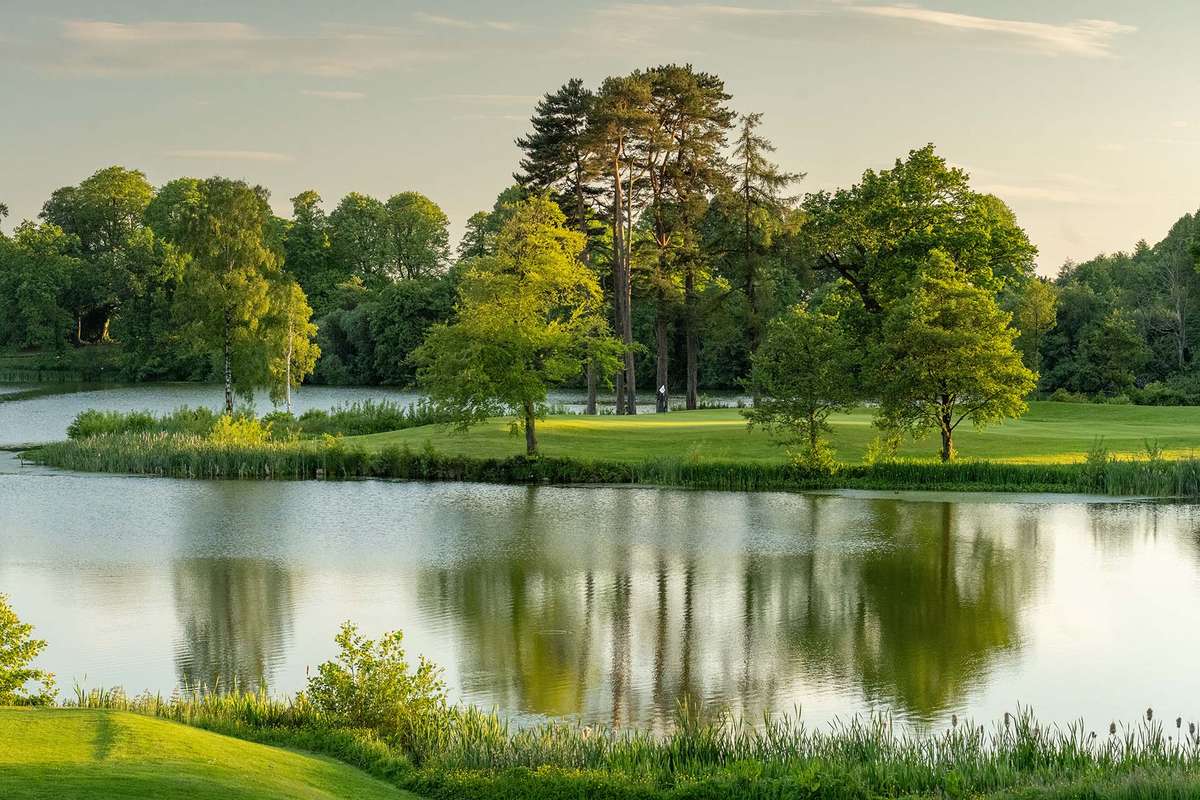
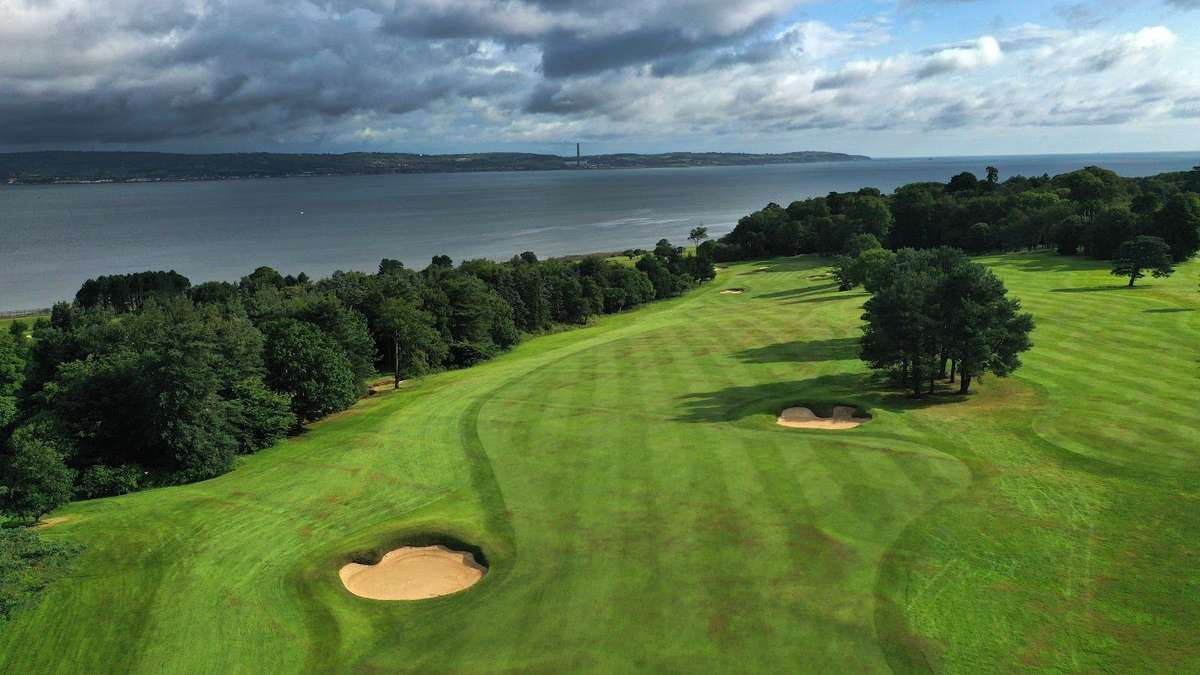
Architect Tom Macauley laid out Dunmurry Golf Club's new fairways on land next to the River Lagan, and Peter Alliss officially opened the course in 1983.
Overall rating

5.0
Dunmurry Golf Club
Architect Tom Macauley laid out Dunmurry Golf Club's new fairways on land next to the River Lagan, and Peter Alliss officially opened the course in 1983.
The latest ranking of the Top 100 Golf Courses in the World serves as the ultimate global golf bucket list. Most members of our World Top 100 Panel are seasoned golfers, each playing 20-30 of these courses annually while travelling extensively over decades to form their opinions on others. We recognise that opinions vary—even among our panel members. Rankings are subjective, and there are undoubtedly 50 or more courses in the UK and USA alone that could easily fit onto this list. Links Golf Pilgrimages The rankings
California, United States
New Jersey, United States
Northern Ireland, United Kingdom
New York, United States
New York, United States
From the formation of Dunmurry Golf Club in 1905, right up to 1977, golfers seemed content enough to hone their golfing skills on a modest 9-hole course close to the city centre of Belfast.
It’s rather ironic therefor, to learn that the club – after a wait of sixty-eight years for a full sized course – then moved to another site within six years of its first 18-hole layout being installed.
Architect Tom Macauley laid out Dunmurry’s new fairways on land next to the River Lagan, and Peter Alliss officially opened the course in 1983.
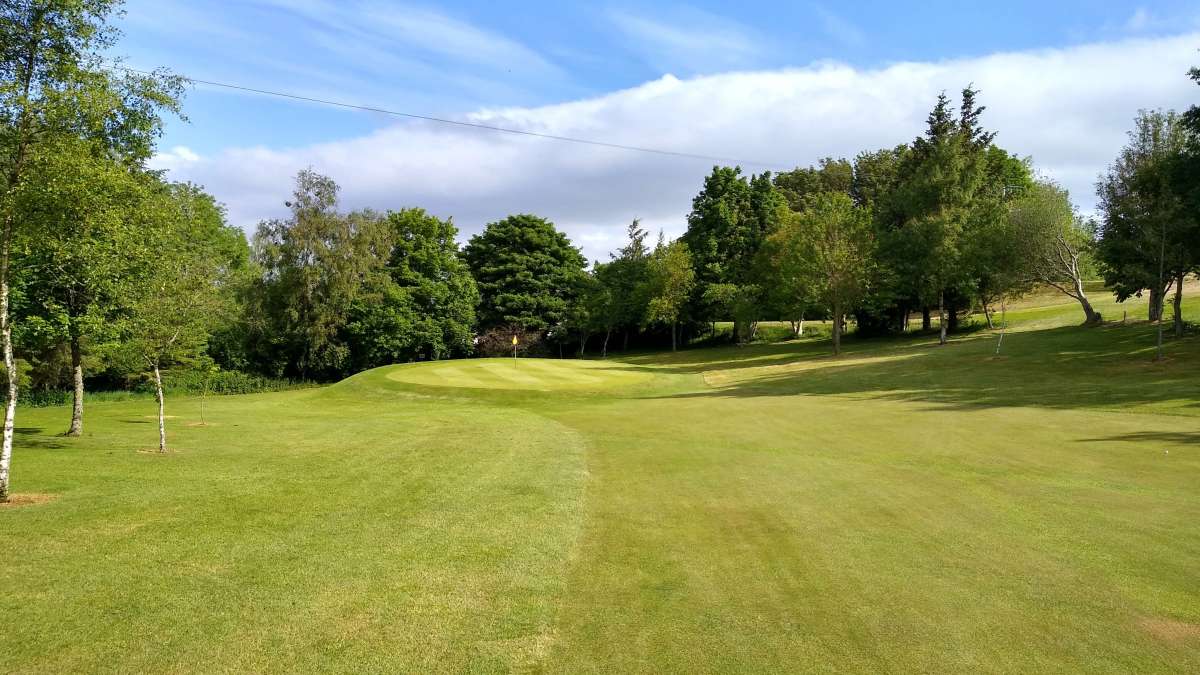
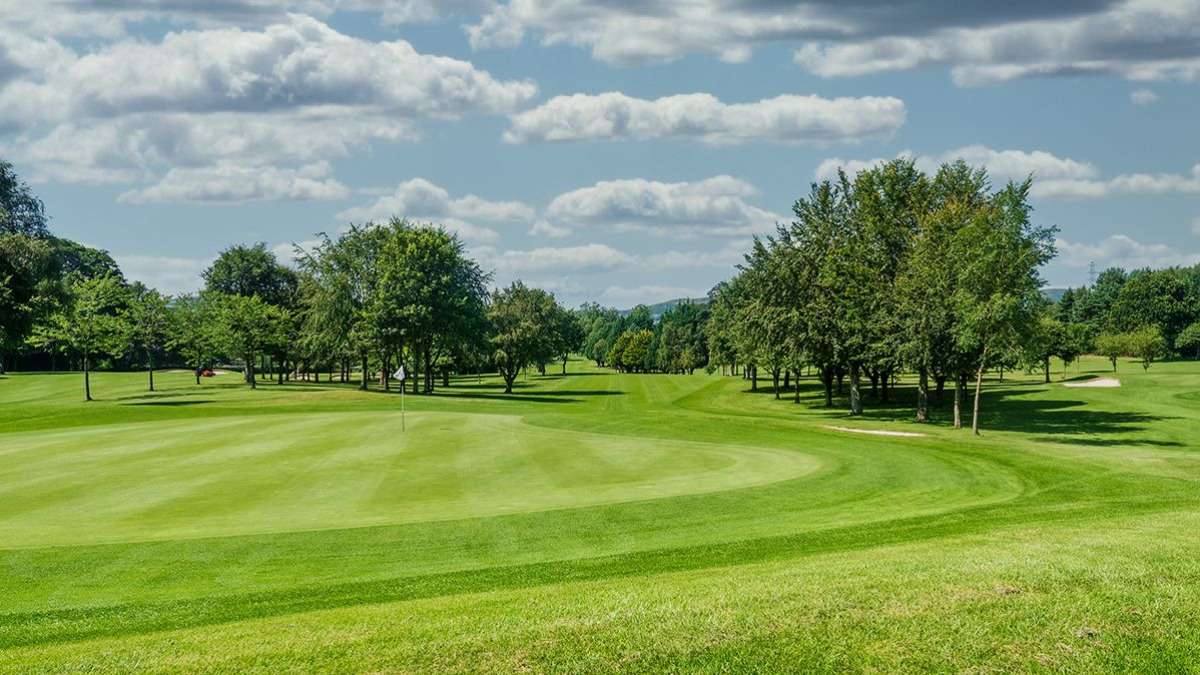
Feature holes on the front nine include the 529-yard 4th, “Trossachs,” a gentle right hand dog legged par five that leads to an elevated, two-tiered green and the 418-yard 9th, “Fortfield,” where a ditch and a small lake must be avoided en route to the green.
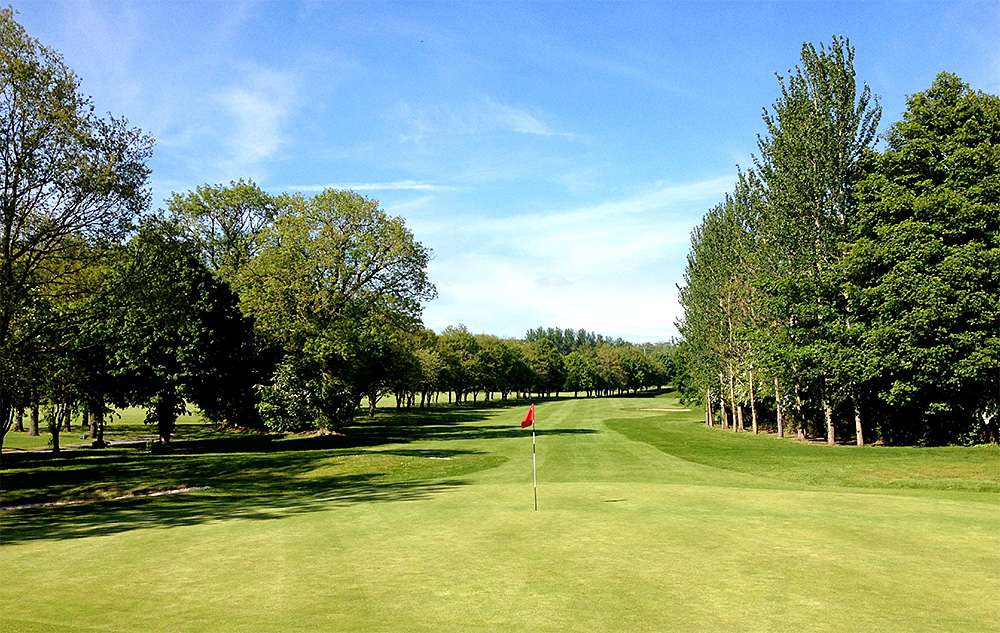
On the inward half, the strongest hole arrives at the 365-yard 15th, “Coach House,” a right dog leg that requires a pinpoint accurate tee shot through a very narrow tree-lined section of fairway with out of bounds running all the way down the right to the green.
Architect David Jones kindly provided us with the following comments:
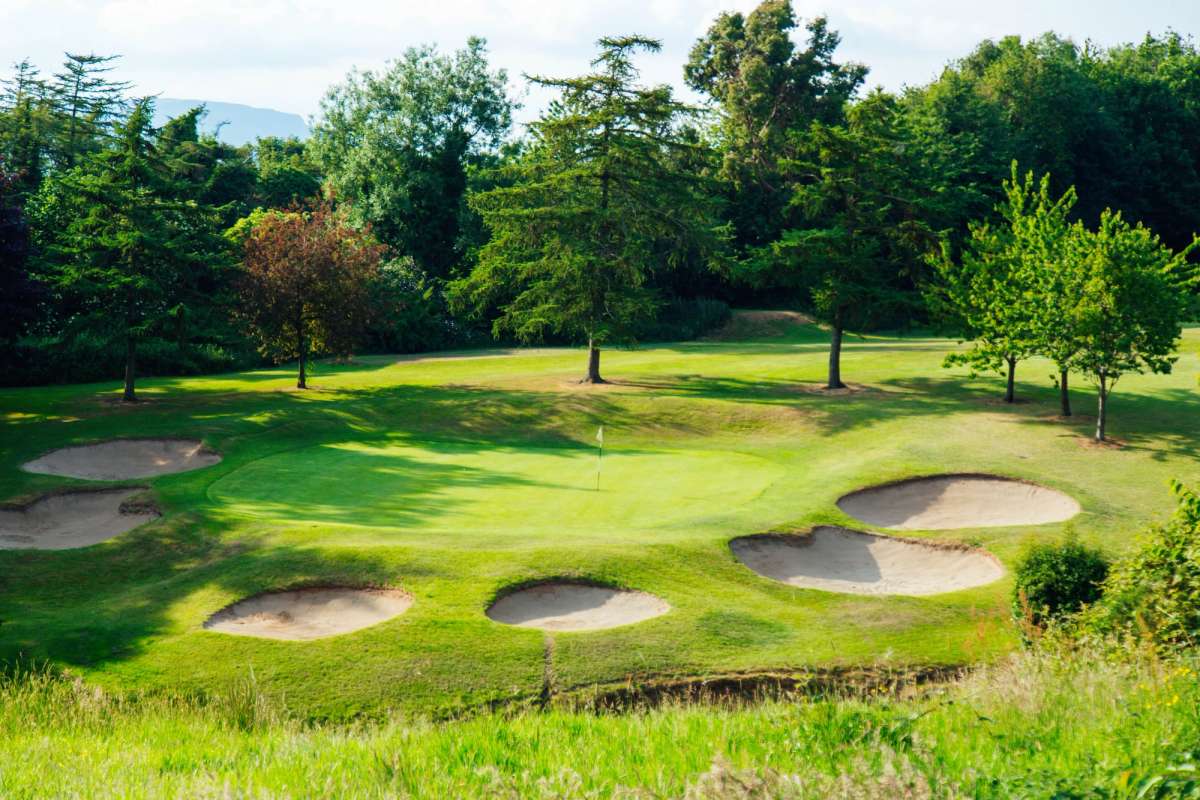
“I did quite a bit of upgrading at Dunmurry between the Spring of 2000 and the winter of 2004. The course was very weak on bunkering, with a near total lack of fairway bunkers and poorly placed greenside traps. I introduced strategically placed bunkers off the tees on twelve holes, while relocating and improving many of the old greenside bunkers.
I also redesigned the rather flat 3rd, 4th, 5th, 9th 14th and 15th greens, contouring more imaginative surfaces with a better range of pin positions. Length was added to a number of holes with new back tees installed - in the process enlarging the teeing areas overall on nine separate holes - and some forward tees repositioned.
There was also an intensive tree-planting programme undertaken, introducing blocks of trees to improve definition and safety, as well as adding some more strategic value to the course.
Dunmurry moved to its present site in the 1980s and had to undertake a huge works programme to create a playable, well-drained course out of what initially was not a promising site, although it had the benefit of some lovely trees.
My contribution was really to improve the interest and challenge to what had been a fairly basic layout and it seems to have worked well.”

Ireland is home to some of the world's finest links courses, but navigating their blind tee shots, towering dunes and unpredictable coastal winds isn't always straightforward, particularly for first-time visitors. Hiring a caddie can make a big difference, and at some of the country's most famous courses, it's actually a requirement. But how much does a caddie cost in Ireland, where are they compulsory, and are they worth the extra expense? We've put together everything you need to know before your next Irish golf trip. Do You Have to Take a Caddie in Ireland? The short answer is no, although it depends on where you're playing. Most Irish golf courses allow visitors to play without a caddie, but several of the country's most famous links have specific requirements for visiting golfers. At Royal County Down, for example, at least one caddie is required per group. The same applies at Ballybunion, where groups must have at least one caddie or forecaddie. Lahinch also requires at least one caddie per group on its Old Course, while Royal Dublin requires a forecaddie for threeballs and fourballs that haven't arranged individual caddies. County Louth, better known to many golfers as Baltray, includes a mandatory forecaddie arrangement with visitor bookings. Importantly, these requirements don't necessarily mean everyone in your group needs their own caddie. In many cases, sharing a forecaddie is enough to satisfy the club's rules while keeping costs down. It's always worth checking the policy when booking your tee time, particularly if you're visiting several courses during the same trip. How Much Does a Caddie Cost in Ireland? Caddie fees vary between clubs, but at Ireland's leading links courses, you can generally expect to pay around €75–€130 for an individual caddie, before gratuities. Forecaddies are usually charged at a group rate, making them a more affordable option for golfers travelling together. Here's a look at published caddie fees at some of Ireland's best-known courses: Note: Caddie fees are based on published 2026 and 2027 rates, depending on the club. Prices may vary by caddie category and are subject to change. Gratuities are additional where applicable. Northern Ireland uses pounds sterling, while the Republic of Ireland uses euros. For a group of four playing Royal County Down, sharing a £110 forecaddie works out at £27.50 per golfer before gratuities. Hiring four individual caddies, meanwhile, would cost £300 collectively. That's a considerable difference, particularly if you're playing five or six rounds during your trip. Caddie fees are broadly comparable to those at leading UK courses, with St Andrews, Royal Birkdale and Royal Liverpool charging £80, Royal Dornoch and Royal Troon £75, and Sunningdale £120 including gratuity. What’s the Difference Between a Caddie and a Forecaddie? Before booking, it's worth understanding exactly what you're paying for. An individual caddie will typically carry your golf bag throughout the round, provide yardages, help with club selection, read greens and offer advice on how to approach unfamiliar holes. Some clubs also offer double-bag caddies, who carry clubs for two golfers and split their attention between both players. A forecaddie, meanwhile, generally works with the entire group rather than an individual golfer. They help identify landing areas, locate golf balls, provide yardages and offer advice on navigating the course, but usually don't carry anyone's clubs. For groups happy to carry their own bags or use a trolley, a forecaddie can be a sensible compromise. You still benefit from local knowledge without paying for four separate caddies. Is Hiring a Caddie in Ireland Worth It? If you're visiting Ireland for the first time, particularly to play some of its famous links courses, there's a strong argument for hiring a caddie at least once. Irish links golf can be very different from what many international visitors are accustomed to. Fairways can disappear behind dunes, greens aren't always visible from the tee, and a shot that looks perfectly positioned can leave you in serious trouble. A good caddie knows where to aim, which areas to avoid and how the wind tends to affect particular holes. They can also save time searching for balls in thick rough, help with tricky green reads and offer an insight into the course that you won't necessarily get from a yardage book. And there's the social side of it. Many Irish caddies have spent years walking the same fairways, collecting stories about the club, its members and the famous golfers who've played there. Of course, that doesn't mean everyone needs one. Experienced links golfers may be perfectly comfortable navigating an unfamiliar course themselves, particularly with a GPS device or detailed yardage book. And if you're travelling on a budget, spending another €100 or more on every round isn't always realistic. Which Irish Golf Courses Are Best Played With a Caddie? While a caddie can be helpful almost anywhere, there are a handful of Irish links where local knowledge can make a particularly big difference. Royal County Down World Ranking: 3rd | GB&I Ranking: 1st | Northern Ireland Ranking: 1st Set beneath the Mourne Mountains in Newcastle, Royal County Down is widely regarded as one of the world's finest links courses. It's also a demanding place to play for the first time, with blind tee shots, deep bunkers and thick rough waiting to punish misplaced shots. Knowing the correct line from the tee isn't always straightforward, and having a caddie who understands the course can make a significant difference. With at least one caddie required per group, it's also a decision visitors will need to factor into their plans. Lahinch Golf Club World Ranking: 32nd | GB&I Ranking: 10th | Ireland Ranking: 2nd Lahinch's Old Course is home to two of the most recognisable holes in Irish golf: the Klondyke and the Dell. The former features a blind approach over a towering dune, while the latter has a green tucked between dunes and largely hidden from view. They're memorable holes, but not necessarily straightforward for someone playing them for the first time. A caddie can help with the correct lines, distances and club selection, particularly when the Atlantic wind picks up. Ballybunion Golf Club World Ranking: 29th | GB&I Ranking: 9th | Ireland Ranking: 1st Ballybunion's Old Course is another where a little local knowledge goes a long way. The course winds through enormous dunes overlooking the Atlantic, with narrow fairways, blind shots and uneven terrain creating plenty of challenges. A caddie can help golfers navigate the more demanding holes and avoid trouble that might not be obvious from the tee. As with Royal County Down and Lahinch, groups must also meet the club's caddie requirements. Tralee Golf Club GB&I Ranking: 70th | Ireland Ranking: 12th Designed by Arnold Palmer, Tralee is known for its spectacular coastal setting and particularly dramatic back nine. Several holes play alongside towering dunes and cliffs, with changes in elevation and exposed conditions making club selection difficult. It's a course where knowing the correct line and understanding how the wind affects each hole can prove particularly useful. Waterville Golf Links GB&I Ranking: 40th | Ireland Ranking: 5th Waterville sits on the Ring of Kerry, surrounded by the Atlantic Ocean and some of Ireland's most impressive coastal scenery. The course is exposed to the elements, and conditions can change quickly throughout a round. A caddie familiar with the prevailing winds and the subtleties of the greens can be a valuable addition, especially for golfers experiencing traditional Irish links golf for the first time. How Do You Book a Caddie in Ireland? The easiest option is to request a caddie when booking your tee time. Most major Irish golf clubs arrange caddies through their reservations team or caddie master, although some golf travel operators can organise them as part of a wider itinerary. It's worth booking well in advance, particularly if you're travelling between May and September, when demand at popular links courses is high. Some clubs request at least 48 hours' notice, while others encourage visitors to make arrangements as early as possible. Keep in mind that caddie availability isn't always guaranteed, even when requested in advance. Do You Tip Caddies in Ireland? Tipping is customary for good service, although gratuities are generally discretionary. As a guideline, golfers might consider an additional €20–€40 or £20–£40 for an individual caddie, depending on the service provided. At many clubs, caddies are independent contractors, and payment is made directly to them rather than through the pro shop. It's worth carrying some cash, particularly if you're playing several courses during your trip. Can You Play Irish Links Courses Without a Caddie? Absolutely, provided the club's visitor policies allow it. Many Irish links courses are designed to be walked, and carrying your own bag or hiring a push trolley is a perfectly reasonable way to enjoy them. At some clubs with mandatory caddie requirements, golfers can still carry their own bags or use a trolley, provided their group has arranged the required forecaddie. Don't assume you'll be able to hire a golf buggy, however. Royal County Down, Lahinch and Ballybunion's Old Course are among the famous links where buggy use is restricted or unavailable. If you're planning to walk several rounds on consecutive days, it's worth considering how much ground you'll be covering, particularly on courses with substantial dunes and changes in elevation. So, Should You Hire a Caddie in Ireland? If you're travelling to Ireland for a once-in-a-lifetime golf trip, hiring a caddie for at least one or two of your biggest rounds is well worth considering. At courses such as Royal County Down, Lahinch and Ballybunion, local knowledge can make a challenging round considerably more enjoyable. But there's no need to hire an individual caddie everywhere you go. Sharing a forecaddie or carrying your own clubs can help keep costs manageable, provided the club's requirements allow it. Just make sure you check the arrangements before arriving, so there are no unexpected additions to your green fee.
While some of the world's most famous courses command eye-watering green fees, there are often excellent alternatives just a short drive away. From celebrated links venues to championship layouts, we've picked out 10 famous golf courses and their more affordable neighbours, where you can still enjoy a quality round without paying quite so much. Pebble Beach Golf Links vs Pacific Grove Golf Links (California, USA) Pebble Beach Golf Links | World Ranking: 27th | California Ranking: 3rd | Green Fees: US$755 (including mandatory cart fee) Pacific Grove Golf Links | California Ranking: 71st | Green Fees: US$66–89 Few golf courses command the same level of recognition as Pebble Beach Golf Links. Ranked 27th in the world, it has hosted multiple US Opens and is a regular fixture on the PGA Tour, with its spectacular Pacific coastline making it one of the game's most recognisable settings. At US$755 for a visitor round, however, it comes at a considerable price. Just five miles away, Pacific Grove Golf Links offers a much more affordable way to enjoy the same stretch of California coastline. Often nicknamed the 'Poor Man's Pebble Beach', this municipal course has plenty of character of its own, with its history closely connected to its famous neighbour. Chandler Egan, who helped redesign Pebble Beach alongside Alister MacKenzie, laid out Pacific Grove's original nine holes in 1932, before Jack Neville, one of Pebble Beach's original designers, extended it to 18. The front nine winds through gardens and trees, while the back nine opens up towards the Pacific Ocean and Point Pinos Lighthouse. With green fees from US$66, it's a considerably cheaper way to enjoy golf on the Monterey Peninsula. Distance apart: 5 miles Price difference: US$666–689 (88–91% cheaper at Pacific Grove) St Andrews Links – Old Course vs St Andrews Links – Eden Course (Scotland) St Andrews Links (Old) | World Ranking: 7th | Scotland Ranking: 1st | Green Fees: £380 St Andrews Links (Eden) | Scotland Ranking: 62nd | Green Fees: £85 Few golf courses carry the reputation of the Old Course at St Andrews. Ranked seventh in the world, it is the Home of Golf and one of the most recognisable venues in the game, but securing a tee time can be just as challenging as finding the money for its £380 high-season green fee in 2027. A much more affordable option is the Eden Course, just west of the Old Course and ranked 62nd in Scotland. Designed by Harry Colt and opened in 1914, it offers a genuine links experience for a fraction of the price. Its wide fairways provide some room off the tee, but deep bunkers, undulating greens and several challenging par fours ensure there is plenty to think about. At £85 for a high-season round in 2027, the Eden is an appealing way to enjoy the Home of Golf without paying Old Course prices. Distance apart: Approximately 1 mile Price difference: £295 (around 78% cheaper at the Eden) Royal County Down – Championship Course vs Ardglass Golf Club (Northern Ireland) Royal County Down (Championship) | World Ranking: 3rd | Northern Ireland Ranking: 1st | Green Fees: £495 Ardglass Golf Club | Northern Ireland Ranking: 8th | Green Fees: £275 Royal County Down is a bucket-list destination for golfers, ranked third in the world and set against the spectacular backdrop of the Mountains of Mourne. Its Championship course is a formidable links test, with rugged dunes, blind drives and some of the most memorable holes in the game. A visitor round costs £495 in 2027, and tee-time availability is exceptionally limited. Around 11 miles away, Ardglass offers a different but equally memorable experience along the County Down coastline. The opening five holes hug the cliffs above the Irish Sea, with the second a particularly striking par three played across a rocky inlet. The course also has a clubhouse with a rather unusual history: it occupies a 14th-century castle. Ardglass may not have the same global reputation as its famous neighbour, but its dramatic coastal setting and enjoyable links test make it well worth adding to a trip to the area. At £275, it also represents a sizeable saving. Distance apart: Approximately 11 miles (straight-line) Price difference: £220 (44% cheaper at Ardglass) Royal Portrush Golf Club – Dunluce Course vs Castlerock Golf Club – Mussenden Course (Northern Ireland) Royal Portrush Golf Club (Dunluce) | World Ranking: 9th | Northern Ireland Ranking: 2nd | Green Fees: £475 Castlerock Golf Club (Mussenden) | Northern Ireland Ranking: 5th | Green Fees: £250 Royal Portrush is one of the biggest names in Irish golf, ranked ninth in the world and twice the host of The Open Championship, most recently in 2025. The Dunluce Links is a spectacular test, with its dramatic coastal setting and memorable holes, including the famous par-three 16th, Calamity. At £475 for a visitor round, it is also one of the more expensive places to play in Northern Ireland. Around 13 miles along the coast, Castlerock's Mussenden Course offers an excellent alternative for £250. It may live in the shadow of its more famous neighbours, but it is a highly regarded links in its own right, with a strong reputation among golfers who have made the trip to the Causeway Coast. The standout is the fourth, known as Leg O’Mutton, a 200-yard par three with a railway line running alongside one side and a burn guarding the other. Castlerock also has views across the Atlantic towards Donegal and, on a clear day, Scotland. Distance apart: Approximately 13 miles by road Price difference: £225 (47% cheaper at Castlerock) Carnoustie Golf Links – Championship Course vs Panmure Golf Club (Scotland) Carnoustie Golf Links (Championship) | World Ranking: 34th | Scotland Ranking: 5th | Green Fees: £450 Panmure Golf Club | Scotland Ranking: 35th | Green Fees: £195 Carnoustie is one of the most famous and demanding tests in Scottish golf. Ranked fifth in Scotland and 34th in the world, its Championship course has hosted The Open eight times, most recently in 2018, when Francesco Molinari lifted the Claret Jug. A peak-season visitor round in 2027 costs £450. Just a short drive away, Panmure provides a similarly challenging links experience for considerably less. Ranked 35th in Scotland, it has plenty of history of its own, having hosted Open Qualifying and played a part in Ben Hogan's preparation for his 1953 Open Championship victory at Carnoustie. Hogan spent two weeks practising at Panmure before winning at his neighbouring course, and the club still celebrates that connection. The layout features plenty of traditional links character, with heather, hillocks and demanding approach shots. At £195 during the 2026 peak season, it is an appealing option for anyone planning a golf trip to Angus & Dundee. Distance apart: Approximately 5 miles by road Price difference: £255 (57% cheaper at Panmure) Pinehurst No. 2 vs Southern Pines Golf Club (North Carolina, USA) Pinehurst No. 2 | World Ranking: 57th | North Carolina Ranking: 2nd | Green Fees: Not published Southern Pines Golf Club | North Carolina Ranking: 11th | Green Fees: US$225–245 Pinehurst No. 2 is one of American golf's most celebrated courses. Ranked 57th in the world and second in North Carolina, the Donald Ross design has hosted multiple US Opens, most recently in 2024, and will welcome the championship back in 2029. Playing it, however, requires more than simply booking a tee time. Access is reserved for resort guests and members, with a minimum two-night stay required for those booking through the resort. Around five miles away, Southern Pines Golf Club offers a more accessible way to experience the area's golfing heritage. Another Donald Ross design, it opened in 1906 and has retained much of its traditional character, with rolling fairways, sandy waste areas and greens that demand careful approach play. It is ranked 11th in North Carolina and welcomes public play, with visitor fees ranging from US$225 to US$245. It may not carry the same prestige as Pinehurst No. 2, but it is a worthwhile addition to any trip to the Sandhills. Distance apart: Approximately 5 miles Price difference: Not directly comparable – Pinehurst No. 2 requires a resort stay or membership, while Southern Pines has a published visitor green fee. TPC Sawgrass – Stadium Course vs St Johns Golf Club (Florida, USA) TPC Sawgrass (Stadium) | USA Ranking: 66th | Florida Ranking: 2nd | Green Fees: From US$775 St Johns Golf Club | Green Fees: US$41–53.50 TPC Sawgrass is one of the most recognisable venues in American golf. Ranked 66th in the United States and second in Florida, its Stadium Course has hosted THE PLAYERS Championship since 1982 and is best known for the island green 17th. Designed by Pete and Alice Dye, it is a bucket-list round for many golfers, but visitor fees start at US$775 during the September-to-May season. Around 27 miles away, St Johns Golf Club provides a far more affordable alternative. This public, county-owned course in Elkton offers 18 holes of golf for out-of-state visitors at $53.50 in the morning, with afternoon rates dropping to $41. It is a different proposition to the Stadium Course, but the layout has recently benefited from a redesign by Erik Larsen and offers a varied test for golfers of all abilities. For anyone visiting the Jacksonville area, it is a practical option for fitting in a round without paying the premium associated with TPC Sawgrass. Distance apart: Approximately 27 miles by road Price difference: US$721.50–734 (93–95% cheaper at St Johns, comparing TPC's September–May starting rate with St Johns' 2026 out-of-state rates) Royal St George's Golf Club vs Prince's Golf Club – Dunes & Himalayas (England) Royal St George's Golf Club | World Ranking: 19th | England Ranking: 1st | Green Fees: £430 Prince's Golf Club (Dunes & Himalayas) | England Ranking: 32nd | Green Fees: £180–230 Royal St George's is one of the most recognisable names in English golf. Ranked 19th in the world and first in England, the Sandwich links has hosted The Open 15 times, most recently in 2021. Its undulating fairways, towering dunes and famously deep bunkers make it a formidable test, with peak-season visitor fees reaching £430 in 2027. Almost next door, Prince's offers a more affordable way to enjoy links golf on the same stretch of Kent coastline. It hosted The Open in 1932, when Gene Sarazen claimed victory, and remains a highly regarded venue in its own right. The Himalayas nine is particularly varied, with wetland carries, a driveable par four and a double green among its features. Prince's has 27 holes across three nine-hole loops, allowing visitors to combine the Himalayas with either the Dunes or Shore to make an 18-hole round. At £180–230 in 2027, it costs considerably less than its famous neighbour. Distance apart: Approximately 1 mile Price difference: £200–250 (47–58% cheaper at Prince's) Bandon Dunes Golf Resort – Pacific Dunes vs Bandon Crossings (Oregon, USA) Bandon Dunes (Pacific Dunes) | World Ranking: 26th | Oregon Ranking: 1st | Green Fees: US$425 Bandon Crossings | Oregon Ranking: 21st | Green Fees: US$70–96 Pacific Dunes is one of the standout courses at Bandon Dunes Golf Resort, ranked 26th in the world and among the most celebrated public-access layouts in the United States. Tom Doak's design opened in 2001 and makes full use of its rugged Pacific coastline, with several holes playing directly alongside the ocean. It is an unforgettable experience, but a peak-season round for a day guest costs US$425 in 2027. Around 10 miles south, Bandon Crossings offers a much more affordable alternative. Built on an old cattle and sheep ranch, the course was designed by Oregon architect Dan Hixson and takes a different approach to the area's golf, with a heathland-style layout rather than a traditional coastal links. It is not trying to compete directly with the resort's famous courses, but provides an enjoyable and considerably cheaper round, with the added option of taking a cart. Its 2026 standard-time walking rate is US$70, rising to US$96 during daylight-saving time. Distance apart: Approximately 10 miles Price difference: US$329–355 (77–84% cheaper at Bandon Crossings, comparing Pacific Dunes' 2027 peak-season day-guest rate with Bandon Crossings' 2026 walking rates) Royal Melbourne Golf Club – West Course vs Sandy Golf Links (Melbourne, Australia) Royal Melbourne Golf Club (West) | World Ranking: 6th | Australia Ranking: 1st | Green Fees: Not published (Last indicative international visitor rate AU$850) Sandy Golf Links | Australia Ranking: 82nd | Green Fees: AU$70–76 Royal Melbourne's West Course is ranked sixth in the world and first in Australia, and is widely regarded as one of Alister MacKenzie's finest designs. It is a private members' club, although international golfers who belong to a recognised golf club can apply for visitor tee times. The indicative overseas visitor fee is around A$850, although the club does not publish its rates publicly. Less than a mile away, Sandy Golf Links provides an opportunity to experience Melbourne's famous Sandbelt without the same price tag or access restrictions. Formerly known as Sandringham Golf Course, the public facility was extensively redesigned by OCM Golf, the team of Geoff Ogilvy, Mike Cocking and Ashley Mead, and reopened in its current form in 2020. The par-65 layout features firm greens, strategic bunkering and the sandy terrain associated with the region. It is ranked 82nd in Australia and welcomes public bookings, with 18 holes costing A$70 on weekdays and A$76 at weekends. Distance apart: Approximately 1km Price difference: A$774–780 (91–92% cheaper at Sandy, based on Royal Melbourne's indicative A$850 visitor fee) Green fees reflect published high-season visitor rates for 2027 where available. Where 2027 rates have not yet been released, the latest available published rates are provided. Prices and visitor access are subject to change.
As green fees at some of Britain and Ireland’s most celebrated courses continue to climb, Top100 Golf Courses' lead panellist Jasper Miners argues that golfers need to separate the quality of the course from the price of getting onto it. A round of golf at one of Great Britain and Ireland’s most prestigious courses can now cost £400, £500 or even £1,000. But does paying more guarantee a better golfing experience? For Top100 Golf Courses' lead panellist Jasper Miners, the answer is no. While some of the world’s finest courses command premium green fees for good reason, he believes golfers can too easily confuse price with quality. “Price can be exclusivity, it can be quality, it can be difficulty to access, it can also just be damn good branding,” he says. “I've played a lot of golf courses that are very expensive to play and I'd never want to play them again.” The distinction is becoming increasingly relevant as visitor fees at the top end of the game continue to rise. Research published by National Club Golfer in 2026 found that 15 courses in its Great Britain and Ireland Top 100 list charged £400 or more for a peak-summer round, up from eight the previous year. Turnberry's Ailsa Course retained its £1,000 headline fee, while Royal Birkdale's rose to £495. Those prices reflect more than the quality of the golf itself. Reputation, international demand, limited visitor access and the appeal of playing a famous course all contribute to what golfers are willing to pay. “People spend money on an experience, and it's cognitive dissonance: you convince yourself that it's good,” he says. Scotland shows the gap between price and quality Scotland offers a useful illustration of the difference between headline prices and the wider market. Top100's analysis of 94 ranked Scottish courses with published summer visitor fees in 2026 found a median price of £140, compared with an average of £194. The difference is significant: a relatively small number of expensive courses pull the average upwards, while more than half of the courses in the analysis could be played for £140 or less. Twenty-seven charged under £100. That doesn't mean £140 is inexpensive for every golfer, nor does it suggest that all courses offer the same experience. It does, however, challenge the idea that playing highly ranked golf necessarily requires a four-figure budget. The price of some famous venues has risen considerably. The Old Course at St Andrews, for example, went from a summer green fee of £195 in 2021 to £355 in 2026. Yet Scotland's wider selection of highly ranked courses offers alternatives at a fraction of that price. The same principle applies beyond Scotland. Top100's list of the ten cheapest visitor-accessible courses in its current World Top 100 includes Australia's St Andrews Beach at £74 and Bethpage Black in New York, a major championship venue, from £106. These examples do not mean that every lower-priced course offers the same facilities or experience as the most expensive venues. They do show that a high ranking and a substantial green fee do not always go hand in hand. The market, however, does not operate on quality alone. Miners points to Scotscraig Golfing Club as an example of how perceptions can change alongside pricing. He says the course has gone from attracting relatively little visitor attention to charging £225 and selling out. “In America, if you're good, you can charge more, so price becomes equated with quality,” he says. “Scotland has been a beneficiary of that.” He believes the relationship between price and demand can become self-reinforcing. A higher fee can contribute to a course's image as an exclusive destination, and that exclusivity can itself become part of the attraction. The challenge for lesser-known courses For courses without the international recognition of St Andrews, Muirfield or Royal County Down, competing for attention can be more difficult. A lower green fee may make a course attractive to golfers looking for value, but it can also leave it competing against venues whose reputations have been built over generations. Miners believes independent rankings and editorial coverage have a role to play in identifying courses that deserve attention, regardless of what they charge. “Hopefully, a website like Top100 is doing that work where we're going and saying, actually, this is not expensive and that's not part of our criteria, this is worth going to play,” he says. Simply increasing prices to appear more prestigious is not a universal solution, either. A strategy that works in a high-demand Scottish golf destination may not work in Wales, where raising green fees substantially will not necessarily persuade more people to visit. For clubs, the challenge is to establish what their course offers, understand their market and communicate its appeal. A famous name can command a premium, but a lesser-known venue may have more to gain by demonstrating the quality of its golf and the value of the overall experience. Golf is a business, too There is another side to the debate. While golfers may understandably want affordable access to good courses, clubs have to cover the costs of maintaining their facilities and operating their businesses. “I don't think [the industry needs to do more to challenge the idea that the best experiences are the most expensive],” Miners says. “As much as we don't want to admit it, golf is a capitalist sport.” He points out that many members' clubs depend on visitor income to support their finances, particularly when membership fees and subscriptions alone are insufficient to cover operating costs. “There are very few clubs that can run on a very modest budget with a very low membership that doesn't need outside play,” he says. That commercial reality makes it difficult to argue that clubs should simply charge less. Golfers in Britain and Ireland may be accustomed to playing regularly at prices that seem modest by international standards, but maintaining a golf course is expensive, and visitor income can be essential to a club's survival. Where demand is strong and tee times are limited, higher visitor fees may be a rational business decision. “If their tee sheet is full and they can charge a lot of money for people to come play, good for them,” he says. “The issue is mine, not theirs.” The question, then, is not whether every expensive course should lower its fees, or whether lower-priced courses should charge more. It is whether golfers can look beyond the number on the booking page and judge a course on its own merits. For golfers planning their next trip, that means looking beyond the obvious names. For clubs, it means recognising that price is only one part of the proposition. And for the industry, it is a reminder that the most expensive round and the best golfing experience are not necessarily the same thing.