An ultra-elite private members club in the affluent area near Coachella. Gil Hanse and Jim Wagner have built what appears to be a minimalist desert golf course in contrast with many of the artificial and housing-led desert designs in the Palm Springs area.
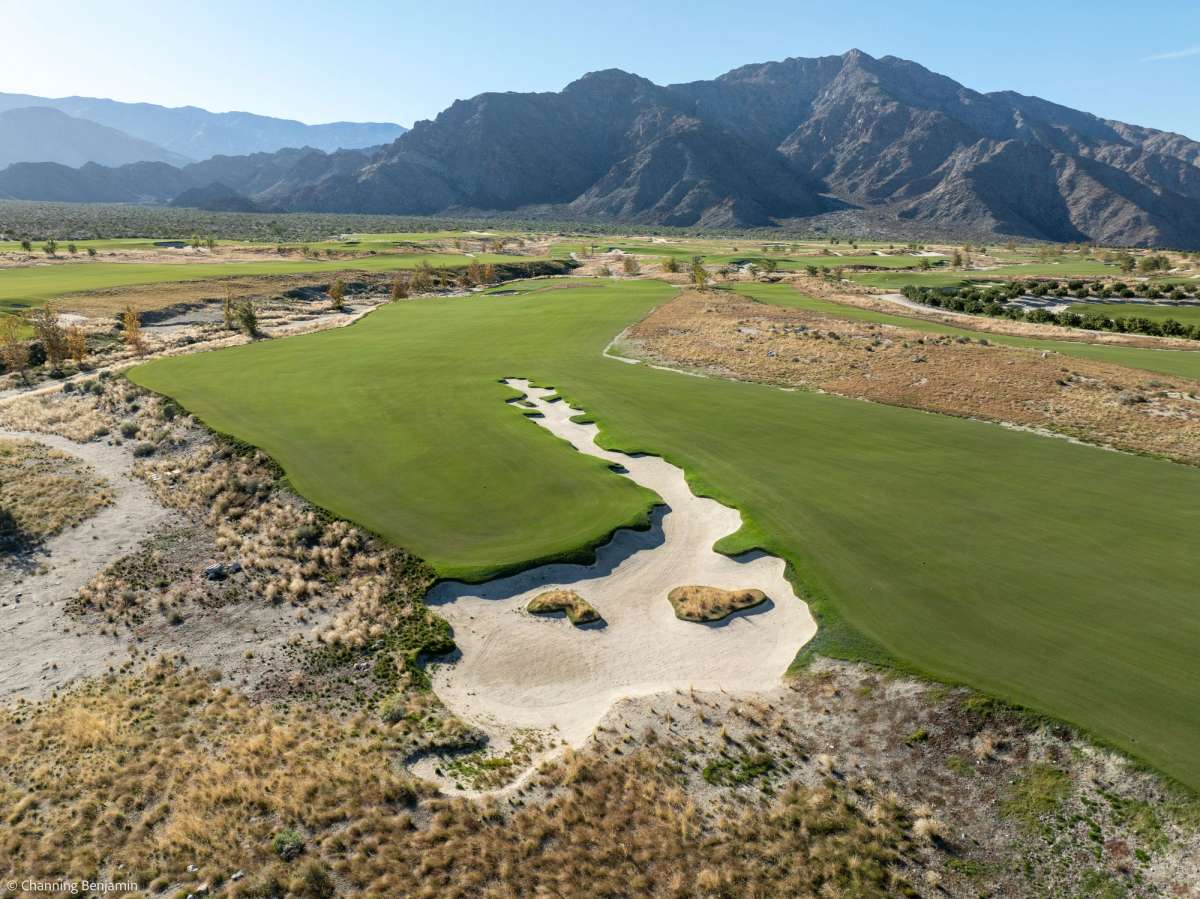
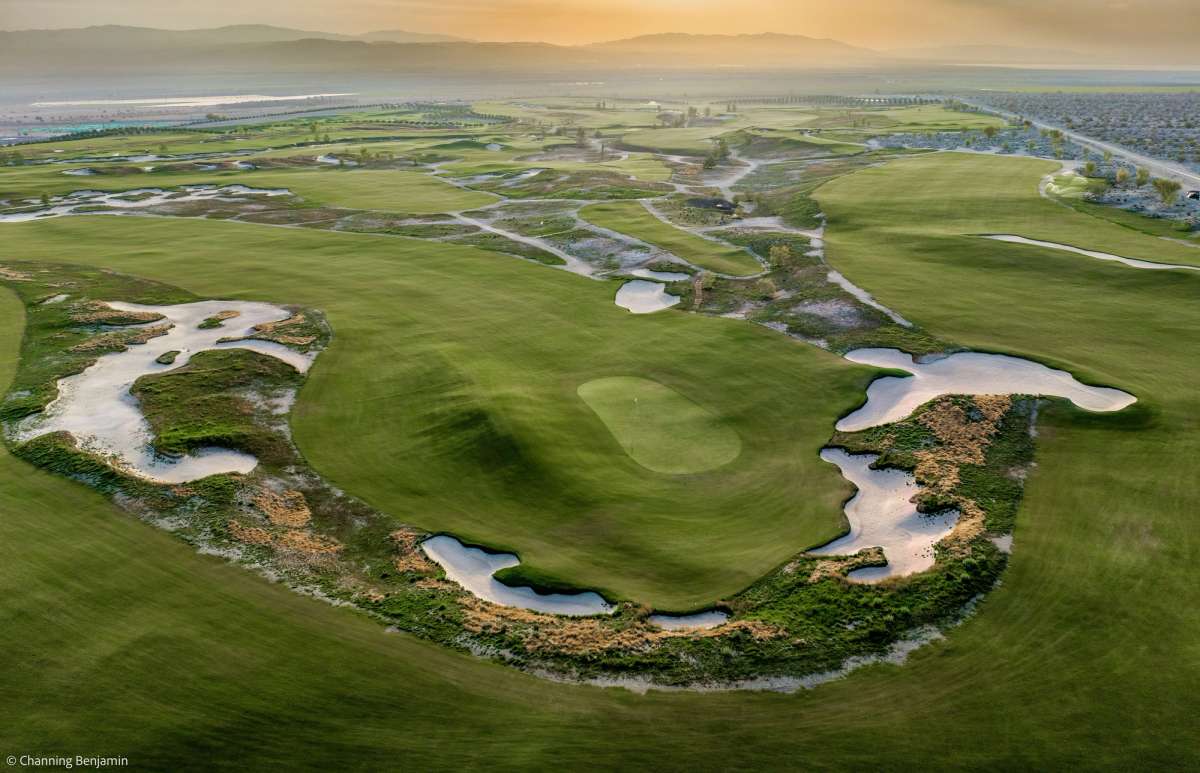
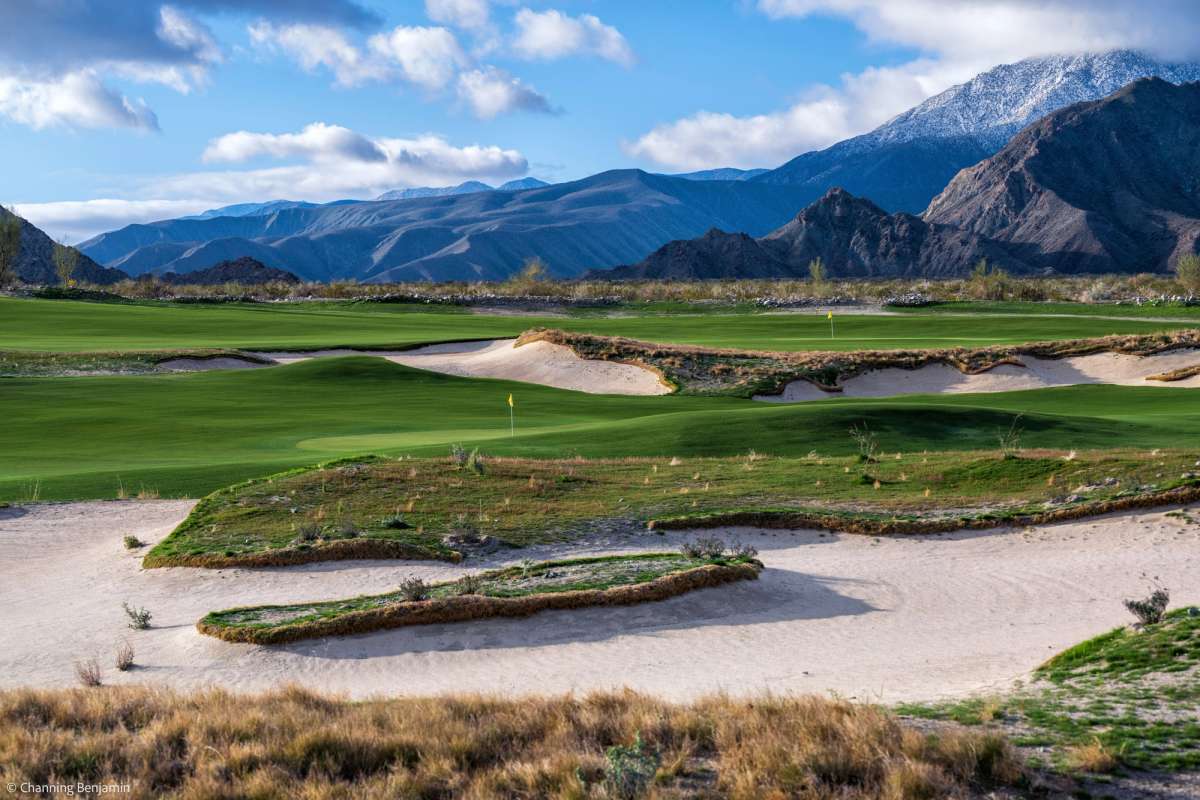
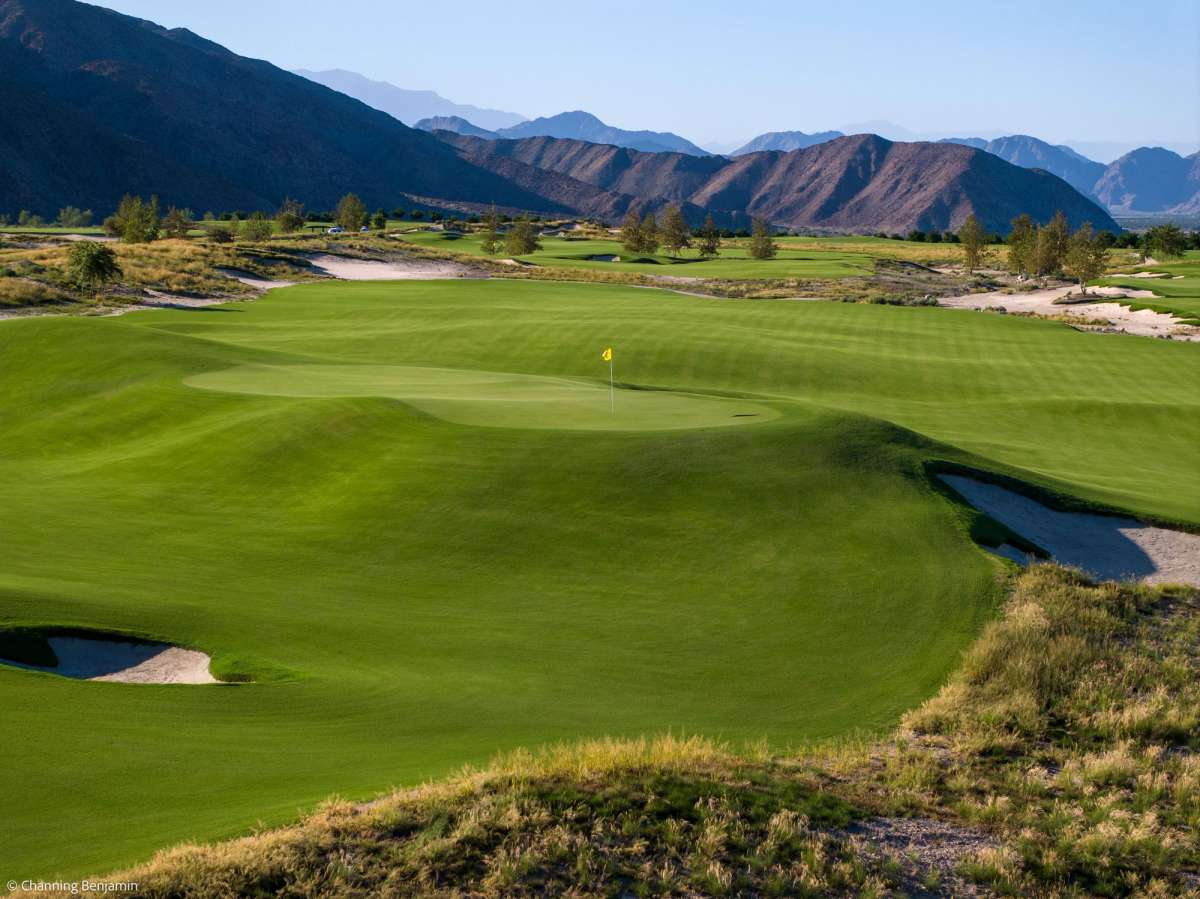
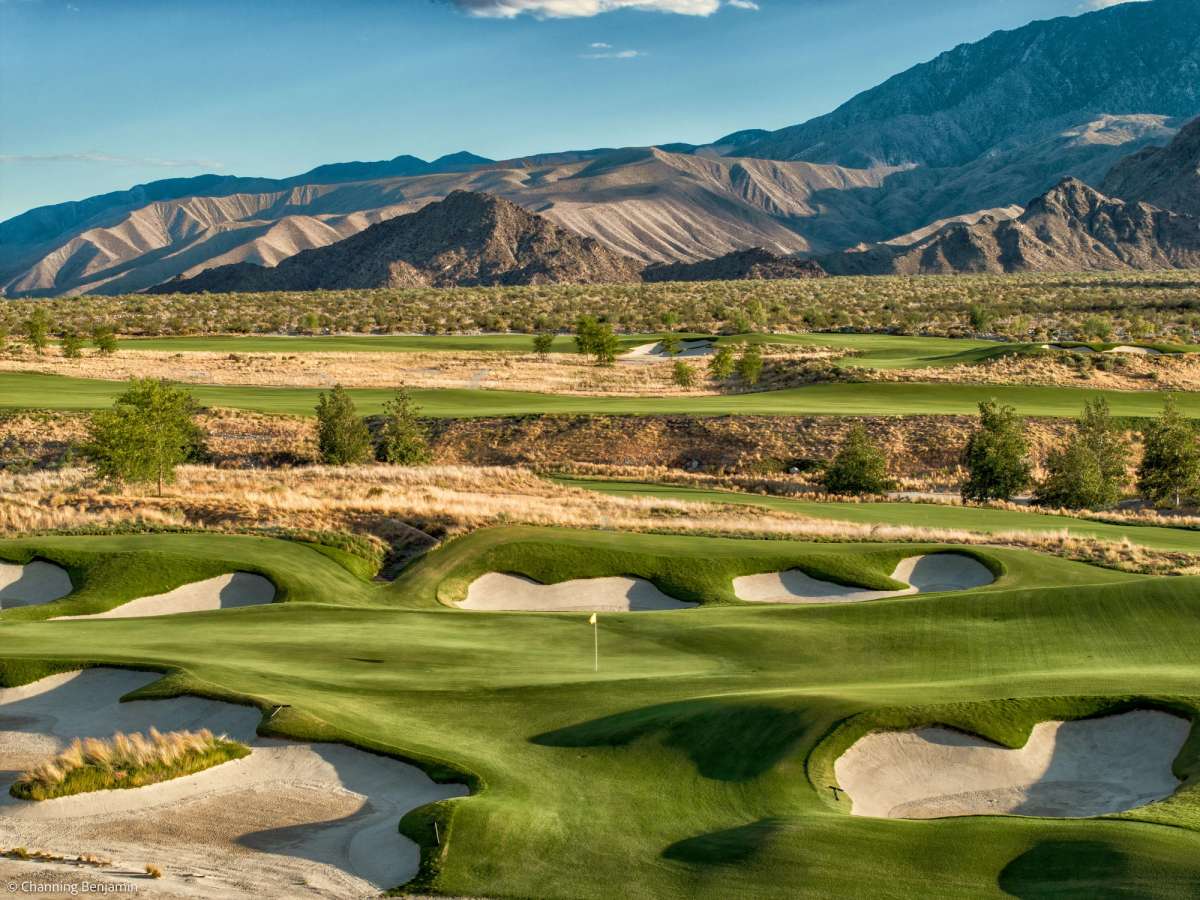

An ultra-elite private members club in the affluent area near Coachella. Gil Hanse and Jim Wagner have built what appears to be a minimalist desert golf course in contrast with many of the artificial and housing-led desert designs in the Palm Springs area.
Ladera Golf Club is the brainchild of best mates Irving Azoff and Eddy Cue. Perhaps not household names to the average punter but you will know Mr Azoff's work at TicketMaster and Mr Cue's work at Apple where we delivered the well-known platform, Apple iTunes.
The passion project is owned by the two families with reports of 40 non-equity members already on board in early 2024. Published reports suggest a cap of 50 members with only between 8 and 25 allowed on the property on any given day. Some of the heavy hitters that will play the course after landing at the private runway a few miles from the course range from business tycoons to celebrities, notably Harry Styles.
The motivation for the club came about from the overcrowding at their other private golf club memberships (for example, Madison Club in La Quinta where the Kardashian's are reportedly members). A similar story is told regarding the creation of Swinley Forest, where members never wanted to wait on the 1st tee so an elite course with a small membership was the only reasonable solution! $40 million was the reported price tag for the golf courses with extras like infrastructure, lodging and amenities on top... no corners were cut in its conception, development or delivery.
The golf course sits on 300 acres that was formerly a flat lemon grove south of Coachella and an hour's drive from central Palm Springs. Interestingly, the site has retained 50 acres of citrus and mango trees.
The last golf course to be built in the immediate area littered with desert golf opulence was Clive Clark's Eagle Falls Golf Club in 2008. Contrasting with the other golf offerings on the doorstep is the fact the course is designed to be walkable with no homes or building plots to be seen on the masterplan.
Transformed with a heavy hand, the result is not extravagant or visibly manufactured. The site is intersected by barrancas that serve as strategic design elements and practically shed and channel water during rare desert deluges. Gil Hanse and the team hand-sketched the layout before getting to work, showing an amazing ability to see the result whilst still a lemon grove... Reportedly the most dirt moved by Hanse and team for any project, they were heavy-handed but left a soft touch.
The routing is reminiscent of Muirfield. The outward nine holes are laid out clockwise on the perimeter of the rectangular site with the inward nine routed in the counter-clockwise direction. Gil Hanse commented in a Golf Digest interview of being inspired by Bill Coore and Ben Crenshaw's work at Sand Hills with regards to 'diagonals' off tees. The orientation of fairways and bordering barrancas gives Cape strategy and allows players to bite off as much as they can chew...
Overall, the fairways are wide and kept short with edge-to-edge, single-height mowing lines that bleed into native grasses and sand-laden barrancas. The 1st and 18th share a fairway with the 9th and 10th also doing the same.
The outward nine works around the boundary of the property in a clockwise orientation with three one-shot holes coming on the 3rd, 6th, and 8th. Both nines return to the clubhouse at the turn. Routed on the interior of the property and working in the counterclockwise direction, there are six changes in direction tacking back and forth. The par 3's on the back nine come on 12 and 16 but the 15th is a short par 4 that will tempt better players to play it as a par 3... the epitome of a half-par hole.
The bunkers are interesting with many placed on the sides of the expansive fairways. On the 4th and 10th, diagonal hazards run into the fairways like the thin end of a wedge... making these cross hazards perfectly placed at proper angles to the line of play. Green sites also show impressive variety - some are bordered by boundless bunkers, the 7th and 8th being good examples. Others have no bunkers at all, the 4th stands out in this regard. Some greens have massive run-offs and swales while still others lie hard against native ground on just one side.
The 400-yard driving range has a practice putting green and 7 target greens surrounded by bunkers off grass tees. Ladera Golf Club has a nine-hole course on the north side of the property.
The project was planned and constructed by Golf Projects International (GPI). GPI are well known for delivering high-end projects such as Bel-Air Country Club in California, Shadow Creek in Las Vegas, Yas Links in Abu Dhabi, Nine Bridges in South Korea, and Loch Lomond in Scotland. La-Bar Golf Renovations was also involved with a valuable addition to the project.
Seed King Enterprises (seed supplier to Los Angeles Country Club and Pebble Beach Golf Links amongst hundreds of others) were involved on the agronomy side. A former lemon grove, the trees had to be removed before being re-sown with warm-season native grasslands. Seed and plugs were used to establish 85 acres of purple three-awn native grass, blue grama, side oats grama, and little bluestem. The 25 acres of barranca (a steep-sided ditch, gulley or canyon) were seeded with fine fescues and warm-season grasses. In addition, 10 acres of wildflower meadows and native shrubland were re-established.
The latest ranking of the Top 100 Golf Courses in the World serves as the ultimate global golf bucket list. Most members of our World Top 100 Panel are seasoned golfers, each playing 20-30 of these courses annually while travelling extensively over decades to form their opinions on others. We recognise that opinions vary—even among our panel members. Rankings are subjective, and there are undoubtedly 50 or more courses in the UK and USA alone that could easily fit onto this list. Links Golf Pilgrimages The rankings
California, United States
New Jersey, United States
Northern Ireland, United Kingdom
New York, United States
New York, United States
USA Top 100 Golf Courses Update There has been a plethora of great golf open up in America in the past few years and the competition is so tough... You could probably do the Next Best USA Top 100 and still add more to the list. From 75 onwards, there are probably 75 more that could be included or swapped out. However, we've done the heavy lifting and produced what will be the first of a few updates in 2025. Additionally, there is a plethora of new courses opening in both traditional and non-traditional markets. Whatever the case, the rankings will be updated in 2025 when we get more eyes on new builds and freshly opened courses after renovations and restorations. The rankings will be updated in an 'always up to date format' which will be introduced during 2025. We will refine the rankings during 2025 when we look again at the World, and North America Rankings and wait for new course openings. One thing for certain is that there is a lot of new and high-end golf state-side at the moment. Listen to the Podcast Discussing the Top 100 USA Rankings Listen to it on Apple iTunes Top 100 USA Highlights New Entries include Ladera at 83, Sedge Valley at 98, and Medinah No. 3 at 99. Old Barnwell is the biggest riser - up 24 spots to 47th. Some big names fall down the ranking, including Tree Farm, Southern Hills, and The Country Club. Two of Tom Doak's designs at Streamsong Blue and Sebonack both fall from the Top 100. The other golf course which may well be just a small hiatus is Yale. We await the re-opening and probable re-entry to the USA Top 100 Ranking. The Top 25 is pretty steady with most well and truly staples not only in America but also in the World's Top 100.
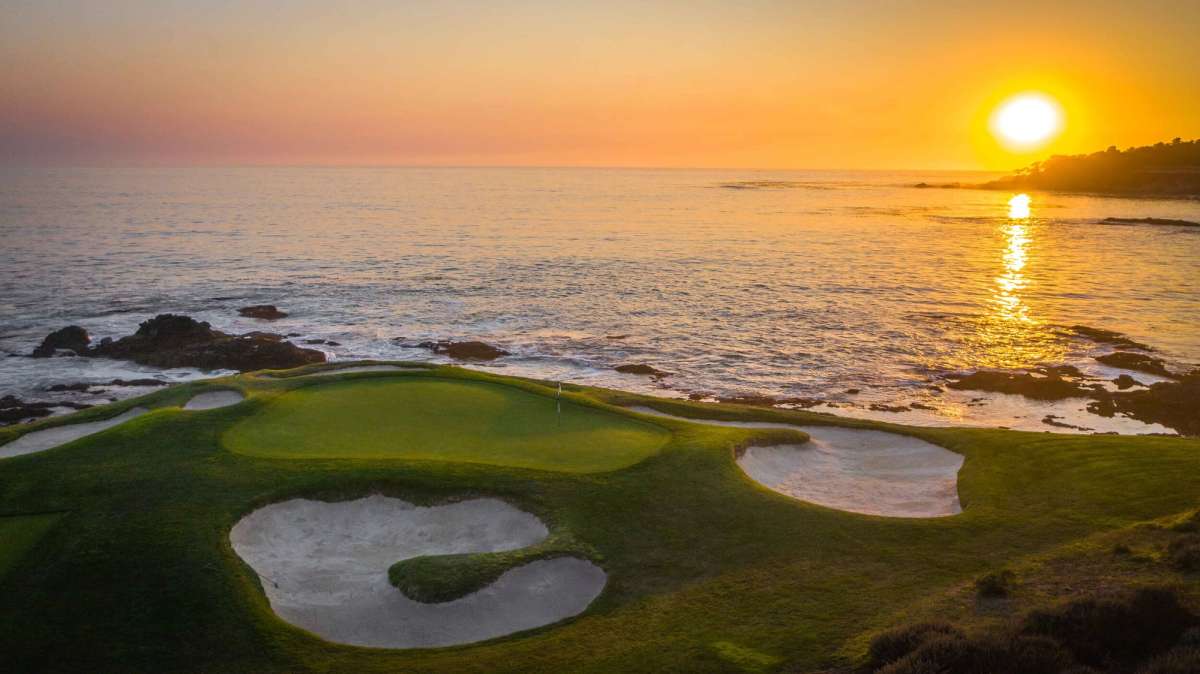
There are few tee times in golf more desirable than one at Pebble Beach Golf Links. The setting is extraordinary, the history is unparalleled and the opportunity to play a course that has hosted multiple U.S. Opens and countless other significant events is firmly on many golfers' bucket lists. Eighteen-time Major champion Jack Nicklaus once said if he only had one more round to play, he’d choose to play it at Pebble Beach, calling it “possibly the best [course] in the world”. Pebble Beach has retained its status as one of the world’s great public-access courses, meaning there are ways for ordinary golfers to play it, unlike many of the world's most exclusive layouts. The catch? Getting a tee time requires a little more planning than simply clicking through an online booking system. The good news is that there are a couple of different routes to the first tee at Pebble Beach. Here's everything you need to know. Where is Pebble Beach Golf Links? Pebble Beach Golf Links is one of golf’s great amphitheaters, where the Pacific Ocean provides the backdrop and almost every hole carries a piece of history. The course sits on the spectacular Monterey Peninsula on California's central coast, roughly 120 miles south of San Francisco. It forms part of Pebble Beach Resorts and is reached via the famous 17-Mile Drive, a scenic road that winds around the coastline between Monterey and Carmel-by-the-Sea. Pebble Beach occupies a dramatic stretch of Pacific coastline, with several holes running directly alongside Carmel Bay. It is also surrounded by some of the most recognisable scenery on the Monterey Peninsula, including the Lone Cypress and the rocky coastline for which the area is famous. For golfers arriving by air, Monterey Regional Airport is by far the closest airport. From the airport, the route to Pebble Beach Golf Links follows Highway 68 and then 17-Mile Drive, with the resort estimating a journey of about 15 minutes. The Easiest Way To Play: Stay at Pebble Beach Resorts The most dependable strategy to secure a tee time is to make your trip a resort stay. Guests staying at The Lodge at Pebble Beach, The Inn at Spanish Bay or Casa Palmero have access to Pebble Beach's courses, and resort guests are the only golfers who can reserve a Pebble Beach tee time more than 24 hours in advance. The booking window is particularly useful for golfers planning a bucket-list trip well ahead of time. Guests at The Lodge and The Inn at Spanish Bay can book accommodation up to 18 months in advance, while Casa Palmero reservations can be made up to 12 months ahead, subject to availability. To avoid disappointment, Pebble Beach explicitly recommends that resort guests request their tee times at the time of booking their room. A minimum two-night stay is required to secure a round at Pebble Beach Golf Links, although the resort can require three nights on certain dates. The resort's availability calendar identifies dates where different requirements apply, so it’s worth checking before finalising your itinerary. How Far Ahead Should You Book? As soon as possible is the short answer. Because resort guests can plan their accommodation up to 18 months in advance, Pebble Beach is best approached as a destination trip rather than an isolated round of golf. For a once-in-a-lifetime trip, we'd recommend starting with dates rather than a particular tee time. If you are travelling a long way to play Pebble Beach, it’s better to have several possible dates than to become fixated on one particular morning. Another important consideration for larger groups is that up to two players may be booked per room, based on room occupancy. A group of four should therefore plan around two rooms if everyone wants to play Pebble Beach. What if You Don't Want to Stay at the Resort? There is another considerably cheaper option to walk in the footsteps of Jack Nicklaus, Tom Watson and Tiger Woods, although it is much less certain. Non-resort guests are able to book Pebble Beach Golf Links one day in advance, meaning you don’t necessarily need to fork out for several nights of accommodation to play the course. Being one of the premier public courses in the world, tee times are in high demand, making the one-day window a genuine gamble. If you're already in the Monterey or Carmel area and have some flexibility, it's worth trying. If you're flying across the Atlantic specifically to play Pebble Beach, however, the resort route is significantly safer. How Much Does it Cost? Playing at such a prestigious course does not come without a hefty price tag, particularly if you’re planning on staying at Pebble Beach Resorts. For the current rate period of April 1, 2026 to March 31, 2027, the published green fee for Pebble Beach Golf Links is $695. The green fee applies to both resort and non-resort golfers, although non-resort golfers also pay the applicable cart fee. Additional published charges include: Cart: $60 per person Pull cart: $20 Single-bag caddie: $175 Double-bag caddie: $250 Forecaddie: $62.50 per person, with a three-player minimum Club rental: $120 per bag, plus tax Those figures make Pebble Beach one of the most expensive public-access rounds in the United States, particularly once accommodation, travel and caddie gratuity are added - but for many golfers this isn't an everyday round, it is the centrepiece of a trip.
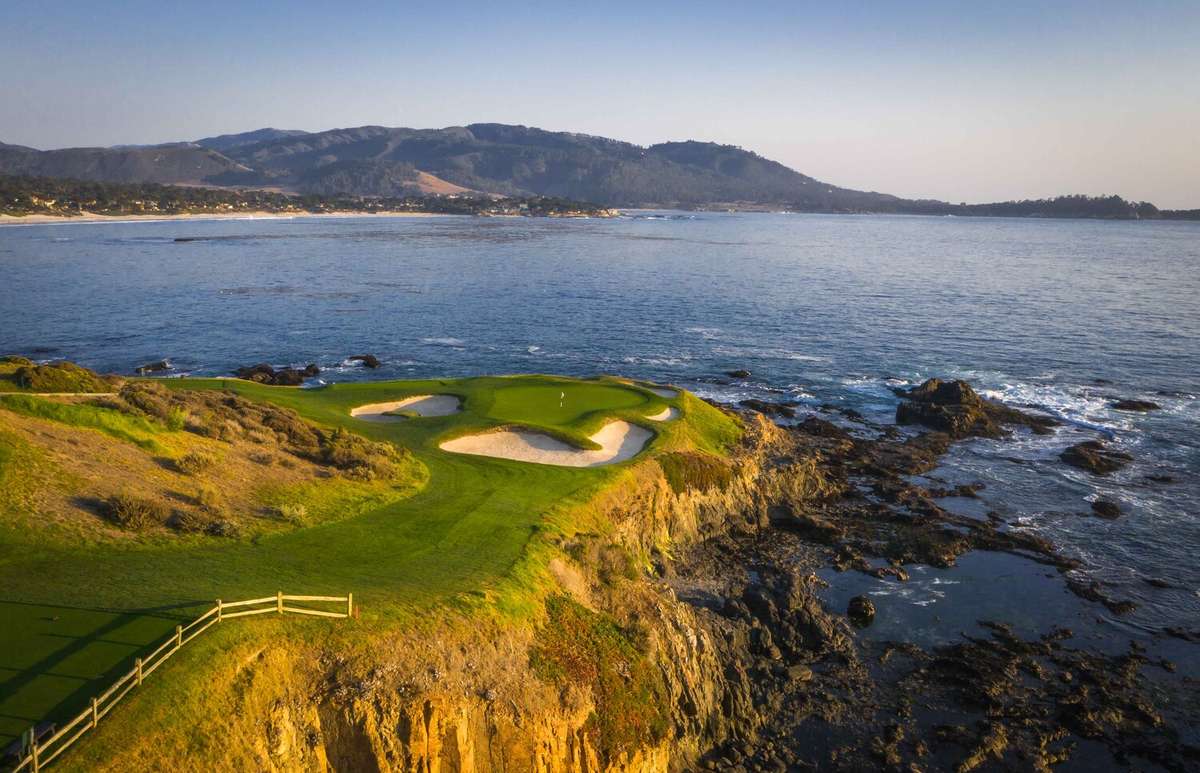
California is home to some of the finest golf courses in the United States, but many of its highest-ranked layouts are reserved for members. For visiting golfers, that can make finding a truly exceptional public course a challenge. Fortunately, the California Top 100 ranking includes several outstanding courses that welcome public play. From the bucket-list experience of Pebble Beach to the much more affordable Rustic Canyon, here are the five highest-ranked courses in The Golden State that visiting golfers can play. Pebble Beach Golf Links (Pebble Beach) World Ranking: 27th | California ranking: 3rd | Green fee: $755 Pebble Beach Golf Links is one of golf’s great amphitheaters, where the Pacific Ocean provides the backdrop and almost every hole carries a piece of history. Jack Neville’s original 1919 layout, remodelled by Henry Chandler Egan, has evolved over the years, but its essential character remains intact. This is the course where the greats have made history, from U.S. Open champions to the stars of the Pebble Beach Pro-Am, yet its greatest appeal is that anyone can play it. The price may make the wallet wince, but where else can an ordinary golfer walk in the footsteps of Nicklaus, Watson and Woods? The stretch from the 7th to the 10th is among the most exhilarating in golf, while the run to the 18th provides a suitably spectacular finale. Pebble Beach may not be perfect, but when the Pacific is crashing against the cliffs, who really cares? Only resort guests can reserve Pebble Beach tee times more than 24 hours in advance, subject to a minimum two-night stay. Non-resort guests can call 24 hours before play to enquire about any remaining tee times. Green Fees: Resort Guest: $695 (£513) Non-Resort Guest: $755 (£557), including cart fee Pasatiempo Golf Club (Santa Cruz) USA Ranking: 63rd | California ranking: 7th | Green fee: $465 Pasatiempo Golf Club is one of America’s great Golden Age survivors and, remarkably, the only public-access course that famed golf architect Alister MacKenzie regarded as his finest work. Founded by Marion Hollins in 1929, the rolling Santa Cruz layout was MacKenzie’s American home, and he lived alongside the sixth fairway during the final years of his life. The course has plenty of history, but it remains a thoroughly enjoyable test for visiting golfers. The front nine winds through the trees before the routing becomes more dramatic on the back nine, where deep barrancas and undulating terrain come into play. A major restoration completed in 2024 returned the greens and bunkers closer to their original forms. Although Pasatiempo is a semi-private club, visiting golfers can book two types of tee times through the club's online booking system – regular, available up to a week in advance, and priority, available up to a year in advance. For golfers looking to experience one of California's great courses without the price tag of Pebble Beach, Pasatiempo offers a rare chance to play a genuine piece of Golden Age golf. Green Fees: 18 holes: $465 (£341), excluding $50 cart fee Spyglass Hill Golf Course (Pebble Beach) California ranking: 17th | Green fee: $610 Spyglass Hill is one of the great tests on the Monterey Peninsula and, for many, the most demanding of the Pebble Beach quartet. Designed by Robert Trent Jones Sr. and opened in 1966, it has been part of the AT&T Pebble Beach Pro-Am rota since the following year. The opening five holes sweep from the Del Monte Forest towards the Pacific, with Jones deliberately drawing inspiration from Pine Valley. The course then turns inland through towering Monterey Pines and Cypress, with its tree-lined corridors recalling Augusta National. The 12th and 15th provide memorable par-three challenges, while the closing holes demand a strong finish. Spyglass Hill may live in the shadow of Pebble Beach and Cypress Point, but its reputation as one of America’s toughest and most rewarding layouts is thoroughly deserved. Unlike its more famous neighbour, Spyglass Hill is considerably easier for visiting golfers to book, with non-resort guests able to reserve tee times up to three months in advance. Green Fees: Resort Guest: $550 (£406) Non-Resort Guest: $610 (£450), including cart fee Rustic Canyon Golf Course (Moorpark) California ranking: 19th | Green fee: From $30 Rustic Canyon Golf Course offers a very different experience from the famous resort courses of the Monterey Peninsula. Laid out by Gil Hanse, Jim Wagner and Geoff Shackelford on a former sheep ranch north-west of Los Angeles, it is a relaxed, natural-looking course where wide fairways and firm, fast-running turf give golfers plenty of options. The course is relatively forgiving from the tee, but its large, undulating greens provide a sterner test, while the exposed setting means wind can quickly change the character of the round. The back nine is particularly memorable, climbing into the surrounding hills before a testing finish. It may lack the ocean views and tournament history of California's marquee courses, but Rustic Canyon offers excellent golf at a fraction of the price. For golfers looking beyond the obvious names, it is one of the state's best-value public courses. Tee times can be booked online, with reservations available to public golfers up to 28 days in advance. Popular weekend slots can fill quickly, while green fees vary depending on the day of the week and how far in advance you book. PGA West – Stadium (La Quinta) California ranking: 23rd | Green fee: From $60 PGA West’s Stadium Course is the toughest of the three public courses at the La Quinta resort and has been challenging golfers since 1986. It has plenty of tournament pedigree, having hosted the televised Skins Game and now serving as the venue for The American Express on the PGA Tour. At 7,300 yards, the Stadium Course is no pushover, with water coming into play on many holes. The closing stretch is particularly demanding, with the famous island green on the 17th – nicknamed Alcatraz – followed by a daunting water-guarded 18th. The course underwent a major restoration in 2024 and remains one of California’s most memorable public golf experiences. For golfers who enjoy a challenge, the Stadium Course offers the chance to test themselves on a layout that continues to feature on the professional circuit. Tee times can be booked online through PGA West, with the Stadium Course available to both resort and non-resort guests. Green Fees: Approximately $60–$399+ (£44–£295+), depending on the season and tee time.


