
Top 100 Golf Courses of the USA 2020
Welcome to the seventh revision of our biennial Top 100 for the USA, a chart which we first published at the end of 2005. A total of 163 courses have appeared in these listings down the years, some lasting for only one edition, others (like most of those that dropped out this time) enjoying long stretches in the national limelight before falling out of favour.
Of course, bear in mind these standings represent the crème de la crème of golfing layouts in a vast country where it’s reckoned there are more than 16,500 courses coast to coast, almost 2,000 of which we promote across our US state ranking tables. We’ll also be updating those Best in State charts in the New Year, announcing the revised listings on a rolling basis over several months.
In the latest edition of our Top 100 for the USA, 39 courses make upward moves, 16 remain in the same position and 45 slip down at least one position – with the 9 that have fallen away completely replaced by an equal number of new entries. So, without any further ado, here’s a brief overview of the main talking points in the new Top 100.
Cypress Point in California, which replaced Pine Valley as the nation’s No. 1 in 2016, remains in the top spot. Set out next to the foothills of the Santa Lucia Mountains at the end of the Monterey Peninsula, this Alister MacKenzie design has been thrilling members and their invited guests since it first opened in 1928. It was also one of the courses used for the AT&T Pebble Beach Pro-Am event on the PGA Tour from 1947 until 1990 but those days are long gone, unfortunately,

Cypress Point Club
Our correspondent M. James Ward reviewed Cypress Point last year, calling it “the quintessential member’s course.” He went on to say: “The reputation of the layout embodies the central philosophy of Alister MacKenzie from start to finish. The intersection with Mother Nature is also central to the round of golf and the Good Doctor was wise enough to not attempt any heavy handed insertions.”
In the runner-up spot at No.2, George Crump’s Pine Valley reverses a surprising fall of one position last time around. All three reviews this year have been of the 6-ball variety, attracting comments such as “a test of nerve and shot making,” keeps you concentrated from hole 1 to 18” and “hard to find anywhere better than Pine Valley”. Laid out within the Pine Barrens of New Jersey, it’s been the supreme golfing test for exactly a hundred years and it’s still as formidable to play today as it was when it first opened in 1919.

Pine Valley Golf Club
Until now, only ten courses have ever been listed within the top ten tier of the US chart but that has changed with Crystal Downs easing one place up to No. 10. Occupying a headland site that’s wedged between Lake Michigan and Crystal Lake in the state of Michigan, this early 1930s layout from Alister MacKenzie and Perry Maxwell has had Tom Doak (who’s a member) and his Renaissance Golf Design company quietly carrying out small but significant refinements in the last few years.

Crystal Downs Country Club
Four courses climb seven places in the top half of the table.
A.W. Tillinghast’s Somerset Hills in New Jersey (at #24), the Macan/MacKenzie layout at the California Golf Club of San Francisco (at #28), Perry Maxwell’s Old Town Club in North Carolina (at #29) and the Seth Raynor-designed course at Shoreacres in Illinois (at #33) have all benefitted from recent architectural input from Brian Slawnik, Kyle Phillips, Bill Coore & Ben Crenshaw and Tom Doak, respectively so it’s no real surprise to see each of them take such positives steps forward in the new rankings.
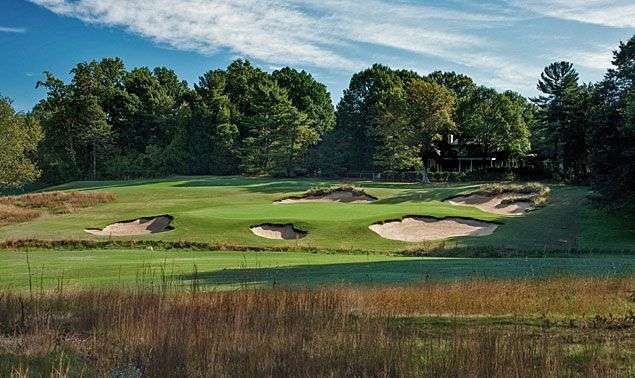
Old Town Club
Mention must also be made of the four courses that currently comprise the brilliant Bandon Dunes golf facility in Oregon. The 18-hole layouts at Pacific Dunes, Bandon Dunes and Old Macdonald have all resided comfortably inside our Top 50 since 2012 and they’ve just been joined by Coore & Crenshaw’s course Bandon Trails (up nine to No. 42) which has also now become a World Top 100 track, entering recently at No. 99.
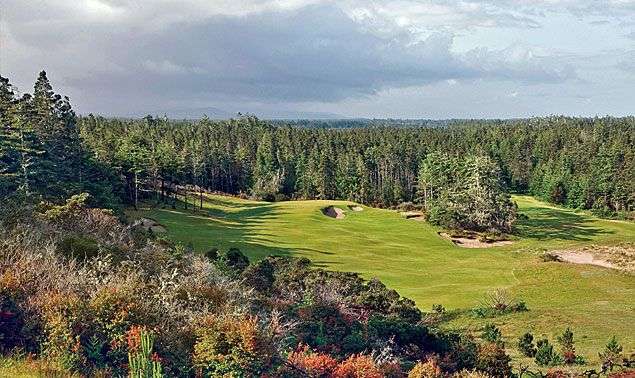
Bandon Trails
Absolutely no pressure then on Bill and Ben to deliver another golfing showpiece when their new Sheep Ranch course opens at Bandon Dunes in June next year! Laid out along a mile of coastline, this exciting new layout will feature the only holes on the entire Bandon Dunes property to require a shot over the cliffs to the double green at the 3rd and 16th on the Fivemile Point promontory .
Three courses make major double digit advances.
Essex County Club in Massachusetts (up thirteen to No. 40) is a century-old Donald Ross layout that was extended to eighteen holes by the architect early in his career, during his time there as club professional. Historically important as one of the first clubs to affiliate to the USGA, Essex came under the spotlight when it hosted the 36th edition of the Curtis Cup matches in 2010 and it’s only now starting to attain the recognition it rightly deserves.
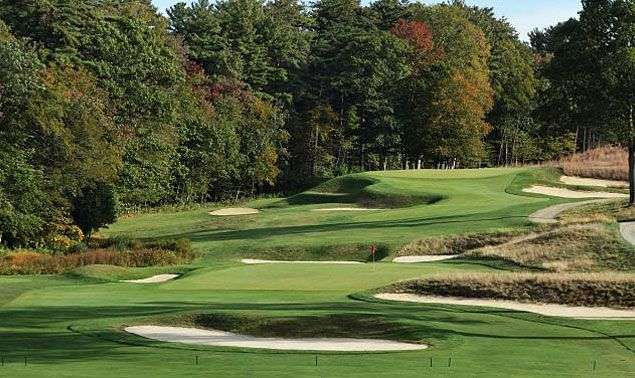
Essex County Club
Piping Rock Club in New York (up twelve to No. 52) is a Charles Blair Macdonald design from 1911, with Seth Raynor building the course for his partner. Situated at Locust Valley on Long Island, it’s long been a favourite track of our US Consultant Fergal O’Leary, even before the renovation work conducted initially by Tom Doak and then his former Renaissance Golf Design associate Bruce Hepner.
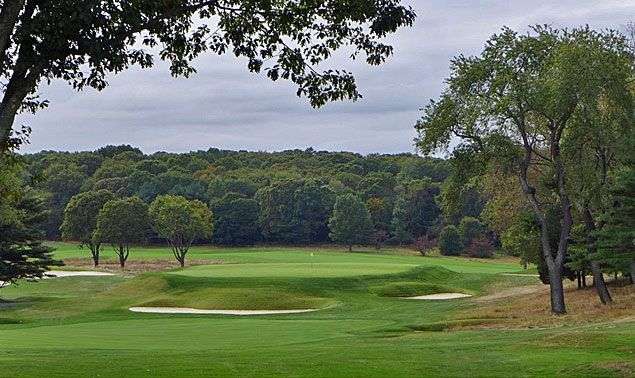
Piping Rock Club 13th hole - image courtesy of Jon Cavalier @LinksGems
Fergal had this to say about Piping Rock in a review last year: “the renovation work across 2015/2016 involved significant tree clearance, green expansion and increased width to the lined fairways. With the introduction of those fabulous cross-bunkers, the wide fairways have revived the emphasis on attacking the treacherous greens from the best angles… a day at Piping Rock is an incredible privilege and a lot of fun, but most importantly, it’s an opportunity to absorb many of the greatest holes ever built.”
The West and East nines at Ridgewood Country Club in New Jersey (up eleven to No. 71) have hosted several new millennium editions of the Northern Trust event on the PGA Tour (formerly known as The Barclays) but the club’s tournament pedigree stretches as far back as 1935, when the USA team played Great Britain in the Ryder Cup. Designed by A. W. Tillinghast, the three nines at the country club have been under the watchful eye of Gil Hanse for the last twenty five years.

Ridgewood Country Club
Another Gil Hanse project, this time an original production, is the 22-hole course at Ohoopee Match Club in Georgia, and it’s the first of nine new chart entries, arriving at No. 53. Laid out inside a massive 3,500-acre property that was once used for onion production, the twenty-two holes at Ohoopee are “overly wide and extremely generous” according to avid Top 100 blogger Paul Rudovsky, who visited last year. He continued: “the ‘ebb and flow’ of the course is brilliant… the property has about five different ‘looks/feels’ and the transition from one to another is seamless.”

Ohoopee Match Club - image courtesy of Gil Hanse
Three of the other eight newcomers are from New York state and Hanse Golf Course Design has had a hand in recent restoration work at all of them. The first two, The Creek in Locust Valley (new at #88) and the Upper course at Sleepy Hollow in Scarborough (new at #92) are classic Macdonald/Raynor ensembles, while the other one, St George’s in East Setauket (new at #100) is a Devereux Emmet track dating back to 1917, when the course was built by the architect to compete against his friend C.B. Macdonald’s National Golf Links of America.

Sleepy Hollow Country Club 9th hole - image courtesy of Gil Hanse
Rank/
To view the complete detailed list of the Top 100 Golf Courses of the USA click the link.
Jim McCann
Editor
Top 100 Golf Courses

Top 100 Golf Courses has ranked every course that has hosted the Walker Cup since 1922. The rankings cover three categories and provide insight into the championship venues that have shaped amateur golf's most prestigious international competition. Three Complete Rankings The research has produced three specialised rankings: USA Walker Cup Venue Ranking - American courses that have hosted the biennial competition. Great Britain & Ireland Walker Cup Venue Ranking - Historic links courses and venues across the British Isles. Combined Walker Cup Venue Rankings - All American and international venues ranked together. The Walker Cup Competition The Walker Cup is a biennial match-play competition between 10-man amateur teams from the United States and Great Britain & Ireland. Named after George Herbert Walker, USGA president in 1920, the competition began in 1922 at the National Golf Links of America. The tournament has maintained its status as amateur golf's premier international competition for over a century, showcasing the world's finest golf courses. Top Venues in Combined Rankings Cypress Point Club leads the combined rankings. Alister MacKenzie's Pacific coast course will host the 50th Walker Cup in September 2025. The US won 15-9 when it previously hosted in 1981. Pine Valley Golf Club ranks second. George Crump's design is considered the ultimate penal golf course. It will host the 2044 Walker Cup and previously staged matches in 1936 (US won 9-0) and 1985 (US won 13-11). Royal County Down Golf Club is the highest-ranked international venue at third. Located beneath the Mountains of Mourne in Northern Ireland, it's consistently rated among the world's most scenic courses. Leading American Venues Shinnecock Hills Golf Club was one of the USGA's five founding members. The New York course features original American design from 1891, when Scottish professional Willie Davis worked with the Shinnecock Reservation. National Golf Links of America is the Walker Cup birthplace. Charles Blair Macdonald's 1922 course established the competition and introduced the term "golf architect." Oakmont Country Club represents championship golf's toughest test. Originally set to host in 2033, then moved to 2032, this Pennsylvania course has hosted multiple major championships. Great Britain & Ireland Leaders St Andrews Old Course has hosted nine Walker Cup matches—more than any other venue. The Home of Golf has also staged 29 Open Championships. Muirfield is home to The Honourable Company of Edinburgh Golfers (founded 1744). This East Lothian course pioneered the two-ring, nine-hole layout design. Turnberry Ailsa Course offers Scotland's most scenic championship golf. The course overlooks the Firth of Clyde with views of the Mull of Kintyre and Isle of Arran. Architectural Excellence Golden Age architects dominate the rankings. Merion Golf Club (East Course) represents Hugh Wilson's success as an amateur architect. Winged Foot Golf Club (West Course) is A.W. Tillinghast's finest work. The demanding layout has tested both amateur and professional golfers for decades. Bandon Dunes Golf Resort represents modern design. The Oregon resort has a USGA partnership through 2045 and will host the Walker Cup in 2028. International Links Tradition Lahinch Golf Club sits beside Liscannor Bay in Ireland. Old Tom Morris created the original layout before Dr. Alister MacKenzie redesigned it in 1926-27. Royal St George's Golf Club is a natural links course in Sandwich, England. It maintains traditional character while hosting major championships. Sunningdale Golf Club represents England's best inland course. The Old Course is considered Britain's most beautiful championship venue away from the coast. Future Walker Cup Venues Prince's Golf Club will host the 53rd Walker Cup after recent investments in facilities and course improvements. Walker Cup matches move to even years from 2026 to avoid conflicts with World Amateur Team Championships. Walker Cup Venue Excellence Both American and international courses contribute to the Walker Cup's legacy. These rankings celebrate golf architecture's finest examples, from MacKenzie's coastal designs to Macdonald's pioneering American courses. View the complete rankings: USA Walker Cup Venue Rankings Great Britain & Ireland Walker Cup Venue Rankings Combined Walker Cup Venue Rankings

Top 100 Golf Courses of the USA 2014 Our latest US Top 100 is unveiled 15 December 2013 In January 2012, we decided to abandon our US Top 250 rankings because we found it too difficult to define the positions for US courses in the ranking range of 150 to 250. Instead, we promised to develop and extend our US Best In State rankings and focus on providing the best possible list of the Top 100 Golf Courses of the USA. For 2014, we included more data from an even wider range of sources, but our final rankings offer rather less change than two years ago. However, there is still a fair level of movement as courses settle towards their plateaux. Cypress Point and Pine Valley continue to slug it out at the very top of the US national rankings. Mathematically, Cypress came incredibly close to knocking Pine Valley off the top, but Pine Valley prevailed once again. The National Golf Links of America makes a bold upward move to 5th place. The two big US tabloids (Golf Magazine & Digest) do not hold the NGLA in the same high esteem as we do, which surprises us because most golfers we know rate the National well inside their personal US Top 10. Eight new entries push eight very solid courses off the hundred and into the Best In State rankings. All of a sudden, Florida starts to punch somewhere nearer its fighting weight thanks to the Red and Blue courses at Streamsong bursting into the chart. If Streamsong could find room for a White course, there would be no need to fly the Stars and Stripes at this aspiring golf resort. The Plantation course at Kapalua (straight in at 86) suggests that resort courses really can hold their own in the top rankings alongside a majority of private facilities. Talking of which, the Upper joins the Lower at Baltusrol in our hundred for the first time and Aronimink, White Bear Yacht Club and Holston Hills also make their debut. Finally, we welcome back Galloway National, which narrowly missed out on a place in 2012 having been ranked inside our US Top 100 since 2006. Los Angeles (North) jumps eleven places to 21st as the magnitude of Gil Hanse’s restoration finally dawns and there’s a meteoric rise of forty places (to 54th) for the California Golf Club of San Francisco. According to our US Correspondent, Fergal O’Leary: “Since the outstanding restoration of the MacKenzie bunkers and routing by Kyle Philips, the ‘Cal Club’ has gone from strength to strength… The restoration has been the catalyst for the club's rising national ranking, and I can only anticipate continued future success.” Boston Golf Club leaps up thirty places to 59th and, according to one of our reviewers, “this hidden away club is back on its feet financially and continues to impress… Bay Staters often find themselves debating preference between Boston and nearby Old Sandwich. Having played them both multiple times, my feeling is that Gil Hanse’s design variety and consideration for all skill levels will tip the scales towards Boston making it the course I’d rather play every day”. There’s a rise of nineteen places for Nanea, which for some unfathomable reason has never been ranked in the national hundred by Golf Digest. Fergal O’Leary made the following comment: “I'm currently playing the Top 100 golf courses in the US and the World and am almost finished with the challenge. When I stepped onto the first tee at Nanea, I had a similar reaction to how Monty described Loch Lomond… Wherever Nanea is ranked, it should be higher.” Yeamans Hall is another of our high climbers but this club is also out of favour with Golf Digest’s panellists. The course does split opinion and one of our reviewers reckons “the club itself is off the charts amazing… A real throwback and a true delight to be there… It gets all the hype associated with Raynor designs, but man I don't understand the adulation.” A rise of twenty places for Essex County Club continues our theme of bucking the trend of the magazine ranking panels. One of our reviewers sums it up perfectly: “Essex was once home to Donald Ross and his legacy can be felt throughout the course. His old house is located by the 15th tee box, and the course is a testament to his craft. I have played a number of Ross courses, including Pinehurst #2 and many of the top Ross courses around Boston, and I always come back to Essex as my favourite.” Europeans may hold Medinah (No.3) in the highest regard and it’s an undeniably good golf course that staged the European Ryder Cup miracle of 2012, but many aficionados feel that this old classic has been injured by the “Open Doctors” and is now too much toil and not enough fun. The No.3 course drops a painful thirty-three places in our 2014 rankings. We suspect our new US Top 100 will not gain universal approval, but we’ve given these new rankings deeper consideration than ever before. If you have any comments or feedback, I’d love to hear from you. Just for the record, I’d like to remind you that Top 100 Golf Courses is truly independent and we have no association with any magazine publication. If you would like to help improve our US golf course rankings, please get in touch. Our new Best In State rankings will be published soon, so please keep an eye on the Top 100 website and our social networking channels for the latest updates. Finally a big thanks to everyone who has taken the time to post course reviews online. Please keep them coming, it’s your reviews that cut to the chase and make the Top 100 website come alive. Keith Baxter Editor-in-Chief www.top100golfcourses.com Click to see in detail our new 2014 Top 100 Golf Courses of the USA

The Ultimate Caddy Guide: Etiquette and Tips for Playing the World's Top Golf Courses Expert advice on working with caddies at bucket-list destinations like St. Andrews, Pebble Beach, Cypress Point and Ballybunion Introduction: Why a Good Caddy Makes All the Difference Picture this: You've finally scored that tee time at Pebble Beach, St. Andrews, or Ballybunion. You've dropped more cash on the greens fee than your monthly car payment. You're jittery with excitement on the first tee, and suddenly it hits you – you've never played with a caddy before. What's the proper tip? Should you rake your own bunker? Can you really trust this stranger when they say "aim three cups right" on a putt that looks dead straight? I've been there. Most of us have. The caddy-player relationship can be awkward if you're not used to someone carrying your bag and giving you advice. But get it right, and a good looper can transform your bucket list round from merely memorable to absolutely magical. According to Morgan Mahalack, who's carried bags at Baltimore Country Club, Olympic Club, and several exclusive Los Angeles private clubs, the caddy-player relationship is pretty simple: "It's built on mutual respect and clear expectations." So let's cut through the mystery and get to the good stuff: How to prep your bag so your caddy doesn't silently curse your name by the third hole When to handle course maintenance yourself (yes, sometimes you still rake your own bunkers) The proper way to handle green reading advice when you're convinced the putt breaks the other way How to handle the money conversation without making everyone uncomfortable Whether you're heading to Bandon Dunes next month or saving up for that once-in-a-lifetime pilgrimage to the Home of Golf, these insider tips will help you navigate the experience like you belong there. And as Morgan puts it, a good caddy "can easily save you 10 strokes" on an unfamiliar course – making that caddy fee the best investment of your golfing trip. Before the First Tee: Setting Yourself Up for Success Understanding Different Caddy Arrangements at Top Golf Courses Before you arrive at prestigious courses like Pine Valley or Royal County Down, it helps to understand what type of caddy service to expect: Single Bag Caddy: One caddy dedicated solely to you – the premium experience but less common at busy courses Double Bag Caddy: One caddy carrying two bags – the standard arrangement at most top 100 golf courses worldwide Four Caddy Service: One caddy assists a foursome in carts, typically handling putters, bunker raking, and course management Pro Tip: Double bagging is typically preferred by caddies for financial reasons, but means you'll share attention with another player. Your expectations should adjust based on which arrangement you'll have. How to Prepare Your Golf Bag for a Caddy Nothing makes a worse first impression than showing up with an unnecessarily heavy bag at courses like Muirfield or Shinnecock Hills. Here's how to prep like a pro: Remove excessive golf balls (12 max for most players) Clean your clubs thoroughly before arrival Consider using a lightweight carry bag rather than a tour or cart bag Remove unnecessary items (excessive rain gear, etc.) Insider Knowledge: "I once caddied for a guy who had 36 Pro V1s in his bag," shares Morgan. "Halfway through the round, I secretly stashed them in a maintenance cart because the bag was so heavy." What Caddies Notice During Your Warm-Up Caddies are often observing you on the range before your round, making mental notes about: Your typical shot shape and distance with various clubs Your pre-shot routine and tempo Whether your equipment suggests your true skill level Caddy Secret: Most top caddies can determine your yardages just by watching your range session. Being honest about your handicap saves embarrassment - they'll know your game within three holes anyway. On the Course: Building a Successful Caddy Partnership Tee-to-Green: Making the Most of Caddy Advice When playing unfamiliar championship courses like Carnoustie or Pine Valley, local knowledge is invaluable: Trust your caddy's line suggestions, especially on blind shots Be clear about your typical shot shape and distance Ask specific questions about hazards and landing areas Expert Advice: "Surrender to the caddy," Morgan recommends. "At iconic courses, local knowledge trumps your instincts 99% of the time. The caddy who's seen thousands of shots from your exact position knows better than you do." Understanding Green Reading Language at Elite Courses Greens at top-ranked courses like Augusta National or Royal Melbourne can be particularly challenging to read. Caddies use specific terminology: "Cups outside" refers to aiming points measured in cup-widths from the hole on either side "Percentage reads" indicate how much break to play (e.g., "50% less" means less break) Visual pointing uses the flagstick to indicate the ideal line Key Insight: Different caddies at different destinations use different systems. Ask for clarification early in the round if you're unclear about their terminology. Halfway House and Refreshment Protocol with Caddies Customs around food and drink vary between prestigious golf clubs around the world: At the turn, it's often good form to ask if your caddy wants something Caddies are not responsible for fetching drinks during play but they may offer to do so Navigating Challenges: When Your Round Gets Complicated When Caddy Advice Doesn't Work Out Even at the world's best golf courses like Cypress Point or Trump Turnberry, misreads happen: Professional caddies often feel worse than you do about misreads Cultural differences matter - Irish caddies might playfully tease you after a poor shot American caddies typically maintain professional courtesy regardless of the outcome Building trust throughout the round matters more than individual shots Real Example: "At Ballybunion, our caddies would (joke) after bad shots, which took all the pressure off. That approach would never work at most American private clubs," shares Morgan. Managing Golf Frustrations with a Caddy Present Even at bucket-list courses, bad days happen. Here's how to handle them: Experienced caddies have already seen every form of golf frustration imaginable Professional caddies maintain a "straight face, mouth shut" demeanour during player outbursts Focus frustration on yourself, never your caddy Remember that how you handle adversity reveals character Caddy Perspective: Morgan recalls a player smashing a tin of beer with his driver after a poor shot. "I just picked up the club, put it back in the bag, and kept walking like nothing happened. That's what professionals do." The Financial Side: Properly Compensating Your Caddy Understanding Caddy Payment at World-Class Golf Destinations Payment structures vary between top golf courses internationally: At most prestigious courses, approximately $150 (£150 or €150) per bag is fairly standard as a ballpark figure Scottish and Irish courses often have a set fee plus expected gratuity Payment methods vary - sometimes fees are prepaid, sometimes paid directly Cash is nearly always preferred Direct Advice: "If you're unsure about compensation, simply ask your caddy directly what the standard is at that course," suggests Morgan. "They'll appreciate the straightforward approach." When and How to Tip Your Caddy Appropriately Compensating caddies appropriately is part of proper golf etiquette. You can ask in the pro shop discreetly about expectations if not clearly stated elsewhere. The following may also help: Consider the caddy effort and experiential improvement Exceptional service merits additional consideration Present payment discreetly at the end of the round if appropriate Remember that caddies depend on proper compensation for their livelihood Practical Tip: For once-in-a-lifetime rounds, err on the side of generosity. If being hosted by a member, some consider it good form to offer to cover caddie costs. Conclusion: The True Value of the Caddy Experience The relationship between player and caddy represents one of golf's most distinctive traditions—a partnership that enhances playing the world's greatest courses. As Morgan puts it, "It's a circular deal...you're helping that caddy out, allowing them to have a career, and you're going to maximize your experience." Consider what you gain with a caddy at bucket-list courses: Local knowledge that can "easily save you 10 strokes" at unfamiliar venues Insights into strategic nuances that make top-ranked courses special Freedom to focus entirely on your game, not logistics A cultural connection to the history and traditions of the course When Morgan played Ballybunion with his friend, their caddy John Stacky—both a looper and course member—delivered not just club selections but authentic Irish golf culture. That experience simply can't be replicated with a yardage book and rangefinder. Whether you're planning your dream round at Pinehurst No. 2, Royal Dornoch, or Tara Iti, understanding these unwritten caddy codes transforms you from an awkward visitor into a seasoned local. Golf at its best isn't just about the score—it's about the connections and memories created. A great caddy doesn't just carry your bag; they carry a piece of the course's soul, sharing it with you one hole at a time. Quick Reference: Caddy Etiquette at World-Class Golf Courses In a nutshell, the following bullet points will get you started: DO: Consider a lightweight carry bag when possible Fix your own ball marks Be honest about your skill level DON'T: Pack unnecessary items or excessive golf balls Ignore their advice, especially on unfamiliar courses Take frustration out on your caddy Remember: A great caddy can save you "10 strokes easily" on an unfamiliar course - perhaps making that $150 the best investment of your bucket-list golf experience. Looking for more tips on planning your next golf trip? Check out our guides to Playing Golf in Scotland, America's Most Exclusive Golf Clubs, and How to Access the World's Top 100 Golf Courses.

